As the Russians conquered, the planet Venus. The story of the first space devices that have transmitted information from another planet

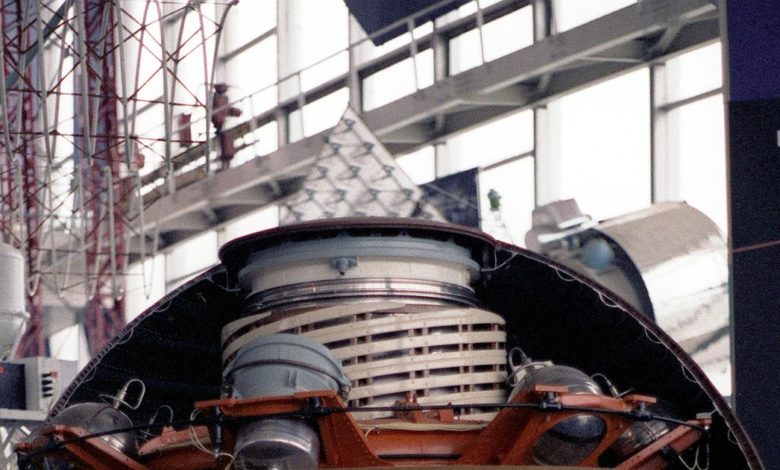
The Soviets were true pioneers of the space. Through the Venera program, the Russians set several premieres in the world of space travel. Among other things, this program was left the first object that entered the atmosphere of another planet, but also returned with images.
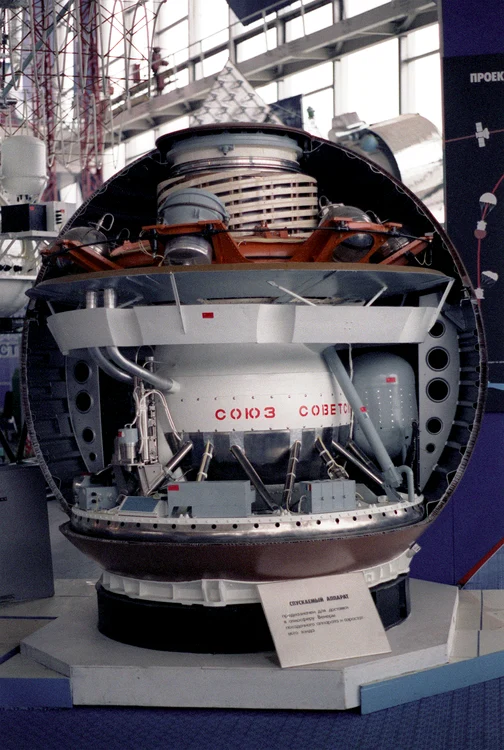
Lander Venera 12 photo wikipedia
In the 60s, the “space race” began, a scientific struggle for supremacy in technique and innovation initiated by Russians and Americans, as part of the “Cold War”.
Probably, it was the only positive aspect of this global conflict for power, managing to bring unimaginable progress in knowing space and planets in our solar system. The Soviets pressed strongly on the acceleration, from the beginning of the space race and made some historical premieres, with an extraordinary scientific contribution. It is in particular about the Venera program, stretched for two decades, and which led to the knowledge of the planet Venus, a heavenly body that lit the imagination of people since its discovery by astronomers. Through the Venera program, the first object was recorded, built by man, who entered the atmosphere of another planet, the first landing of an object of measuring and transmitting information from another planet, the first device to send, on Earth, images from the surface of another planet, but also the first space device that registered sounds from another planet. Last but not least, the Soviets sent the first space object capable of scanning and mapping the territory of another planet.
Venera, the hidden project of the Soviets
“Space Race” or “Space race” started in the 50s, in the context of “Cold War”. It had both a practical competition, to test the ability of spatial satellites in recognizing a threat, especially intercontinental ballistic missiles, but also an ideological one, regarding the struggle to demonstrate the superiority of a political system. The Communists were very interested in demonstrating the whole world that incredible progress can be made through socialism and that they can outcry capitalism (represented by Americans).
The whole “space race” would have started from several magazines in the Soviet Union, in which young people expressed their desire to travel in space. American magazines took over the idea and on July 30, 1955, US officials announced the intention to send artificial satellites around the Earth. Obviously, the Soviets could not be left behind. The fight for space began. In the Soviet Union, the plans were kept secret.
They were only revealed at the time of success. Failures and trials were kept away from the eyes of the world. In their rush to show their superior the technical level, the Soviets launched the first artificial satellite in history, Sputnik 1, on October 4, 1957. To maintain the rhythm, after only a few years, the Russians also send the first man to space, on Yuri Gagarin, in 1961. Although the Americans also carried out the program, and they had a spatial program. Space missions, for the first time. This is how the Venera project was born. Obviously, due to Soviet secretomania, not much is known about the beginning of this project.
It is certain that the Soviets wanted to send wells to other planets. Especially on Venus, the second planet in the sun and had lit the imagination of scientists. They believed that Venus is a planet similar to the Earth, inhabited by strange but very technologically advanced beings. The Russians thought they would give the blow if they are doing light in the case of the planet Venus. The Venera program, meant two decades of research, failures, but also extraordinary victories on a scientific realm. The project was carried out between 1961-1984 and involved no less than 13 space missions, of which ten successfully performed. Obviously, it was about sending space wells, capable of taking pictures, recording sounds and even mapping.
The first space object made by man who reached the orbit of another planet
The Venera project debuted on February 4, 1961 but the space probe failed to leave the Earth's orbit. The causes and the event itself was kept secret. In fact, the Russians were allowed to understand that, in fact, they wanted to send satellites, similar to Sputnik, in no case probe trying to reach Venus. During this time, despite the failure, the Soviets continued the Venera project. On February 12, 1961, the Venera 1 space probe was launched, with an artificial satellite, precisely to mask the purpose of the action.
“Venera 1 was launched on February 12, 1961 together with Tyazheliy Sputnik 5, by a SL-6/A-2-E. (…) Sol teams managed to get contact with the probe, a few days after launch. One of the sessions took place on February 12 at a distance of 126,300 kilometers and the second, on February 13, on February 13 Transmit nominally every five days. Interplanetary) was the first spatial vehicle that flew next to Venus ”says NASA. As the NASA specialists show, the Venera 1 probe was composed of the main body of cylindrical shape, with a height of over two meters and about one meter, in diameter.
It was fed with a fuel table of 643.5 kilograms. Two solar panels, with an area of two square meters were radially expanded from the cylinder area. The space probe was equipped with a large antenna (with the diament of over two meters) equipped with the intention to transmit signals, at wavelengths of 8 centimeters and 32 centimeters. In addition, the module had an omnidirectional antenna arm of 2.4 meters long designed for 1.6 meters wavelength transmissions. Finally, an antenna in the tire of T was used to transmit signals to the ground – 922.8 MHz to 1 bit/sec. The probe was equipped with numerous scientific equipment capable of measuring all the necessary parameters, if they reached Venus. Immediately after Venera 1, the venera 2 probe was also sent, but which suffered faults immediately after leaving the Earth's orbit.
Venus planet, known through Soviet space wells
Obviously, the first failures were kept silent. Especially since the Americans plus the mariner spatial probes. However, the Soviets continued the Venera project. Venera 3 succeeded the first step. It was the first space vehicle made by the man's hand that reached the surface of another planet. He weighed about a ton, was launched by a Molniya-type rape and entered the atmosphere of the planet Venus, crashing on its surface. And this under the conditions in which it was not provided with landing appliances. However, he failed to transmit data, due to the faults produced, in contact with the atmosphere of the planet Venus. The perseverance of the Soviets has begun to give even more results. Venera 4, became, on October 18, 1967, the first space probe that managed to provide information about the atmosphere of another planet. This is how humanity managed to find out that the atmosphere of the planet Venus is dominated by carbon dioxide.
Venera 5 and Venera 6 succeeded even more, recording data on the planet Venus for 53 minutes.
Venus 7 managed to land on Venus, on December 15, 1970, the first landing of a space vehicle on another planet. Revolutionary was the sending of the Venera 9 space probe, the one who, on June 8, 1975, managed to become the first space tool, which transmitted images from another planet. “Venera 9 and 10, a pair of identical spatial vehicles were launched in June 1975. The scientific goals were to analyze the atmosphere of the planet Venus but also its surface. Venera 9 sent images from the surface of the planet Venus, the first images ever transmitted from the surface of another planet.”says NASA.
Finally, Venera 15, was also the first space vehicle that managed to make scans, map, at high resolution and obviously transmit the data.