Interview “is told how well it was in the Soviet Union.” What students from Transnistria about Romania and Russia learn at school

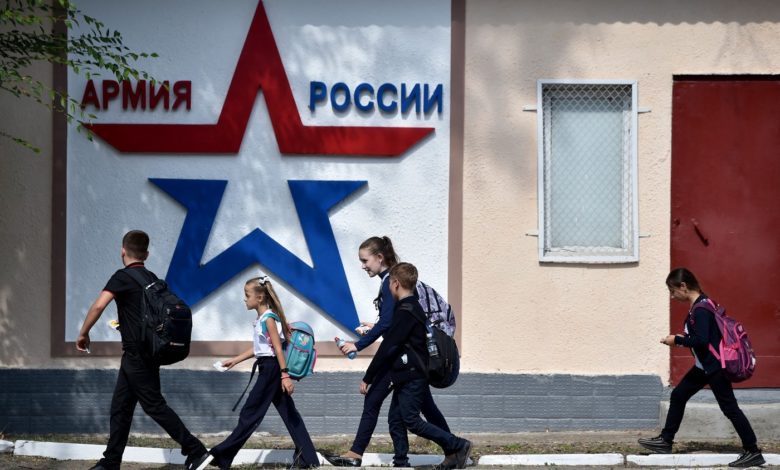
Although legally part of the Republic of Moldova, Transnistria is the closest place to Romania where there is an important armed force of the Russian Federation. The kindergartens and schools in Transnistria were forced to teach the history of the “Transnistrian people”, by a decision taken by the leader of the separatist region Vadim Krasnoselski. The hotnews correspondence in the Republic of Moldova spoke with a doctor in history from Chisinau, Stefan Bejan, to find out what the students from this region about Romania, Russia and the Republic of Moldova learn at the history lesson.
- Ștefan Bejan is a doctor in history and is part of the team of experts of the “Watchdog” non -governmental organization in the Republic of Moldova, who deals with combating misinformation and manipulative narratives.
The decision to introduce in schools and kindergartens the history of the “Transnistrian people” was announced in the context in which in 2025 marks 35 years since the “creation of the Nistrian Republic”. “Everyone should know very well how the Transnistrian people appeared on our land, its historical roots, its entire history to this day,” said Vadim Krasnoselski, the leader of Tiraspol, at a meeting with representatives of local structures.
“Those who have thus captured the Transnistrian region, use it for economic purposes, personal purposes to enrich themselves.”
– Where does the notion of “Transnistrian people” come from? To what extent can this term be used?
– Stefan Bejan: the term “Transnistrian people” does not exist. There is no group of people who speak a “Transnistrian language” and identify as “Transnistrian”. The names “Transnistria” and “Transnistrean” are, in fact, forbidden. The authorities insist on the notions of “pidnestrovie” and “pidnestrovian”, that is, the translation of these Terms in Russian.
– But why is it so important for the local administration to promote the idea of ”Transnistrian people”? Are there any similar precedents in history?
– Yes, this approach resembles the Soviet attempt to create a “Soviet man”. And today there are many people who talk about the “Russian multinational people” or “Soviet people”. There is no such thing.
In us, in Moldova, the “Moldovan multinational people” is used. Again, from a historical point of view, it has no logic.
The same way is created “the prednistrovian people”.
Why is such a people insisting on the existence? Very simple – how do you argue otherwise to people that the Transnistrian region is separated? They separated from the Republic of Moldova by arguing that there is another people, the people there are different from those on the right of the Dniester and, therefore, they need a separate republic.
Otherwise, there would be no foundation either ideological, historical, nor scientific to be a separatist “republic” to the left of the Dniester. Those who have thus captured the Transnistrian region, use it for economic purposes, personal purposes to enrich themselves. And to keep people under obedience, it promotes this ideology.
“The Transnistrian region is a multiethnic one with 30% Moldovans, 30% Ukrainians and a similar percentage of Russians”
-What is the population structure?
-The Transnistrian region is a multiethnic one, with a population of about 30% Moldovans, 30% Ukrainians, a similar percentage of Russians, as well as Bulgarians, Jews and other minorities.
For the first time, this region had any form of state organization, from 1924 to 1940. There it was tried to create the so-called Moldovan people and the Moldovan language, under the RASSM authority, that is, the Moldovan Socialist Socialist Republic.
It was created as an autonomous region within the Ukrainian RSS and functioned as a laboratory. So Transnistria, the Transnistrian region, is a Soviet invention.
After declaring independence in 1990, with the support of the Russian Federation, the local authorities tried to create a separate entity, based on elements as the so-called “Moldovan language”, written in Cyrillic and other symbols considered to be specific to this “porchnestrovene” identity.
However, in order to consider a community a distinct people, it must have a language, a history and a culture clearly different from those of other peoples, which does not exist in the Transnistrian region.
“Between 1941 and 1944 on the territory of Transnistria there were crimes under the Romanian administration”

– However, why is this term so sensitive, “Transnistria” in the region? Of what is really forbidden to be used there by self -proclaimed authorities?
– The name “Transnistria” appears for the first time in 1941, when the Romanian army released Bessarabia, and General Antonescu decided to accept Hitler's proposal to go further with the German army. Therefore the territory between Bug and Dniester was included under the Romanian administration, led by the governor Gheorghe Alexianu.
Of course, between 1941 and 1944 on the territory of Transnistria there were crimes, concentration camps were created where Jewish and Roma were exterminated, which gives a negative connotation to this period.
It was a black period in the history of this region. So from here the resistance to use this name appears.
“Transnistria” means, in fact, “the territory after the Dniester”. Like Transylvania (no-country after the forest, in medieval Latin). It does not have a hidden meaning, it is a term that defines this territory. As you would say: “The house behind the hill” or “the neighbor in the valley”, a definition related to geography.
Children are not learned about Stalin's crimes
– From an educational point of view, how is the history of this region taught in the schools in the region, from what you managed to see as a historian?
– I have not seen their recent textbooks, but, as far as I know, the history of Russia is mainly taught and, subsequently, the “Poridnestrovia History” is surrendered, which includes some chapters on what happened on this territory until 1924 and after RASSM was created until now.
I understood that many lessons of the Transnistria (since 1992) are dedicated, even about 6-7 consecutive weeks. This war is presented as a “struggle for independence”, and about other important events, such as the hunger from 1932-1933 (Holodomor) and the Stalinist purges of 1937-1938, they do not speak.
Some of the RASSM founders, such as Leonid Madan, were purified, but nothing is said about these things.
There is no talk about the role that Russia had in the outbreak of the Conflict in Transnistria, because if Russia had not armed the guardians, if General Alexandr Lebed had not introduced the Russian army in the region in 1992, the conflict probably would not have been so bloody.
After Lebed took over the leadership of the Transnistria army, were the most victims: we are talking about about 400 victims in just two weeks.
So, nothing is said about these things. On the contrary, there is talk of Russia's “civilizing mission”, it is discussed how well it was in the Soviet Union and how important the “independence of the Transnistrian Republic” is.