Transformation of the oldest dendrological park. The place of story with hundreds of dried and storm -downed trees

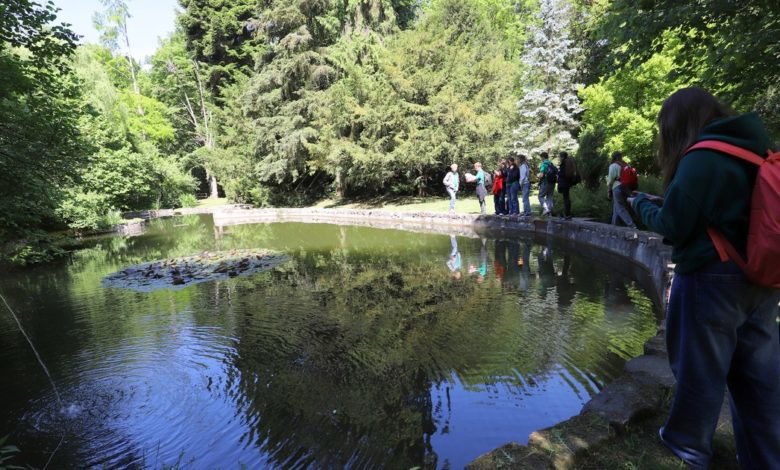
The Arboretum in Simeria, one of the oldest dendrological parks in Romania, is going through broad transformations. Many trees will be extracted, after climatic phenomena, diseases and pests have led to their drying and rot.
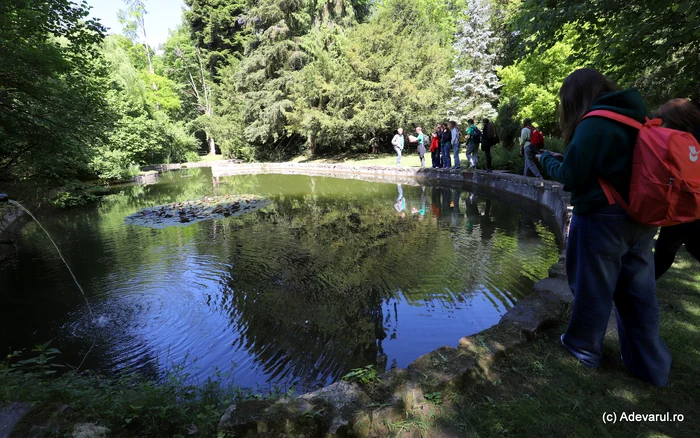
The Arboretum of Simeria. Photo: Daniel Guță. TRUTH
Extensive forest works take place during this period in the Dendrological Park in Simeria, stretched on 70 hectares, but the representatives of the reservation send to tourists that they are needed to remove the already dry, affected and pest, broken and collapsed trees.
Conservation cuts in the dendrological park
Instead, other trees are planted so that the area is regenerated.
“In the Arboretum of Simeria, following the storms of the last years and drought, as well as due to the appearance of a disease in the ash, many trees have dried, and others have fallen. About 1,500 trees will be extracted, of which 300 are completely rotted, without any commercial value, but only biological-they will remain in the park.“, said forest engineer Daniel Pitar (video), Head of Section at the National Institute for Research and Development in Silvictul (ICAS) – Simeria.
From all the extracted quantity, only 25 cubic meters represents industrializable wood, the rest being firewood or cellulose.
“On average, about 19-25 trees per hectare are removed. In the areas from which these trees have been extracted, we will plant trees from the collection or trees of forest interest, to complete the trees and for the plots to regenerate,” completed the forest engineer Daniel Pitar.
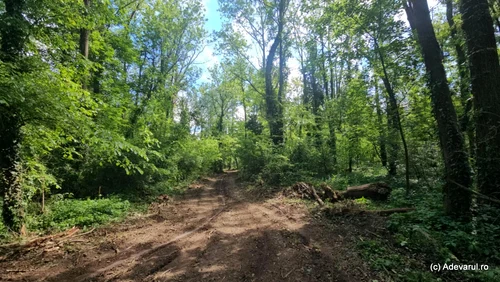
Image 1/15:
Park Dendrological Simeria Photo Daniel Guță Adevărul (55) JPG
According to him, the park has been divided into seven areas, so that the works of extracting the shafts are as managed as possible. Because many dry trees are around the alleys, some of the tree will be closed, so as not to endanger the safety of the visitors during the works.
The rest of the park, respectively its most attractive area, with the terraces and alleys around the lakes, to the Strei Canal, will remain open and can be visited for free.
The story of the oldest dendrological park in Romania
The Simeria Arboretum, considered the oldest dendrological park in Romania, was set up at the beginning of the eighteenth century, when the nobles who mastered the Fay Mansion-a historical monument at the entrance to the park-decided to land the natural locks in the Mureș meadow.
In its beginning, it was a vast exotic garden around the noble mansion, which belonged to several families – Gyulay, Kun, Fay and Ocskay – each contributing to the enrichment of the park with rare species of trees and plants brought from other continents.
The park with an area of 70 hectares and an old noble mansion from the nineteenth century, houses over 2,100 species of plants and trees, most of which are originally from Asia and North America.
His exoticism and diversity gave him a unique character and included it among the monuments of nature in Romania. One of the most important owners of the park was Fáy Béla, a naturalist and a member of the Hungarian Academy of Sciences. He enriched the collection with exotic species and wrote scientific works on their acclimatization.
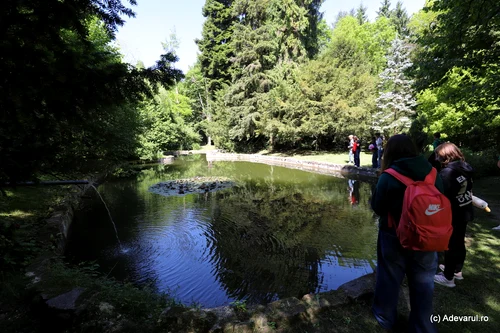
Image 1/22:
Park Dendrological Simeria Photo Daniel Guță Adevărul (35) JPG
After the nationalization of 1949, the park and the mansion entered the administration of the Simeria Forest District, becoming, in 1952, an experimental unit. Two years later, the Simeria forest research and experiments were set up, which saved the area from degradation and deforestation.
“The wonderful Park from Simeria has been fulfilling for many decades, evolving during the role of a first -rank forest research.note the botanist Alexandru Borza (1887-1971).
After 1990, the descendants of the Hungarian and Ocskay Grosts opened processes for the recovery of the mansion and the land confiscated by the communist regime. The courts decided that the legal owner remains the Romanian state.