
The future US fighter plane is questioned by the lack of funding. Dissatisfaction in Congress to Donald Trump

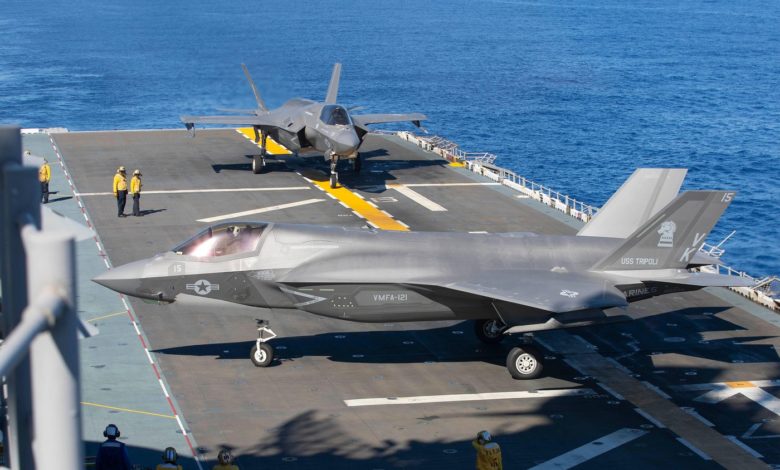
The Military Military and the United States Congress are fighting with the government led by President Donald Trump to continue the contract on a new fighter aircraft, it shows three informed sources on the subject, quoted on Wednesday by Reuters, taken over by Agerpres.
The conflict has as its object the F/A-XX program, which should replace the outdated F/A-19 Super Hornet fleet fleet, of the so-called “invisible” type, which should become available in the 2030 decade.
The military navy would have liked to announce since March which company has obtained the contract worth hundreds of billions of dollars, collected throughout the life of the new aircraft.
A program of hundreds of billion dollars
Some Pentagon officials are trying to delay the program for up to three years, says Reuters Agency. They invoke concerns for technical and production capacity.
The military aviation concluded in March a Boeing contract for F-47 fighter jets, the invisible aircraft version of the sixth generation for this branch of the armed forces, which will replace the F-22 aircraft. US Air Force has announced that it intends to purchase at least 185 new model aircraft.
For the contract with US Navy, the competition between Boeing and Northrop Grumman continues; Lockheed Martin was eliminated, after information broadcast in March by Reuters.
A three -year delay for naval forces would actually cancel the program in the current version, because the contracts and prices would expire until then, making the competition resumption, explains the connoisseurs with whom the quoted agency discussed.
The dispute on F/A-XX financing brings to pay attention to wider issues regarding the future of naval aviation and the role of aircraft carriers in confrontation with China. The delay could deprive the military navy by a modern fighter plane, capable of leaving on missions on the aircraft carriers, in the 2030s and later. This would thus undermine the ability of the US military fleet to design force in disputed environments.
China has already tested advanced planes such as J-50 and J-36, which he claims are from the 6th generation and with which the US Navy aircraft could meet.
“America will not be able to do much with the aircraft carriers over 30, if he does not invest in a fighter plane for the next generation for the military,” a American official warned. “Faster decisions, extended range, integration with autonomous systems and maximum lethality are vital for the future of air struggles, especially in the Indo-Pacific region,” added the source.
Like the other people with whom Reuters discussed, the official asked to keep his anonymity, because the subject is sensitive.
Elon Musk relies on drones
Trump's government insists on reviewing the content and way of making the Pentagon's acquisitions for various articles, from software to airplanes. Elon Musk, the president's adviser, targeted the hunting planes with a crew, which he called “outdated”, because he started era of drones-unanswered aircraft on board. Some defense experts say, however, that enemy jamming systems can overcome autonomous air vehicles, which is why human crews are needed in the fight.
Currently, the US Navy has about 128 F/A -18 aircraft, used since the mid-1990s.
The cost evaluation office subordinated to the Minister of Defense Pete Hegseth intends to cut the financing for the development of the next generation aircraft and to re-establish the $ 454 million received for F/A-XX from the US Congress for Fiscal Year 2025; The information comes from two high -level managers in the industry and a Congress assistant, Reuters mentions.
Independent of this, the Pentagon is preparing to ask the Congress not to allocate $ 500 million for the program, the amount included in a draft law for reconciliation in order to accelerate the development of new fighter aircraft, the same three sources said.
The two reductions in financing and the possible three -year delay have not been reported so far. These decisions determined the military navy and several important members of the Congress to respond. The Pentagon could still change its position towards the respective efforts and adopt the guiding lines of the Congress on financing, said the assistant mentioned by Reuters as a source.


