Antarctica is again covered with ice. Four glaciers have registered spectacular mass increases in recent years

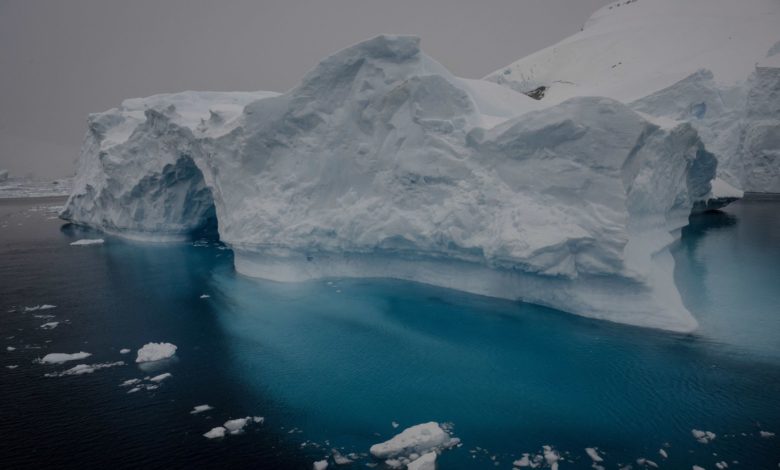
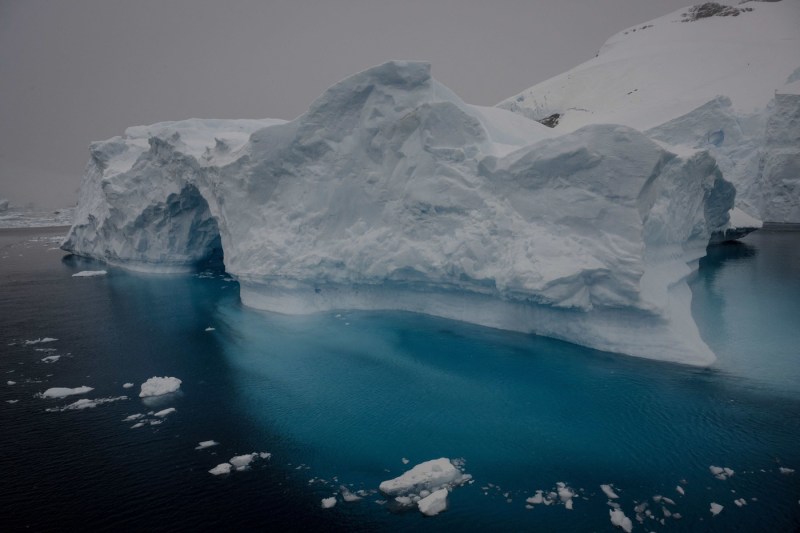
Glacier in Antarctica Photo: AA / Abaca / Abaca Press / Profimedia
In the case of at least four major glaciers in the Wilkes Land-Queen Land region in the eastern Antarctic, the satellite data shows that there has been a reversal of the accelerated mass loss process through which they passed between 2011 and 2020, which registering record increases of the ice mass during 2021-2023, reports Scitechdaily.com.
This is the conclusion of a study coordinated by Dr. Wang and Prof. Shen of Tongji University in Shanghai, China, based on the data obtained by NASA Grace satellite missions (Gravity Recovery and Climate Experiment) and Grace-Fo (Grace Follow-on), reports Agerpres.
The Antarctic glacial cap (AIS) plays a major role in the process of increasing the global ocean level. Previous studies have highlighted a long -term tendency to lose the ice mass, especially in the Western Antarctica and in the Antarctic Peninsula, while the east Antarctica glaciers appeared relatively stable. However, in their study, Dr. Wang and Prof. Shen discovered a surprising change in this melting tendency – between 2021 – 2023 AIS has experienced a record increase in total ice mass.
Thus, between 2002 and 2010, Calota Antarctic lost on average 74 billion tonnes of ice a year, and between 2011 and 2020 this loss was doubled, reaching an average of 142 billion tonnes. This accelerated mass loss was mainly linked to the intensification of the melting of ice in the Western Antarctica and in the WL-QML region of East Antarctica. However, after 2020, there was a significant reversal, probably determined by an abnormal accumulation of rainfall.
Thus, between 2021 – 2023 the mass of the glacial cap increased with the average value of 108 billion tonnes per year, transmits Live Science that cites the same study.
Properly, according to the study, the loss of mass of ice in Antarctica led to an increase in the level of the Planetary Ocean of 0.20ą0.16 mm/year between 2002-2010 and 0.39ą0.15 mm/year between 2011-2020. By contrast, during the period 2021-2023 a negative contribution was registered, compensating for the average increase in the global ocean level with a rate between 0.30ą0.21 mm/year.
The four key dial basins in the Wilkes Land-Queen Mary Land region, Totten glaciers, Moscow University, Denman and Vincennes Bay have intensified mass loss at a rate of 47.64ą8.14 GT/year in 2011-2020 compared to 2002-2010. The researchers explained that “this accelerated mass loss was mainly determined by two factors: reducing the surface mass (contributing by 72.53%) and increasing the ice flow (27.47%)”.
The complete melting of these four glaciers could trigger an increase in the average sea level over 7 meters. Their pronounced ablation models are already a critical climatic warning signal, justifying increased scientific attention to their stability, the study states.
The study of Chinese researchers is called “Spatiotemporal Mass Change Rate Analysis from 2002 to 2023 Over the Antarctic Ice Sheet and Four Glacier Basins in Wilkes-Queen Mary Land”, was signed by Wei Wang, Yunzhong Shen, Qiujie Chen, Fengwei Wang and Yangkang Yu and published in 19 March 2025 in the journal Science China Earth Sciences.