Millimeters race. Samsung S25 Edge and Apple iPhone 17 Air are to be Supercienkie and Superdrogie

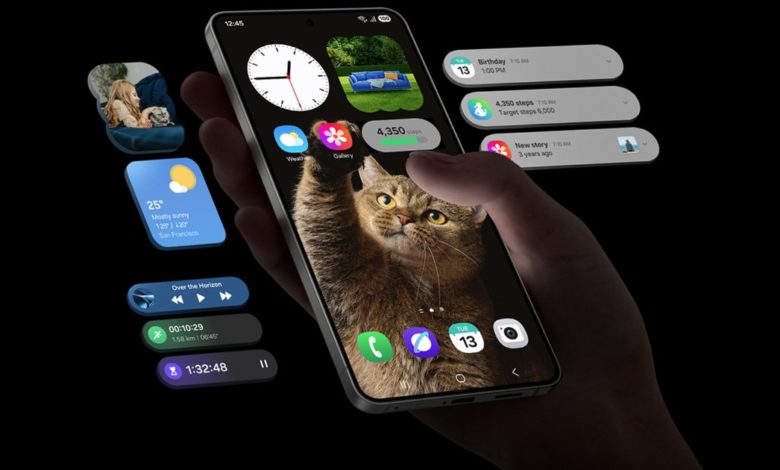
The new Samsung smartphone has a full -size 6.7 “QHD+ 120 Hz display and the same Snapdragon 8 Elite system, which in a thicker S25 Plus, but stuffed in a housing thinner than seven credit cards. To achieve this, Koreans limited the battery to 3900 mAh, they gave up the telephoto and sig. The main camera 200-MP, titanium frame, protective Gorilla Glass Ceramic 2 and Qi2 charging.
iPhone 17 Air, successor to the low-popular Plus version, is to receive a body with a titanium-aluminum alloy, OLED panel 6.6-6.7 “class M14 with Promotion, single 48-mp camera in a characteristic” beam “, front camera 24 MP and A19 system in lithography 2 nm. Change of thickness forces a probable transition to ESIM (lack of a physical SIM card), as well as a battery with a capacity of 4000 mAh than 5000 mAhwhich Apple is to compensate for the higher efficiency of the new screen and a faster 35-watt charging.
This strategy is consistent with a wider company plan: after a record thin iPad Pro M4 Apple wants to offer “the thinnest and lightest products” again in all its range, also covering MacBook Pro and Apple Watch.
Check also: Pegasus on your phone? Learn how to detect it
A fast processor is not enough. The phone is to tempt with appearance
Why do producers return to the millimeters race? The market has matured and the technical specifications have ceased to elective customers who They complain about the weight and too large dimensions of flagships more often today than the lack of performance. Samsung simply recalls conclusions from consumer research: “Users wanted something slimmer and lighter without loss of performance.”
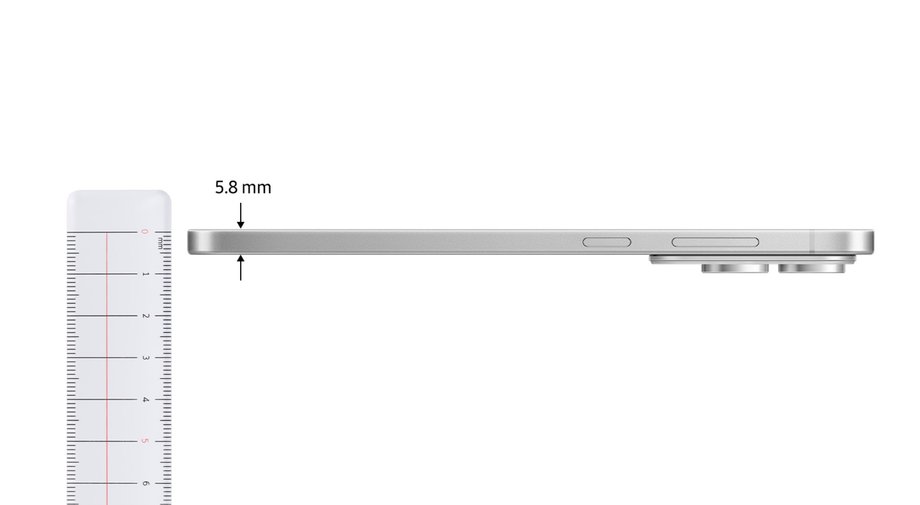
Only 5.8 mm thick. The latest Samsung phone is very thin
|
Mat. press
Apple, in turn, treats the iPhone 17 Air as a symbol of a new aesthetics clearly recognized against the background of competition – just like in 2008, MacBook Air has set fashion for ultrabooks.
Technologically, this is allowed by several parallel trends: switching to 3 Nm and 2 Nm with lower energy demand, thinner motherboards, higher energy densities in silicone-graphite batteries, as well as more efficient heat dissipation thanks to titanium and flattened steam chambers. In the iPhone, an additional place gives resignation from the second lens, and in Galaxy – a smaller battery supported by algorithmic optimization of energy consumption.
Will such thin phones heat up more strongly? Theoretically, the smaller weight makes it difficult to accumulate heat, but manufacturers balance this with more effective chips and rapid scattering in the steam chamber (Samsung) or in a larger surface of the frame and camera beam (Apple). In long sessions of playing 3D games, however, the temperature can grow faster than in thicker counterpartswhich is why the software is more aggressed then by the clocking of individual chips – the phones work with lower performance, so as not to lead to too high temperature.
Read also: Origami from the phone. Folding smartphones gain millions of customers, and the iPhone begins to be associated with boredom
The price may be too high
Design and weight are strong arguments in the premium segment – especially for younger users who carry the phone constantly in their hands or in flat pockets. At the same time, research shows that for a mass recipient The battery and camera remains a priority. That is why Samsung and Apple treat ultra -high editions as a complement, not a replacement for ultra or pro variants. If the declared battery performance turns out to be sufficient and prices do not exceed psychological barriers, slender models can take over the role of the so -called Halo-productions that attract to the whole line, just like the first phones with a curved screen.
S25 Edge shows today that the flagship can go below 6 mm without complete dedication, and the iPhone 17 Air is to push this idea even further. The success of both constructions depends on whether the compromises – a smaller battery and a simplified camera – will prove to be less severe for customers than the daily relief resulting from a lower mass and a slimmer profile.
The new Samsung is valued at $ 1099. (approx. PLN 4,200), but in Poland it will cost PLN 5399 for the 256 GB version and PLN 5899 for 512 GB. The latest iPhone is to debut in September this year. And the price is not yet known.
Author: Grzegorz Kubera, Business Insider Polska journalist