A Turkish fisherman found “Poseidon's spear”, a historical artifact that could be from the Roman era

Freedom article – published Tuesday, May 13, 2025, 15:25 / Updated Tuesday, May 13, 2025 15:35
A fisherman from Turkey made an amazing discovery in Lake ̇znik, arousing the interest of archeologists and Greek mythology fans, writes Libertatea.ro.
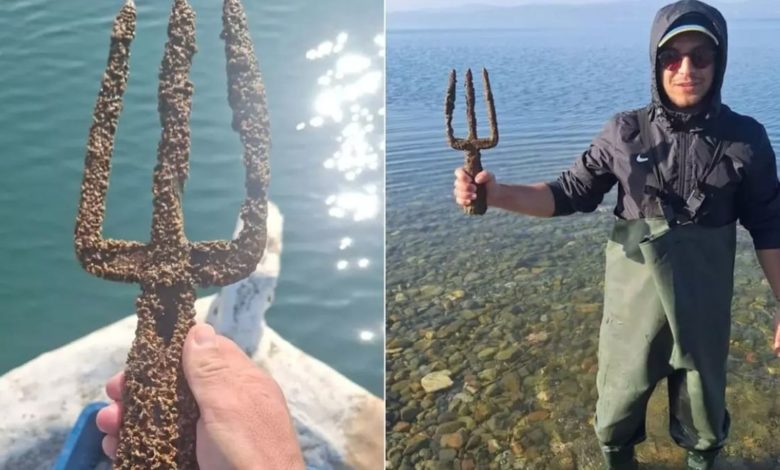
According to Bild, the object found resembles a rusty trident, reminiscent of the weapon of the god Poseidon. Osman Erim, the lucky fisherman, told his experience for the Turkish newspaper Kayıp Rıhtım: “In the morning I went to the lake and caught fish.” However, in his net, besides the fish, a three -tip metal “spear” appeared.

The lucky fisherman found “Poseidon's spear”
Aware of the possible importance of his discovery, Erim told a news portal: “I handed it to the authorities if it could be a historical artifact.”
The specialists of the Local Museum are now analyzing the object nicknamed “Poseidon's spear”. The first evaluations suggest that it could be an authentic artifact from the Roman era, according to the newspaper Hakimiyet.
Turkish archaeologists emphasize the rarity of such a discovery in the region. The object is under the protection of the state until the completion of the analyzes.
In Greek mythology, Poseidon was the god of sea, earthquakes and horses. His trident symbolized the control over the waters and has become an iconic element in modern popular culture.
A famous lake for his discoveries
This lake in Turkey is not at its first important discovery. In 2014, the archaeologists found here the ruins of an underwater basilica dedicated to Saint Neophyte, a discovery considered “sensational” at that time.
The new discovery adds an additional layer of mystery to this lake with deep and turbulent waters. It remains to be seen what other secrets ̇znik hides and what information will be able to provide specialists about “Poseidon's spear” after completing the analyzes.
According to Bild, this unexpected discovery once again demonstrates the archaeological potential of the region and the importance of preserving and studying the underwater heritage.