
Pope Leon XIV: The name chosen discloses the plans he has at the forefront of the Catholic Church

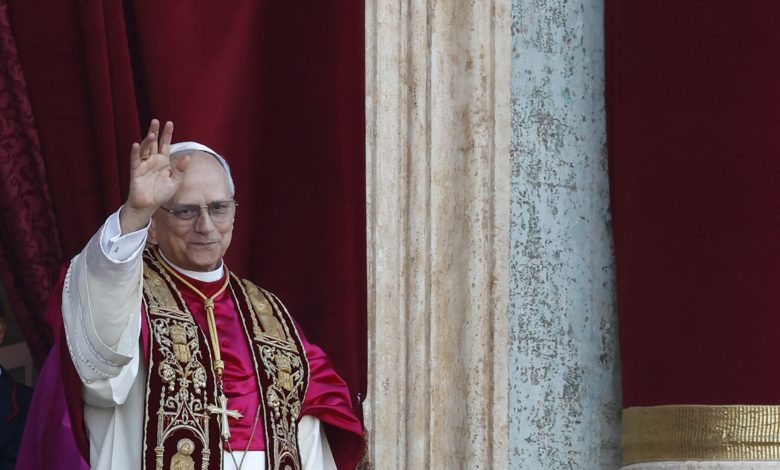
The first indication of the plans of the new Pope was revealed with the name he chose on Thursday, writes the site of The Independent.
American cardinal Robert Prevost, 69, was elected on Thursday the new Pope and leader of the Roman Catholic Church and adopted the name of Pope Leon XIV, a high-ranking cardinal in front of the numerous believers and tourists gathered in Saint Peter Square.
Cardinal Robert Prevost, an American missionary who spent most of his career serving in Peru and then leading the influent Dicaster of the Vatican bishops, was elected the first American pope in the 2,000-year history of the Catholic Church, notes Agerpres.
According to the traditional announcement “Habemus Papam” (“We have a Pope”), spoken in the Latin language of the Balcony of Saint Peter, the name of baptism of the new Pontifical Sovereign, followed by its important papal name, loaded by symbolic meanings, was revealed.
“Peace be with you all,” said Pope Leon XIV of the Balcony of Saint Peter on Thursday evening, in his first public speech.
Papal's name historically signifies “strength during a crisis period”, a Catholic commentator revealed.
The choice of cardinal of American origin Robert Francis Prevost came as a surprise, said the Catholic priest and blogger Ed Tomlinson.
“It seems to be a continuation of Francis's liberalization,” he told The Independent.
As for choosing his papal name, Ed Tomlinson said that this name has a long history.
“The Papal Leon name shows, without surprise, a pope who will be strong in a period of crisis, from a historical point of view,” he said.
The last pope who chose the name Leon lived more than 100 years ago. Pope Leon XIII ruled the Catholic Church from 1878 to 1903. The first pope with this name, Pope Leon the Great, led the Catholic Church between 440-461.
Pope Leon XI had one of the shortest pontifications in history, which lasted less than a month-from April 1, 1605 to his death, on April 27, 1605.
What meanings hide the papal name
If the new Sovereign Pontiff had chosen the Papal Francis II name, then it would have reported a continuation of the emphasis placed by the previous pope on the pastoral care and the help of the marginalized ones. Pope Francis himself suggested at one point, in jest, that his successor could choose the name John XXIV, referring to the progressive Pope John XXIII from the Vatican Council.
On the contrary, the choice of the name of Pius, the most commonly used papal names of the twentieth century, would be clearly indicated a traditionalist in the leadership of the Catholic Church.
As Natalia Imperori-lee, rector of the Chair of Religious Studies at Manhattan College, noted, “in the deepest depths of their mind, when the conclave begins, each of the cardinals enters there, given a certain name.”
The name chosen by each Sovereign Pontiff offers people a vital “radiography” on the vision that the new Pope has on the Catholic Church.
History of papal names
In most of the first millennium in the history of the Catholic Church, the popes used their first names of baptism. The first exception was the novel Mercurius of the 6th century, who had been named after a pagan god and chose the name more appropriate by John II.
The practice of adopting a new name became rooted in the eleventh century, a period when the German popes chose names of the first Christian bishops from “the desire to symbolize continuity,” said Roberto Regoli, a historian at the Gregorian Pontifical University of Rome.
For many centuries, the new popes tended to choose the name of the pope that elevated him to the rank of cardinal. John was the most popular name, chosen by 23 papi, followed by Benedict and Grigore, each with 16 reiterations.
Only since the middle of the twentieth century, the new popes began to choose names to signal the objectives of their papacy, said Roberto Regoli.
“Even now, when we expect the new Pope, the name he will present will help us understand the horizon he wants to go to,” added Professor Regoli.
Some names have come out of use of centuries, such as Urban and Innocent.
“I do not think that someone will choose the name of innocent,” said Natalia Imperori-lee, given the abuses and other scandals that have shaken the Catholic Church. “I don't think it would be the right choice,” she added.
The recent names of the popes
Francis
Pope Francis, chosen in 2013, took over the name of Saint Francis of Assisi, known for his humility, life lived in poverty and love for all living beings.
By this name, Pope Francis pointed out a papacy focused on those who are often seen as “marginalized”, including the poor, prisoners and the LGBTQ+community, while promoting peace, fraternity and environmental protection.
Benedict
This name was most recently chosen by the German cardinal Joseph Ratzinger, which became Pope in 2005. Pope Benedict XVI said he wanted to pay tribute to Benedict XV, who led the Catholic Church during the First World War and dedicated to the healing of wounds caused by the VI, which of Saint Benedict, has contributed to the spread of Christianity in Europe.
One of the priorities of Benedict XVI was the attempt to revitalize faith in Europe. “If we have a Benedict, then we know that the cardinals have chosen to see Francisc as an anomaly,” Natalia Imperori-lee revealed.
John-Paul
The first name composed of the history of the papacy was chosen by Cardinal Albino Luciani in 1978 to honor Pope John XXIII, who opened the process of Vatican Second Council, which reformed the Catholic Church, and Paul VI, who concluded.
The name reported a commitment to reforms, including giving up the Litin Liturgy in favor of local languages and opening to other beliefs, especially to Judaism. The papacy of John Paul I only lasted 33 days. Polish cardinal Karol Wojtyla, who succeeded, chose the name John Paul II.
John
This name was chosen 23 times by Papi, most recently in 1958 by Pope John XXIII. John can refer to St. John the Apostle, one of the 12 apostles of Jesus and the author of one of the Gospels, or to Saint John the Baptist, the prophet who baptized Jesus.
“John XXIII was a pope from whom no one was waiting for much, but who had a colossal impact on the church,” said Natalia Imperori-lee.
Paule
He was chosen six times, most recently in 1963 by Paul VI. Saint Paul spread the teachings of Jesus in the 1st century.
Pius
This name is associated with popes known for their traditionalist and antireformist tendency. Pope Pius IX ordered the abduction of Jewish boy Edgardo Mortar in 1858 and raised as a Catholic child at the Vatican after finding out that he had been secretly baptized by a housekeeper.
Pius X was the antimodernist from the beginning of the twentieth century, which inspired the Schismatic Anti-Vaican II group, the Society of St. Pius X. Pius XII was the Pope from the Second World War, criticized for not talking enough about the Holocaust.
“Pius is now a name that has been taken hostage by some Catholic groups that can be considered traditionalist,” said Professor Regoli.
The new directions of a pope
A new pope is free to choose a name that has not been used before, as Pope Francis has done.
“This would open a new chapter and could mean that his program is not in line with any of his predecessors, so an even more personalized program,” explained Professor Regoli.
Natalia Imperori-lee suggested another name that could have reported a continuation of Pope Francis: Ignatiu, to refer to the founder of the Jesuit Order of which Pope Francis was a part.


