This acquisition has a strategic dimension because Stainless does not produce AI models themselves, but is a kind of “gateway” through which code used by thousands of developers around the world flows. Thanks to it, applications can easily connect to services such as ChatGPT or Gemini. In practice, this means that Anthropic has just taken control of a tool on which not only its own products, but also the ecosystems built by its rivals, depend.
To understand the importance of this purchase, it is worth first explaining what an SDK is in the context of artificial intelligence. SDK, or Software Development Kit, is a ready-made set of libraries and tools that programmers install in their code with one command. Thanks to this, the application can send queries to the AI model, handle responses, manage errors and automatically retry failed connections, without having to write everything from scratch. In short, these are “instructions enabling the application to talk to artificial intelligence”. If we want our application to connect, for example, to ChatGPT and receive responses, we need such libraries, and Stainless provides them.
- Read also: This is the fastest growing company in history. This is neither OpenAI nor Musk's project
The company takes the service's official API specification (called OpenAPI) and in minutes compiles a fully professional, production library for multiple programming languages - Python, TypeScript, Go, Java, etc. When an AI provider changes something in their API, Stainless automatically updates all generated libraries, saving up to months of work for engineering teams.
Stainless
|
Stainless
As a result, Stainless tools are used not only by OpenAI and Google Gemini, but also by Meta with Llama Stack, Cloudflare Workers AI, Groq, Cerebras, Runway, as well as popular frameworks such as LangChain. This generates tens of millions of library downloads every week.
OpenAI once tried to build its own SDK development tool, but found it too expensive and complicated to maintain, so it moved to Stainless. Google did the same. In this way, a small company from New York has become the bottleneck of the entire AI development ecosystem – something that no one notices on a daily basis, but without which building applications using large language models would be much slower and more expensive.
$300 million for a small startup
In light of the above information, it is not surprising that there is interest in purchasing such a startup. However, Anthropica's official statement after the deal is quite restrained – the company claims that the acquisition of Stainless is primarily intended to “improve the development experience” around the Claude model. The idea is to make it even faster and easier for developers to build Claude-based applications, without any technical friction.
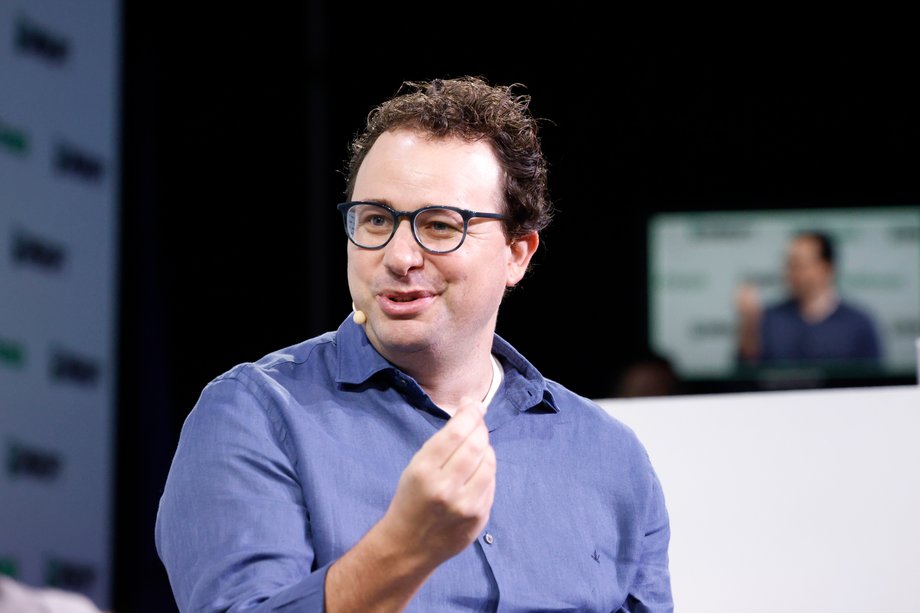
Dario Amodei – founder and CEO of Anthropic
|
Kimberly White/Getty Images
In practice, however, the decision obviously has a much deeper, strategic dimension. Anthropic didn't just buy another tool – it bought a key piece of infrastructure that its biggest competitors have been using for years.
- Read also: Anthropic wants to leapfrog OpenAI. The game has an astronomical valuation
The price of the transaction was not officially announced, but according to reliable industry sources “The Information”, Anthropic paid over USD 300 million. This is more than double the valuation of Stainless from December 2024. For a company that was recently treated as one of many players in the AI race, such an expense shows how seriously it takes to build long-term dominance not only in the quality of models, but also in the development infrastructure layer.
Pickaxes and shovels
This is not the first such acquisition. Anthropic has already completed four significant acquisitions in the last six months. In addition to Stainless, it bought Bun, a modern JavaScript runtime, Vercept, a tool that enables AI models to “use a computer” in a human-like manner, and Coefficient Bio, a biotechnology company.
These moves show a clear change in direction: Anthropic is no longer seen solely as a laboratory creating better and better language models. Instead, it's building something much bigger — a full-fledged AI platform that controls not only the models themselves, but also the tools the entire industry uses.
In the tech world, this is referred to as the “picks and shovels” strategy. During the gold rush in the 19th century, the people who earned the most were not those looking for gold, but those who sold the tools necessary to extract it. The exact same thing is happening in the artificial intelligence industry right now. Having the best model is one thing, but controlling the tools for its use and implementation, through which flows the code used by thousands of companies and developers around the world, provides a completely different, lasting competitive advantage.
It was similar during the great cryptocurrency rush. You could make money mining bitcoin not only by owning miners, but also by building, configuring and optimizing them. Selling equipment, renting halls and designing cooling systems was a very lucrative business back then.
Time for a change?
For most developers and companies that use Stainless libraries on a daily basis, nothing will change overnight. If your application already uses the generated SDK for OpenAI, Gemini or Claude, the code still works the same as yesterday. Libraries remain open, can be modified and further developed. Behind the scenes, however, things start to get a little more complicated.
- Read also: Another deal in the AI boom. CoreWeave gains after the deal with Anthropic
As of yesterday, Anthropic has stopped accepting new projects on the Stainless platform and generating SDKs for external clients. The hosted compiler that many companies used was disabled. Technical support for existing contracts ends in September 2026. This means that companies that build long-term products based on these libraries should conduct an internal audit as soon as possible: check which parts of their systems depend on Stainless, how integrated they are and how difficult it would be to replace them with another solution.
Anthropic Language Model, Claude
|
Patrickx007 / Shutterstock
For competitors — primarily OpenAI and Google — the situation is more tense. There is a real conflict of interest. Anthropic, as the new owner of the tool, now has visibility into its rivals' API specifications. The company declares that data is protected by encryption and a separation policy, but in the AI industry trust is a currency that is not threatened by inflation. License renewal contracts will now be negotiated in a completely different atmosphere – with greater caution and possibly higher price expectations or additional guarantees.
At an industry-wide level, the purchase of Stainless means moving the battlefield further down the technology stack. Just a year ago, what mattered most was who had the fastest and most intelligent language model. Today, it is becoming increasingly clear that control over the tools used by thousands of developers and companies is becoming equally important – and sometimes even more important. Whoever controls the paths through which code flows also controls the rate at which new applications enter the market and how quickly they can scale.
Other “bottlenecks” of development infrastructure, i.e. what else can be purchased to control the market?
Stainless is not the only piece of infrastructure that acts as an “invisible gateway” for the entire AI ecosystem. There are several other companies on the market that offer very similar solutions – tools that automatically generate SDK libraries, API documentation, and components needed to quickly integrate language models into applications. These companies are currently overshadowed by Stainless, but in light of the recent Anthropica acquisition, they could suddenly become very attractive targets for Google, OpenAI, or even other players looking to regain control of the development tools supply chain.
One of the strongest alternatives is Speakeasy, a company that, like Stainless, builds SDK generators but also specializes in Model Context Protocol (MCP)-compliant servers. This open standard allows AI agents to securely connect to external tools and data. Speakeasy already serves many clients from the AI and fintech sectors, offering ready-made migrations and high-quality code. If customers were to switch away from Stainless en masse, Speakeasy could rapidly increase its market share.
- Read also: Anthropic worth $1 trillion. on the secondary market. It outperformed OpenAI's valuation
Another major player is Fern, which goes a step further – it not only generates SDK libraries, but combines them into one coherent package with automatic API documentation and testing tools. Fern is often chosen by companies that need a complete “developer experience” in one place. Industry rumors suggest the company has previously been considered by larger entities, and Anthropica's latest move could accelerate talks about its acquisition or significant investment.

|
Elle Aon / Shutterstock
You cannot ignore APIMatic – a platform that has been providing full SDK solutions for years. The company has been operating on the market longer than Stainless and its portfolio includes clients from the financial and technology sectors for whom stability and compliance with regulations are key. APIMatic is a more “conservative” option, but that's why it can be an interesting target for those looking for a ready-made, proven solution on a large scale.
Smaller but fast-growing entities include Konfig and LibLab. Konfig specializes in automating not only SDKs, but also command line interfaces (CLI), which is especially useful in DevOps environments. LibLab, in turn, emphasizes the highest quality of the generated code and is eagerly chosen by AI start-ups and SaaS companies. Both of these companies are still relatively small, which makes them easier and cheaper acquisition targets compared to more mature players.
Apart from pure SDK generators, it is worth taking a broader look at other infrastructure bottlenecks. These include tools for monitoring and distillation for large language models, such as Helicone or LangSmith – platforms that monitor the traffic, costs and performance of AI queries in real time. Control over them would mean influencing not only how developers write code, but also how they later observe and optimize it. Tools for automatic parsing and structuring model responses play a similar role and are becoming increasingly important as AI agents develop.
- Read also: We will pay more for AI. The end of the market where you fight for the user
In practice, each of these companies is part of a “pick and shovel” family – tools essential to the daily work of thousands of developers, but not owned by any of the big AI players. Whoever buys them first or invests significantly will gain leverage over the competition similar to what Anthropic has just gained. The market is still relatively fragmented, so the coming months may bring a series of similar transactions.