Friedrich Merz in France and Poland, immediately after confirmation in office: What message do the first visits of the new German Chancellor send

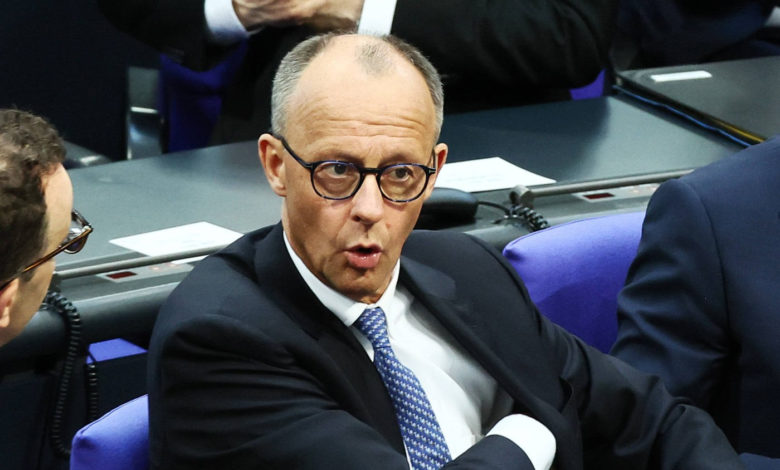
The visit of the German Chancellor to Warsaw shows the growing importance of this country in European politics, due to its key role in mobilizing support for Ukraine against the invasion of Russia, writes Reuters.
Friedrich Merz starts on Wednesday on his first journey abroad, in Paris and Warsaw, in an attempt to renew the relationships with the main allies of the country and to prove that Germany has returned to the world stage, despite an injured government, writes Reuters.
He was about to postpone his first tour abroad, an important symbolic one, after missing the first vote for confirmation as a chancellor in Budestag.
The success recorded in the second voting round brought things back to normal.
Among the allies of Germany are high hopes that Merz will restore the leading position of Germany in Europe, after years of internal struggles in the tripartite coalition of former Chancellor Olaf Scholz and its implosion in November.
The problems of Europe
Merz has taken over the position while Europe strives to reach an agreement on security guarantees for Ukraine as part of an armistice in the War with Russia and negotiate a commercial agreement with the United States, after President Donald Trump has announced radical customs duties.
“After years of internal quarrels and political divisions under the previous government, it is now necessary for a German leadership that not only pay attention to the European politics, but to contribute to its modeling,” said Jana Puglierin, the head of the Berlin office of the European Council on Foreign Relations, quoted by Reuters.
“Merz's chances of achieving this are good. He intends to centralize the foreign and European policy in the chancellery – making it the nervous center of the decision -making process,” added the analyst.
For the first time in recent years, the Chancellery and the Ministry of Foreign Affairs will be run by the same party. Merz also wants to set up a national security council within the Chancellery to better coordinate the entire foreign, development and defense policy.
The Conservatory, who was a deputy in the European Parliament in 1989-1994 and later took a break from politics to work in business, said he wants to repair relations with the main European allies.
Difficult relations with the United States have done this all the more imperative. Even in the evening of his choice, Merz emphasized the need for Europe to pursue greater independence in terms of defense from the United States.
He also expressed his uncertainty about the future of the NATO alliance. As such, he seems more receptive to French proposals on European strategic autonomy and common defense, analysts said.
Just before taking over the mandate, he obtained a historical fiscal package in Parliament, which would allow his government to dramatically increase the defense expenses.
Discussions with Macron and Donald Tusk
Merz's first stop will be in Paris, where he will meet with French President Emmanuel Macron, with whom he already has a good relationship, according to French officials.
“Merz has a deep knowledge of the Finance and Economy world, which approaches Macron,” said a French official.
Macron wrote on Tuesday on X that it is up to the two “to make sure that the Franco-German engine and the combined decision making is stronger than ever.”
Merz will then visit Poland, reflecting the growing importance of this country in European politics due to its key role in mobilizing support for Ukraine against the invasion of Russia, writes Reuters.
“I would hope for a common leadership in Europe,” said a Polish government source for Reuters. “Germany has been missing from these discussions in the past,” this source added.
The source said that a key question was the way in which Merz's government intends to increase the defense expenses, mentioning that it would be logical for European countries to purchase equipment together.
Merz said late Tuesday for the public television station ZdF that he will also discuss Macron and Polish Prime Minister Donald Tusk about the adoption of a tougher European policy.
The future coalition agreed to reject asylum applicants at Germany's terrestrial borders, but coordinated with European neighbors.