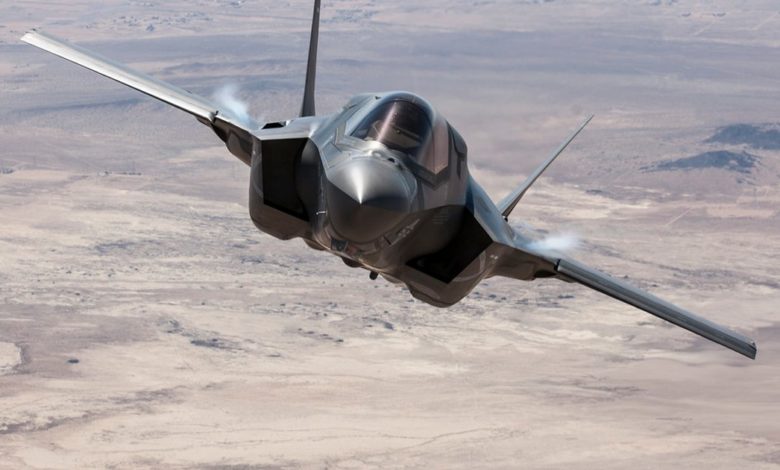
The uncertainties related to US F-35 fighting aircraft, amplified by Donald Trump's harsh criticisms, have caused European countries to accelerate the sixth generation aircraft projects. The purpose? Reducing addiction to unpredictable decisions of Washington.
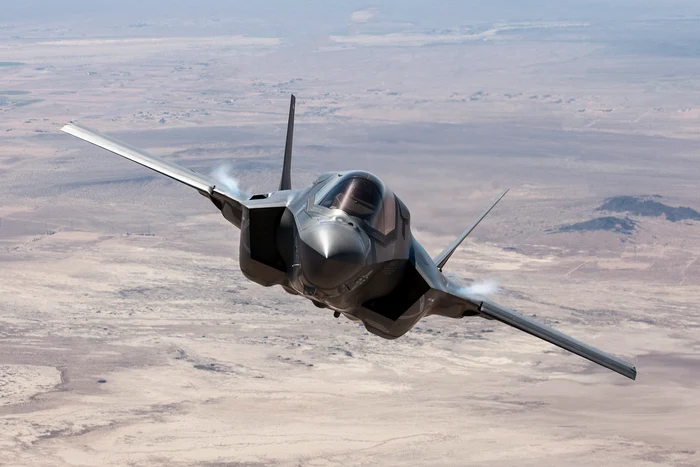
Flying F 35/ PHOTO: US Embassy in Romania
Many European NATO member states, as well as Canada, anxiously pursue the foreign policy of the Trump administration, which seems to get closer to Kremlin. At the same time, the US criticizes its allies for low military spending, which have made Europe dependent on American technology – including nuclear shield.
Although NATO countries have promised to increase defense budgets, there is no clear plan for replacing US systems, which are now focusing on Indo-Pacific.
F-35, under the question mark
Canada has put under review the purchase of 88 F-35 aircraft, and Portugal announced that it will take into account the “new geopolitical context” before deciding whether to order these planes, which cost about 100 million dollars.
At the beginning of the year, rumors circulated about a possible “Kill Switch” (stop switch) incorporated in F-35, which would allow the US to control the aircraft sold to other countries. Experts have minimized these fears, but I admit that Washington can affect the performance of aircraft by limiting software updates or access to mission data.
“If a country would use the F-35 in a way that does not suit the US, Lockheed Martin could immediately stop technical assistance.”says Andrew Curtis, former commander of British Air Force. Although there is no “Kill Switch” itself, the US can create major problems to users.
Europe is looking for independence
In this context, the European aircraft projects of the sixth generation gain increased importance.
There is now a stronger impulse for European countries to get involved in such programs, says a European official involved in defense planning.
Gabrielius Landsbergis, former Foreign Minister of Lithuania, confirms: “There will be an increased pressure for Pan -European projects. It is inevitable.”
Major initiatives include:
-GCAP (Global Combat Air Program) -a collaboration between the United Kingdom, Italy and Japan, which is to launch the temperate plane by 2035.
-FCAS (Future Combat Air System)-a Franco-Germano-Spaniol project, which could be delayed up to 10 years compared to GCAP.
US stay in the race but with conditions
The United States works on its own sixth generation aircraft, F-47, presented by Trump as “the most advanced and lethal weapon in history”.
“The plane will far exceed the capabilities of any other nation”, Trump insisted.
But there is a problem: the export versions will be “diminished” by 10% compared to the American ones.
“This is not a good promotion for F-47”says Yvan Blondin, former commander of Canadian Air Force. “If the risk exists at F-35, at F-47 it will be even higher.”
The future of European defense
In addition to airplanes, Europe wants to reduce US addiction in areas such as:
-The anti-aircraft (replacement of patriotic systems with European alternatives such as IRIS),
-Chapabilities of recognition and communications,
-ammunition stages.
“It is irresponsible not to analyze US military addiction, given the sudden changes in American politics,” says Justin Bronk, an expert in Russians.
But for now, most NATO capabilities are so related to the US that any American restriction could paralyze military operations.