Generation with technological trap. They have a problem with work and it will be even worse

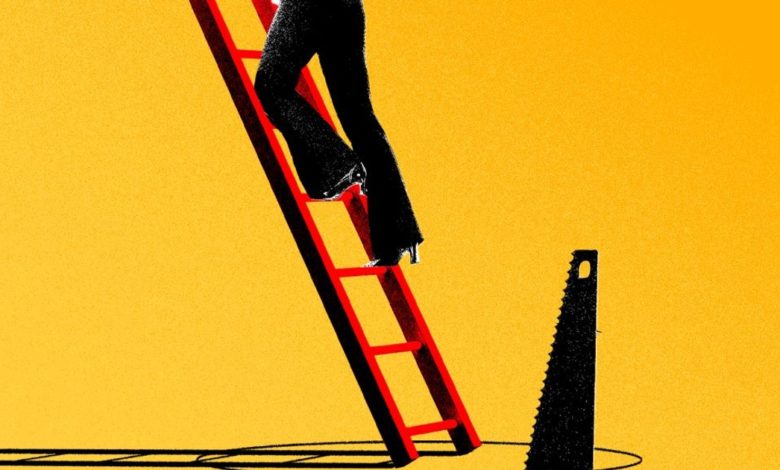
The first works for university graduates are becoming more and more difficult to get. The number of job offers for beginner software engineers has dropped. Generative artificial intelligence writes more and more code, and the largest technology companies boast that thanks to AI their employees are more efficient. The number of job offers at the initial level in management advice and finance began to fall last year, and several large companies even considering offering lower remuneration – justifying that AI would take over some duties.
Generative AI is not the only problem of the Z generation. This can mean less vacancies and job offers. Employers are more cautious when employing fresh graduates requiring training.
Read also at Business Insider
Problems with starting a professional career
All these violent changes have meant that many representatives of the generation of the from the experience of feeling great anxiety. In a new study among last year students conducted by the Handshake career portal 62 percent. Those who declared knowledge of AI tools expressed at least some concerns about the impact of these tools on their professional perspectives – compared to 44 percent. in 2023 Computer science students were most concerned about their general perspectives; 28 percent stated that they are “very pessimistic” focused on starting a career in the current economic situationcompared to 18 percent a year earlier. Until March, graduates submitted by 21 percent. More applied work on Handshake than a year ago – while the number of job offers on this platform dropped by 15 percent. In turn, according to Indeed data, the number of internship offers in all sectors, after the peak increase in 2022, fell below the level of 2019.
If AI replaces work at the initial level, new graduates will have to acquire the necessary skills in a different way – and many of these practical professional competences are not taught at the university. As Matt Beane says, professor of technology management at the University of California in Santa Barbara, The collapse of a traditional career path and growing automation can deepen unevenness in terms of skills, salaries and professional satisfaction. The first signs of problems are already appearing in some “white collar” industries. “It's too late to avoid this problem completely and perfectly,” says Beane. “Some damages have already been done,” he adds.
The generation of the university diploma has already heavily doubted – about half of the young people stated in the March study that higher education is a “loss of money”. In March, almost 6 percent graduates of universities aged 27 or younger were unemployed, compared to 2.6 percent. all employees with a university diploma – according to the Federal Reserve Bank in New York. In general 4 percent All employees were unemployed, and almost 7 percent. Young people without a diploma remained unemployed.
OPENAI data analysis carried out by the Brookings Institution has shown that some works at the initial level, such as preparing legal documents and a review of legal data, are very exposed to automation. About half of the tasks of marketing research analyst were also considered to be threatened with automation, compared to 9 percent. work of the marketing manager. Similar applications concerned sales representatives compared to sales managers. AI tools can affect different industries to varying degrees: Anthropic Claude.Ai analysis has shown that 37 percent Inquiries concerned computer and mathematical works, such as creating and maintaining websites or debugging computer systems, while other areas such as education, business and finance, exact sciences and administration were less common.
See also: I run a construction company in the USA. I am already losing my clients through Trump's duties
“Very unfortunate moment”
Company bosses can see the benefits of introducing AI and AI agents into the work environment, but this is not a wonderful solution that guarantees performance. Three out of four employees surveyed last year by the UPWORK Freelancing Platform said that AI tools made them less productive and they came to them.
-At first glance, there are savings and an increase in performance, but when you really look at it, it turns out that the control periods are lengthening or you need to correct more mistakes that are not captured in the initial phases-says Tim Herbert, research director at Comptia, non-profit organization representing the American IT sector.
– New graduates enter the environment in which they will have to wait for the effects of the AI revolution – says Frank Fusco, general director of Silicon Society, a company dealing with employees' education through the practices of the so -called Shading of work (in the USA, the science method is determined in such a way that a less experienced employee or student observes an experienced specialist). He believes that some roles will be destroyed or connected, but there will also be new ones – those that we cannot imagine or predict.
– Ultimately, companies will understand that they cannot completely replace people, but for the generation with “the moment is very unfortunate” – says. – If we look wider, we are only at the very beginning of this curve – he adds.
Although they love young people, it seems to me that they love robots even more – Maureen Wiley Clough, hostess of the podcast “it gets late early”
“We are in the period of freezing”
Meanwhile, companies are also more cautious when employing employees in the face of economic uncertainty and recession threats. “We are during the freezing period,” says Allison Shrivastava, an economist at Indeed. Both employees and bosses act cautiously, waiting for the effects of duties introduced by President Donald Trump. – We are all a bit like a roe deer in the spotlight, uncertain of what is happening – adds the expert. However, as he says, this state of affairs cannot last long – companies ultimately have to make decisions, whether through dismissals or as a result of the departure of employees.
The technology industry, in particular, has been struggling with uncertainty for two years – the number of job offers fell from approx. 625 thousand. in January 2023 to 467 thousand In March this year, according to the data analysis made by Comptia. At the beginning of 2023, work at the initial level accounted for 24 percent. these offers, now – 21 percent However, the demand for employees with seven -year and more experience by 3 percent increased. These changes are partly the result of mass employment during the pandemic and then mass layoffs in 2023. This is a difficult reality for those who are just starting their careers in the industry known for high salaries and fashionable privileges.
This is a painful change for the technology sector, which has long been accused of favoring young talents over experienced employees. “Although they love young people, it seems to me that they love robots even more,” says Maureen Wiley Clough, leading the podcast “It Gets Late Early” regarding ageism in the technology industry. In Intelligent.com from 2023, almost 40 percent bosses in various industries stated that in their opinion freshly baked graduates are not prepared for work. In a study from 2024 among 800 HR leaders sponsored by the Hult International Business School, 37 percent HR leaders stated that they would prefer a given task to be performed by a robot or AI than to hire a new graduate; Another 30 percent They would simply prefer to leave the position not supported.
Brought up in remote work
However, this is not the fault of the generation with that they do not fully understand the principles and norms prevailing in the workplace. Many young people have completed their studies or have started their career remotely in the last five years. This meant the loss of opportunities to find close mentors and cultural science and the norms of the office. “Zoomersi” (called so from the Zoom application) seem to want to work in a hybrid model more than older generations, looking for personal contact. “These elements just fell out of the equation,” says Wiley Clough. “Now it's a bit like this: either you will stay on the surface or drown.”
Some young employees learn to use AI themselves, finding help in searching for a job. Meel Harkness graduated from Loyoli University in Chicago in May last year in the direction of communication and began to apply for a job. She submitted applications for LinkedIn for positions that already had over 100 candidates, and raised the account to the premium version to be able to send messages to strangers.
During this application fever, Harkness won AI certificate in advertising and PR for several weeks. She was afraid of the rapid development of technology and wondered if her freshly acquired marketing skills would not be easily replaced by generative AI. Completing the course made her feel more confident. – The robot will not sell to man like another man does it – says. About four months later, she found a job as a marketing coordinator at Bartesian, a manufacturer of cocktail mixing machines, using a part of knowledge from the AI course to create examples of materials for the recruitment test.
Christine Cruzvergara, director of education at Handshake, is more optimistic about whether young employees will not be so easily pushed out of the labor market. He claims that despite changes in the labor market and AI development, initial positions are still available and necessary for companies. “You must be able to develop your own talent pool and advance people to medium and higher levels,” says Cruzvergara. If automation actually took over work at the initial level throughout the industry or among mental workers, “there would be a recalculation of what is considered work at the initial level.”
The best graduates should look for a job in companies that offer practical training – says Beane, author of the book “The Skill Code: How to save humanity in an age of intelligent machines”. Working in companies investing in young people will become a reason for pride. Companies will have to employ “promising but unqualified” candidates. Otherwise, the training obligation will fall on middle and higher -level employees – or young people will have to learn themselves. – Responsibility falls on both the employer and the employee – says Danielle Farage, work expert from generation Z. – It is impossible to keep up if you do not cause constant learning and developing skills by part of your roleAnd – he adds.
Students are already drawing conclusions. Julia Fedorin, a student of the University of Waterloo, decided to give up the traditional application process. She created a video and published them on X, asking Shopify to employ her for marketing practices – although such a position did not exist. Her video was watched by over a million people, and Shopify has already offered her an internship for autumn. – I think AI should be 100 percent. a tool that is used – says. AI, however, will not replace experience. “Now we value authenticity more than ever,” adds Fedorin.
The above text is a translation with American Business Insider edition