Exclusively “Russia does not stop. Let's not be blind.” The warning for Romanians of the Deputy Minister of Defense in an EU country, neighbor to Russia

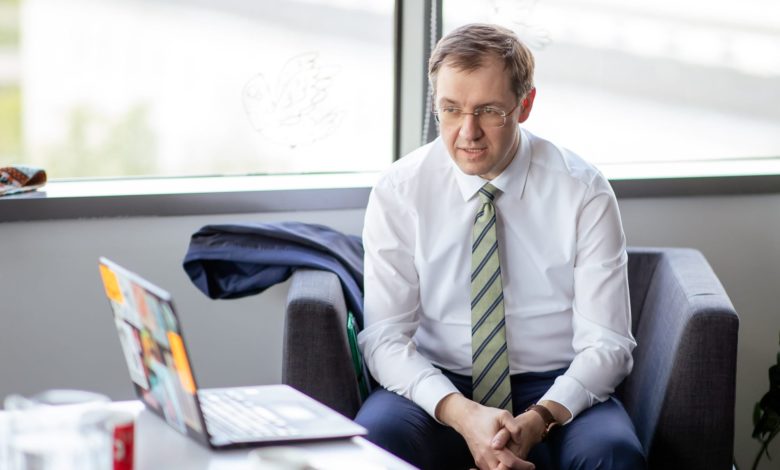
The Lithuanian Deputy Minister of Defense Karolis Aleksa was asked by Hotnews, on a travel to Vilnius, to explain the measures taken by his country to ensure correct elections and to combat Russian propaganda.
- The discussion took place in the capital of Lithuania, Vilnius, between Karolis Aleksa and journalists from several countries that are part of the Pulse cross -border project.
- The article was written by Sebastian Pricop (hotnews.ro), with the support of Delphi (Lithuania) and Voxerop (France).
“One of the most effective tools to weaken the will of society is during the election time.”
“We understand that Russia is trying to use all possible means to model the environment, to weaken the will of societies, political elites and to do everything needed to influence. Of course, one of the most effective tools is elections. It is much easier to influence a change of policy than to use the military force,” Asked by Hotnews about the measures taken by Lithuania to ensure the safety of the election.
And the approximately three million inhabitants of Lithuania know what Russian influence and threat means. The country, which was part of the Soviet Union, until 1990, has a direct border with Russia, through the Kaliningrad Enclus, and a border with Belarus, also called a Russian satellite.
Since the invasion of Ukraine, Lithuania has taken more and more measures to avoid a similar scenario. The latest: a week ago, the officials from Vilnius, the capital with 540,000 inhabitants, revealed an evacuation plan, which will be used in the event of an invasion of the city.
“Let's be very cautious about the activities of Russia and Belarus”
In the dialogue with Hotnews, who started from the events in Romania that led to the cancellation and resumption of presidential elections in December, the Deputy Minister stressed that he is not an expert on elections, but in the duties of his institution there is cyber security, and the Parliament from Vilnius offered tools in this law.
“We strive to make sure that our computer systems are protected. We must use all possible means and be very cautious about the activities of Russia and Belarus, which could have hostile intentions against us.
He believes that the Lithuanian society is resilient to such challenges, but says that the authorities should not be satisfied with this thought, but understand that the danger does not end.
“The security situation in the world and in the region depends on Ukraine (no. The war triggered by Russia in Ukraine). There are high questions about NATO defense, about article 5. From this point of view, this area is very fertile for propaganda. Or German, and the Russian language is declining.
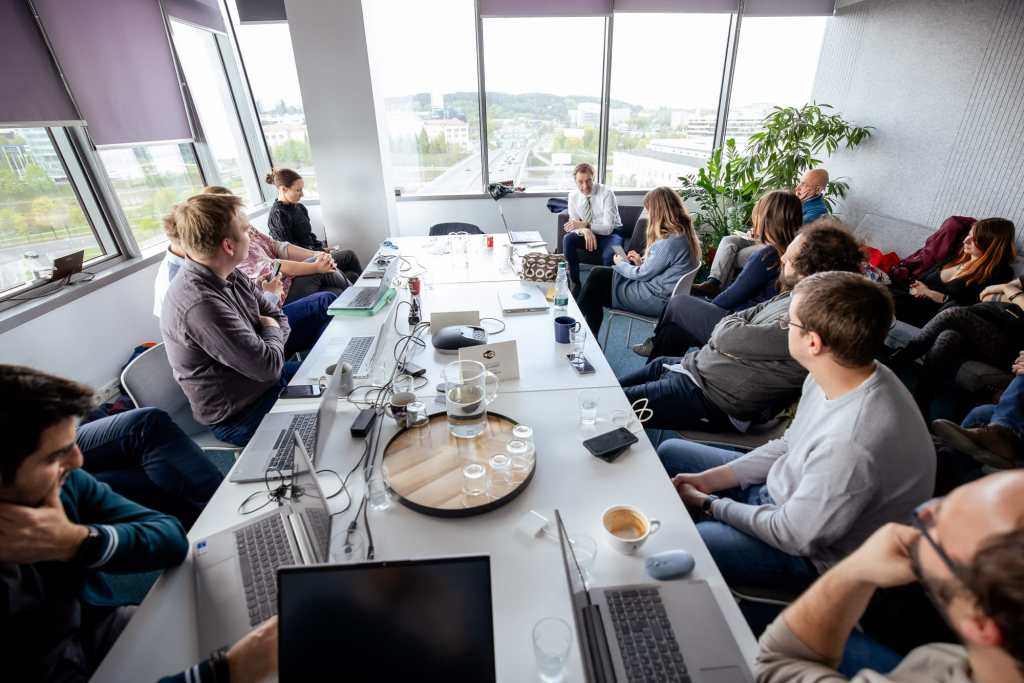
In Lithuania, there is a special department of the army that monitors Russian propaganda
Several institutions in Lithuania monitor propaganda and misinformation actions. One of these is the Department of Strategic Communication of the Lithuanian armed forces, which deals with the monitoring of Russian propaganda over a decade, according to the Lithuanian Delphi publication, a partner with Hotnews in the Pulse project.
Army specialists monitor and evaluate hostile information, first of all those in Russia and Belarus. Lithuanian armed forces actively cooperate with other institutions involved in monitoring misinformation.
According to the Department of State Security in Lithuania, the systematic monitoring of information incidents are also involved in the competent directions of the different institutions, their assessments being centralized by the National Crisis Management Center.
The Department of State Security is constantly receiving information from citizens who claim pro-Russia messages or denigration of Lithuania and other Western democrats, on platforms such as YouTube, Facebook and Tiktok.
The illegal activities in the digital public space are registered, taking measures by the Lithuanian police and parquet.
The institution responsible for the struggle against misinformation in audiovisual media is the Lithuanian radio and television (LRTC) Commission. It monitors Russian television programs NTV, Pervyi Kanal, Rossiya 1, Rossiya 24 or RTR Planet. LRTC receives, on average, up to 20 complaints per month related to the propagation of misinformation. After making checks and discovering cases of misinformation, LRTC has the right to apply fines. These can be given for misinformation and incitement to hatred.
The fine can reach “3% of the total annual income of the broadcaster, the retransmission provider, another person providing online distribution services of TV and/or individual programs or the audiovisual media service provider”, according to the legislation in force.
 Chamomile, political and Putin – how Romania struggles with Russian propaganda. Comparison with five other European countries
“We have to be blind to not see what follows”
Asked by the Voxerop reporter about a saturation in the Western society on war and about the possibility of looking at other ways to negotiate with Russia, the Lithuanian official warned that “the threat is real”.
“It is the responsibility of the political leaders to show this. The companies on the eastern flank see the threats very clearly. The threat is real. We understand this from our history and what is happening in Ukraine. How can we be sure that we will not happen to us?”, Replied the Lithuanian Deputy Minister of Defense.
He warned Western societies not to be “blind” and to see what the Kremlin wants.
“We have to be blind to not see what follows. Russia is preparing, it builds its military capabilities. We need to understand the ambitions, which Russia is trying to get: the Great Russia. It is a problem for us, for the Western world, if we do not want to see this. I lived three years in Brussels, I could not go back to the year, It stops.

The PULSE project is a European initiative to promote cross-border journalistic partnerships, co-financed by the European Commission (DG Connect) within Multimedia actions by Grant Agreement LC-0272862. HotNews.ro collaborates in the project with other prestigious publications in Europe: Delfi (Lithuania), Deník Referndum (Czech Republic), the largest Austrian newspaper Der Standard (Austria), some of the largest publications in Greece – Efsyn, El Confidential, Spain, the largest Polish newspaper Gazeta Wyborcza, the oldest analytical and information site. MediaPool, one of the largest HUVG HUVG and Italian newspaper with economic profile for 24 hours, one of the oldest and most powerful publications in the peninsula.
Three renowned transnational media organizations-OBCT (Italy), N-OST (Germany) and Voxerop (France) will coordinate the project activities.