The Romanian producers are worried about inflation and the general evolution of the economic and political environment, a report transmitted to investors by one of the largest banks

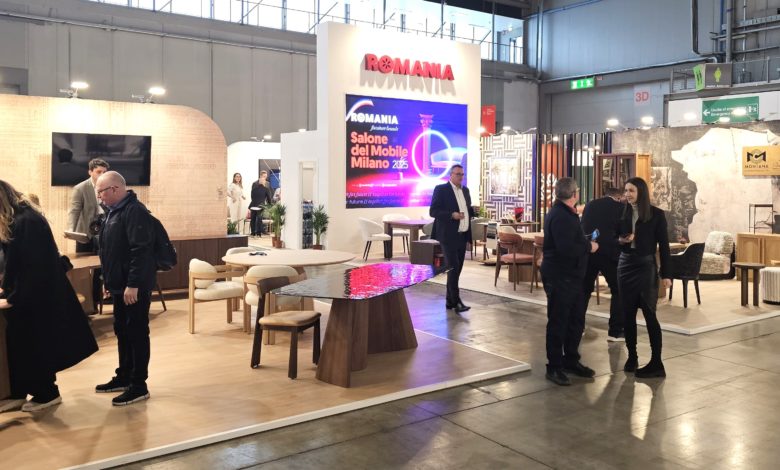
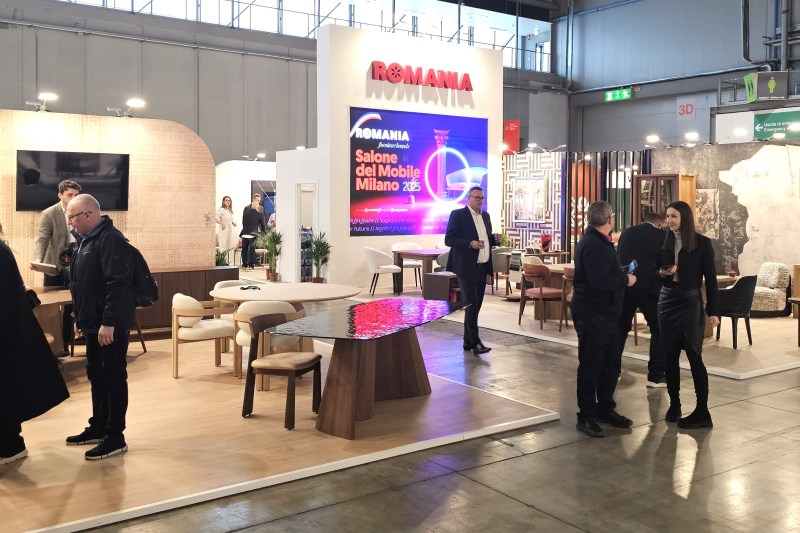
Romania's stand at a furniture fair. Photo: Association of Mobile Manufacturers in Romania
In April, a more moderate contraction rate of the PMI index for the processing industry was registered, a report of BCR, transmitted to investors on Friday. The PMI or Purchasing Managers' Index index is an indicator that reflects the economic evolution in production and services and at the same time the confidence of the managers working in the supply departments of the companies.
The main index increased to 48.3 from 46.9 in the previous month, against the background of a positive contribution of all 5 components.
The noisy beginning of the year, full of events, affected the production this year. The evolution of the external demand remains crucial for any significant rectification of the sector. The PMI index for the Germany processing industry, HCOB Flash, decreased slightly in April, to 48.0, indicating that all the uncertainty around the rates affects the largest trading partner in Romania.
Based on the PMI indicators, we expect the industry to not support the economic growth in the first quarter of 2025. The official data on industrial production at the National Institute of Statistics for the first two months of the first quarter has a similar situation. Our expectations are for industrial production to regain its growth rate in 2025, after two consecutive years of contraction.
External demand should play an important role. Significant investments in EU security, together with extensive fiscal incentives approved in Germany for infrastructure and defense expenses, will probably stimulate European industrial production. The uncertainty remains high, especially in the context of the announced American tariffs. Romania is rather indirectly exposed to American tariffs through supply chains in the German car industry.
The sub-indics of production remained below the neutral threshold of 50.0 for the eleventh consecutive month in April. The unfavorable economic conditions and the weak demand remain the main concerns for the Romanian producers.
New orders decreased again in April and extended the contraction series for the tenth month. The weak demand was partially related to higher prices and the low demand from international customers was the problem reported by the companies questioned as the reason for a new month of contraction of new export orders in April.
The confidence in the robustness of the business in the following months weakened in April, the producers in Romania being worried about inflation and the general evolution of the economic and political environment. Access to European funds and the hopes of an improvement in the conditions of demand are reasons that have maintained optimistic producers.
The component of employment continued to indicate a contraction in April, mainly as a result of departures and layoffs, according to the answers provided. The need for jobs is currently low, and this has coincided with an easier reduction in finished products.
The prices of raw materials continued to increase in April, although the inflation rate has decreased for the second consecutive month. Increases in supplier prices have been mentioned, as well as higher costs of raw materials and energy. In some cases, participants in Panel associated inflation with tariff uncertainty.