According to Stanislav Ignatiev, the chairman of the Council of the Ukrainian Association of renewable energy, the war actually forced Ukraine to decarce: “Up to 94% of coal generation was destroyed or substantially damaged. Coal was almost stopped. There is damage to gas infrastructure objects, although the restoration is quickly increased. The role of renewed energy – both in distributed generation and in new ones projects “.
In 2025, more than half of the energy balance of Ukraine falls on atomic generation. Due to the losses of coal mines and TPPs, the fraction of the heat power was significantly reduced. Approximately 5% provides solar energy (mainly thanks to private SES), and Vetrovka has already reached almost 2% and shows the fastest growth rates among all sources.
Despite a small share in the general balance, it is the wind energy that is of strategic importance. Unlike centralized stations, wind farms are less vulnerable to shelling due to their dispersal and complexity of destruction in one blow. Therefore, even during the war in Ukraine, new projects began to be implemented.
The case of DTEK is indicative, which built a wind farm in the Nikolaev region – the world's first project of such a scale in the context of active hostilities, the expert says.
According to the national plan of the energy transition, by 2030 the share of renewable energy sources should grow to 25%. And wind generation is one of the main drivers of this process.
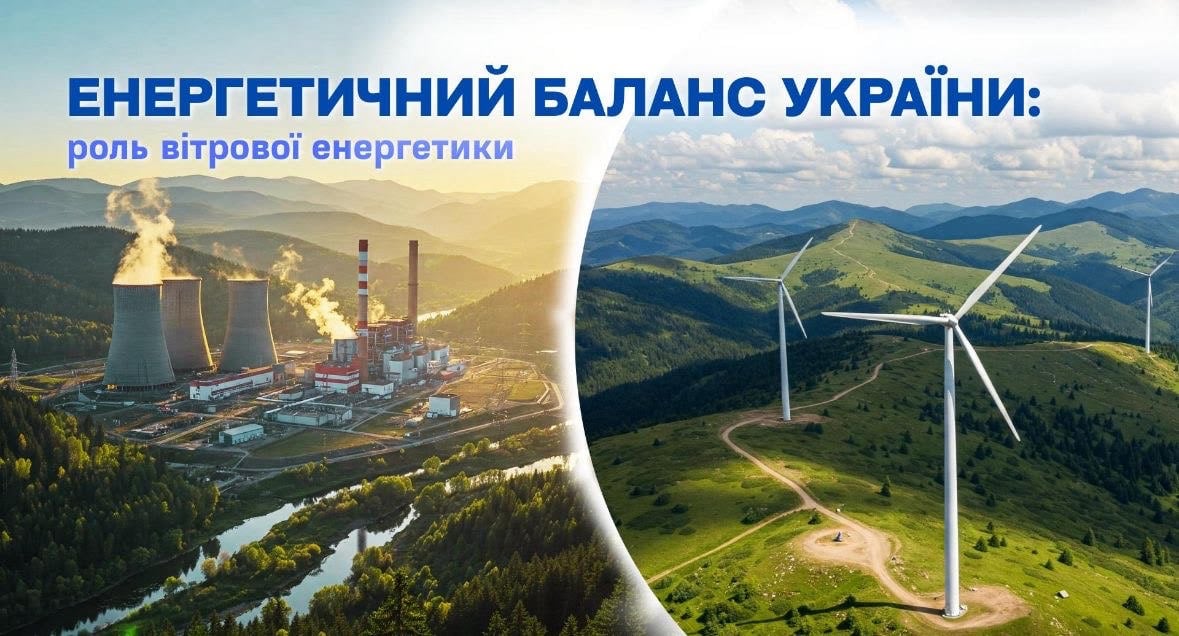
“Carpathians, Odessa region, the north of Ukraine – these are all regions with great wind potential. And they are already becoming points of energy growth,” says Stanislav Ignatiev.
In particular, Transcarpathia is turned into the main location for new investments. The company “Criminal Code of Vitryani Parks of Ukraine” implements here an ambitious design of the construction of a wind park with a capacity of up to 1.5 GW – one of the largest in the country.
According to the general director of the company Vladislav Eremenko in an interview with Interfax-Ukraine, the implementation will last at least 4.5–5 years, and the success of this plan largely depends on the development of domestic production. That is why the company “Frendle Vind Technolodzhi”, evacuated from Kramatorsk to Perechin, plans to triple production capacities by 2026 and produce up to 100 turbines annually.
In the near future, in the Transcarpathian region, the construction of the first WES with a capacity of 80 MW will be completed – this will be the beginning of a large -scale energy transformation of the region and an important step towards energy decentralization.
So, even in conditions of full -scale war, Ukraine not only restores the destroyed infrastructure, but also forms a new one – modern, stable and less vulnerable to threats. And the wind energy has every chance of becoming the main element of the country's future energy system.