What continues to ask Putin for an agreement to put an end to the Ukraine war, despite US pressures

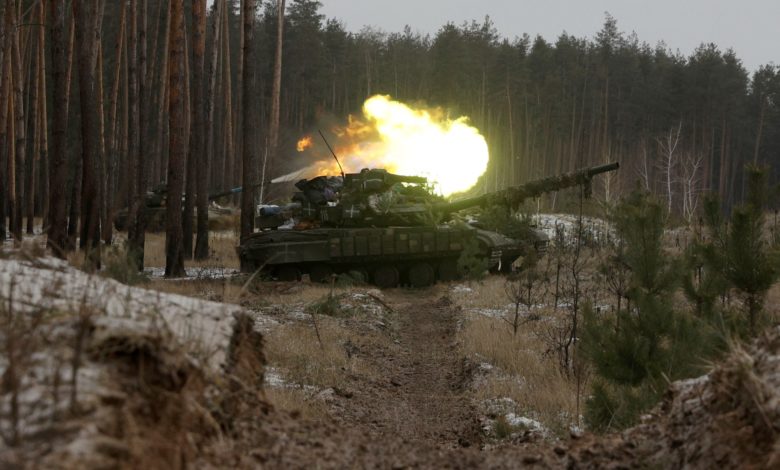
President Vladimir Putin insists that Russia must take control of the four regions of Ukraine, which he annexed in 2022, but which he does not fully occupy (Donansk, Luhansk, Zaporojie and Herson), even as part of any cessation agreement of the war, says three persons from Moscow, wrote in Moscow.
The requests of the Kremlin leader are a blow to the efforts of US President Donald Trump to reach an armistice and the definitive termination of the war, against the background of growing at the White House regarding the lack of progress in negotiations.
Trump's special emissary Steve Witkoff has tried to convince Putin that Russia should accept an armistice in which to stop fighting along the current front lines, in long discussions that took place in Kremlin on Friday, according to two people who spoke under the protection of anonymity. Instead, the Russian leader has maintained his maximalist position on Ukrainian territories, they said.
The negotiations have arrived in a deadlock for the moment and a direct contact between Putin and Trump is needed to make additional progress, one of the sources quoted said.
Kremlin spokesman Dmitri Peskov did not respond to a request to provide a point of view.
“We do not comment on the deliberations in progress,” said the US National Security Council, James Hewitt. “We continue to make progress with both Ukraine and Russia to reach a peaceful settlement of this conflict,” he added.
Putin said that the four regions of the East and Southern Ukraine-Donetk, Luhansk, Zaporojie and Herson-will do “forever” part of Russia, after organizing referendums in the areas occupied by his troops a few months after the large-scale invasion of 2022.
The Secretary General of the United Nations, Antonio Getterres, has qualified referendums as “a violation of the UN and international law”, and other states refused to recognize their results.
Trump and other high -ranking personalities in the Washington administration have pointed out that they could give up negotiations if an agreement is not coming soon. The US did not make public details about the result of Witkoff's last meeting with Putin, the fourth from the beginning of February.
Immediately after these discussions, Trump has shown optimistic that an agreement on the termination of the war is “very close.” Later, he became more prudent, saying that Putin “may not want to stop the war” and that the US may have to respond with new sanctions against Russia.
“This week will be a very important one, in which we have to decide if it is an effort in which we want to continue to get involved or if it is time to focus on other issues,” said US Secretary Marco Rubio on Sunday, in a NBC post.
The “shades” of Putin's position, explicitly invoked by Kremlin
The US said that I am ready to recognize Russia's control over the Crimean Peninsula, from the Black Sea, annexed by Putin in 2014, within the proposed peace agreement. The agreement would also freeze the conflict mostly along the existing lines, offering Moscow the actual control over the parts of the other four regions of Ukraine occupied by the Russian forces.
There are still no concrete signs that Putin has agreed to give up his maximalist requests regarding the Ukrainian regions and to accept the US proposals to end the war, according to European officials who are aware of these discussions. Officials have warned that negotiations are ongoing and that assessments can change.
European officials believe that in the next two weeks it will become more clear if the US will be able to reach an agreement between Russia and Ukraine or will opt to abandon negotiations or intensify the pressure on Moscow.
French President Emmanuel Macron said he urges Trump to adopt a tougher position. In an interview with Paris Match magazine Monday, Macron said he was convinced that he “convinced Americans of the possibility of escalating threats and, possibly, sanctions.”
Western officials warned in March that Putin will not compromise on his goals. The Trump administration believes that economic incentives, including energy cooperation and other sectors, are key elements to convince Putin to accept a peace agreement, Bloomberg said.
On Monday, Putin announced a three-day armistice, starting May 8, to mark 80 years since the victory in World War II over Nazi Germany. Ukrainian President Volodimir Zelenski instead asked for an immediate and unconditional armistice for at least 30 days, saying that there is no reason to expect until May 8 and accusing Moscow of “manipulation”.
The US, who wanted to conclude a permanent armistice until April 30, when Trump is 100 days from the beginning of his new mandate, expressed their disappointment with Putin's announcement on the armistice. Trump is “more and more frustrated” by Russian and Ukraine leaders, Karoline Leavitt, spokesman for the White House, said on Monday.
Moscow will not accept a long -term armistice in Ukraine until the “shades” of Putin's position will be taken into account, Kremlin spokesman Dmitri Peskov said on Tuesday in response to Zelenski's proposal for a 30 -day armistice, according to Interfax news agency.
The Trump administration also wants Moscow to return to Ukraine the nuclear power station in Zaporojie, the largest in Europe, which he occupied at the beginning of the war. The nuclear facility would then come under US control to administer energy to both sides, according to US -proposed agreement.
The Russian Foreign Minister Sergei Lavrov excluded this possibility in an interview with the American CBS television station on Sunday, saying that “I do not think there is any change.”
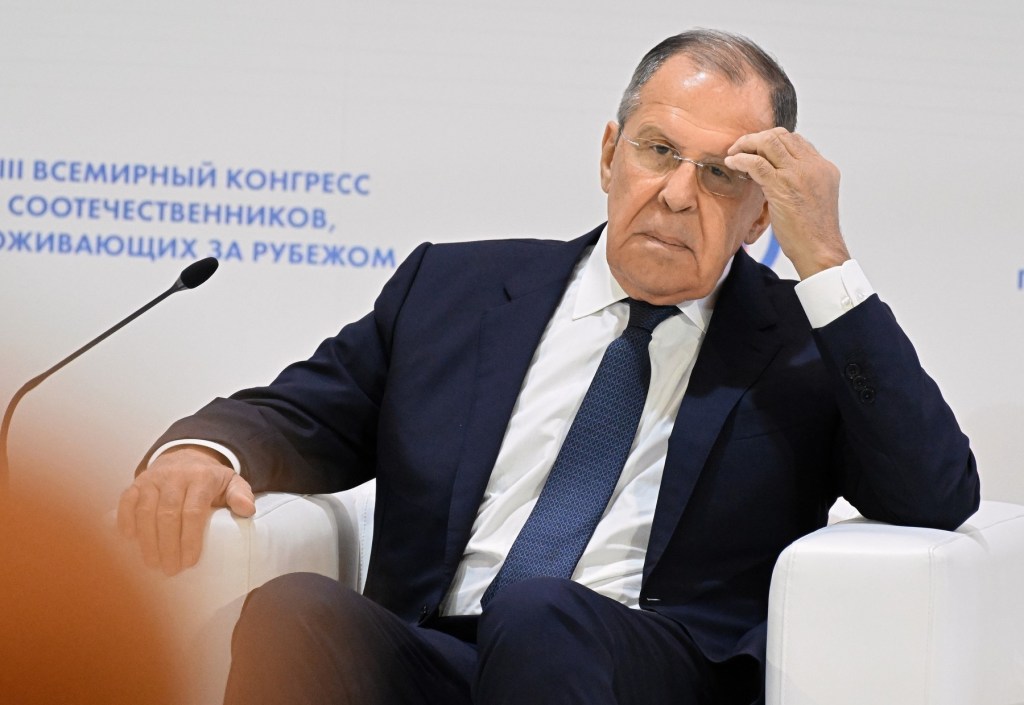 Sergei Lavrov evokes, in a surprising announcement, the “beginning of direct negotiations” with Kiev. “Without prior conditions”
As part of the US proposals shared with European allies earlier this month, Ukraine's aspirations to join NATO would be eliminated, sanctions against Russia would eventually be high, and Kiev would receive solid security guarantees to ensure any agreement. US requirements to allow the conclusion of an agreement also includes Russia's acceptance of Ukraine's right to develop its own army and defense industry, Bloomberg has previously wrote.
Follow the latest evolutions of the War in Ukraine LiveText on HotNews.ro