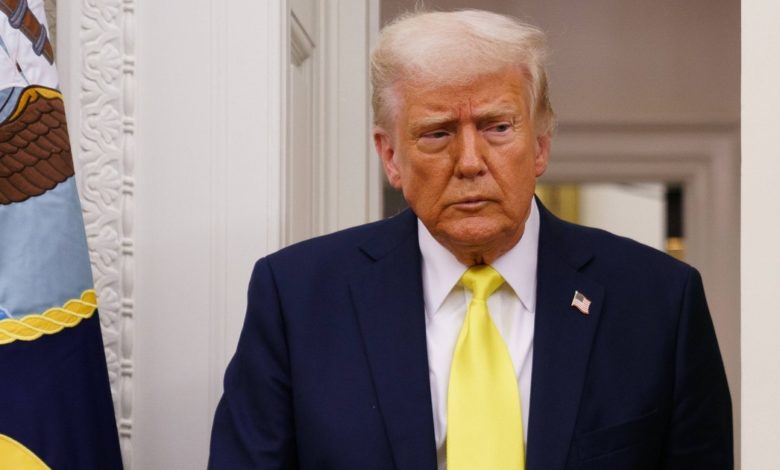
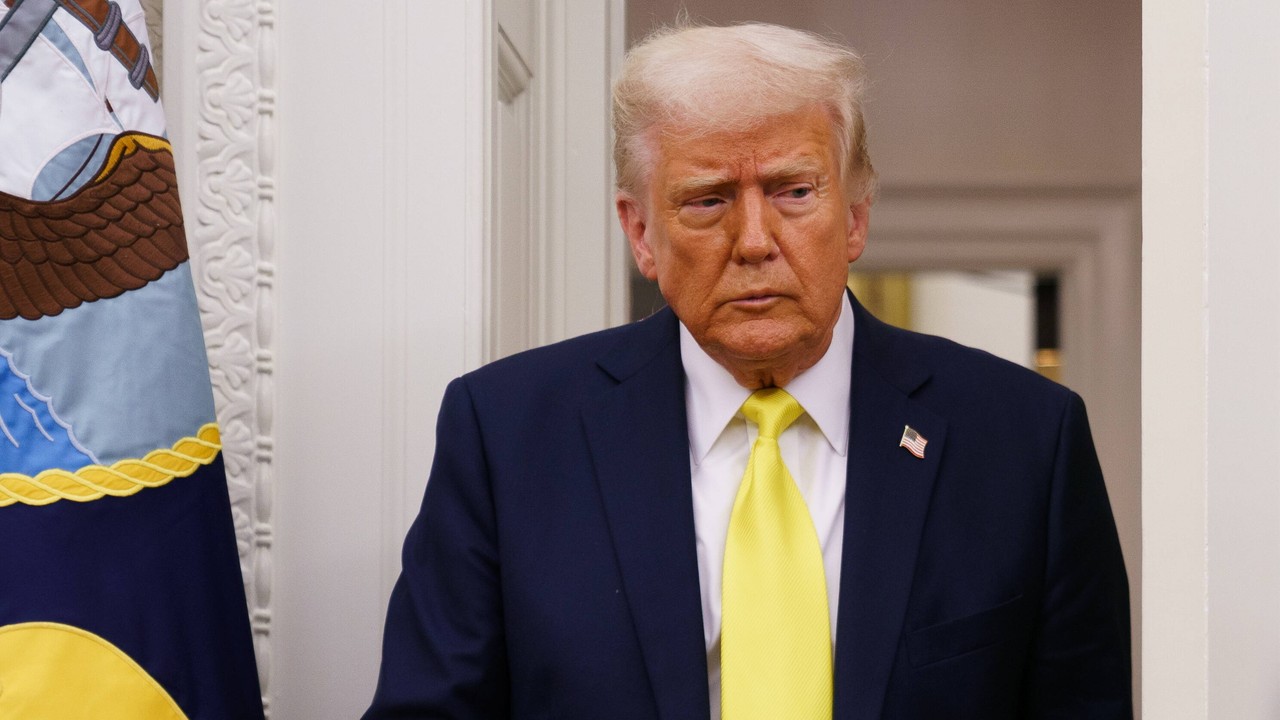
Stock Exchange results have always been a measure of the success of Donald Trump. If you accept this criterion today, it should be stated that he has been the worst president in 52 years, since Richard Nixon.
The first 100 days of Trump's second term is for the American stock exchange The worst start of the president since the 1970s. Since the sworn in on January 20, the American S&P 500 index has lost as much as 7.8 percent. its value – this is the second worst result in the first 100 days of the president since Nixon. At the beginning of his second term, the S&P 500 index fell by almost 10 percent.
Nixon tried to fight galloping inflation with a number of economic funds, which eventually led the American economy to recession. A year later, in 1974, he had to give way, which was the result of the Watergate scandal.
The effects of Nixon's actions were not limited to the United States. During the first 100 days of his presidency, German actions also lost their value – approx. 5 percent. In this respect, however, you can see a clear difference – the DAX index [niemiecki indeks giełdowy obejmujące największe spółki na frankfurckiej giełdzie] It is currently over 7 percent. higher than January 20. This difference shows that Trump has its unpredictable policy much more burden its own stock exchange than international markets.
“American uniqueness”
The comparison with Germany is particularly striking. The growing US isolationism prompted the future government of this country to increase public expenditure – especially for defense and infrastructure investments. These funds are to revive the local economy and are currently supporting stock markets.
Uncertainty can also be observed by looking at the position of the dollar. Since Trump took office, the American currency has lost about 9 percent. values compared to the most important currencies, and in relation to the euro almost 11 percent.
– The weaker streak of the American economy is largely due to the re -valuation of American assets due to the increase in political uncertainty and stagicing shock caused by the festivals – says Samer Goel from Deutsche Bank.
Continued article under video material
After choosing Trump as president in November last year, investors assumed that American shares would continue to be an important reference point in the Republican's policy. Many talked about “American uniqueness”. As a result, between the election day and the inauguration day, the S&P 500 index increased by almost 4 percent. However, these hopes quickly dispelled when the US president began much more aggressive trade warthan expected most market participants.
According to CFRA Research calculations, in the first 100 days of each presidency, the S&P 500 index grows by an average of 2 percent. – This is how the data from 1944–2020 show. So Trump fell at about 10 percentage points Worse than the average IO 13 percentage points Weaker than in the first 100 days of your first term. It is worth noting that the effects of Trump's policy are not yet visible in hard data. Investors are simply no longer ready to pay as much as before for American assets.
Lesson for investors
However, that's not all – Review of 100 days of Trump's rule also reveals other disappointments. Many investors expected him to restore Bitcoin and other cryptocurrencies to their former splendor.
However, since his swearing in to the president, the largest digital currency has lost almost 10 percent. your value. In terms of euro, this decrease is even more pronounced and amounts to about 18 percent. A similar loss was suffered by all investors who invested their assets in MSCI World: This index is currently recorded by 13 percent. Below your value from 20 January.
The conclusion is that the formation of courses depends not only on hard facts, such as enterprise profits, but also – and to a large extent – on the assessment of investors. When a given asset class loses its value, investors sell their assets – even if hard financial data has not changed much.
I’m Ashley Davis as an editor, I’m committed to upholding the highest standards of integrity and accuracy in every piece we publish. My work is driven by curiosity, a passion for truth, and a belief that journalism plays a crucial role in shaping public discourse. I strive to tell stories that not only inform but also inspire action and conversation.