“Robotica is a sport of mind, team.” RO2D2 story: from a high school in Ploiești to the world podium

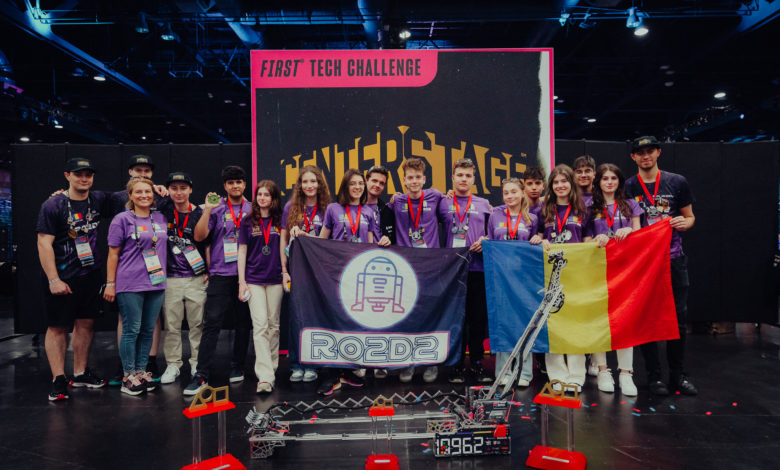
RO2D2 was born in 2018, in a corner of the “Mihai Viteazul” National College in Ploiești, at the initiative of high school students who decided that they can learn more than what he wrote in textbooks. Without specialized mentors, without access to technical know-how, but with an avid learning thirst, the team gradually increased-first with modest presence at regional competitions, then national and finally, on the global stage.
David Luca Moșu, a member and leader of the RO2D2 team, together with Stefan Istrate, one of the team leaders, talked in an interview about their project, about the value of perseverance and community, but also how the Romanian educational system could evolve and what it means to be digitally prepared.
“Everything we do is individual thing. We have mentors, as is our history teacher, but not on the technical side. In the design and programming area, we have done alone. We learned mostly, and then we share the colleagues,” says Stefania.
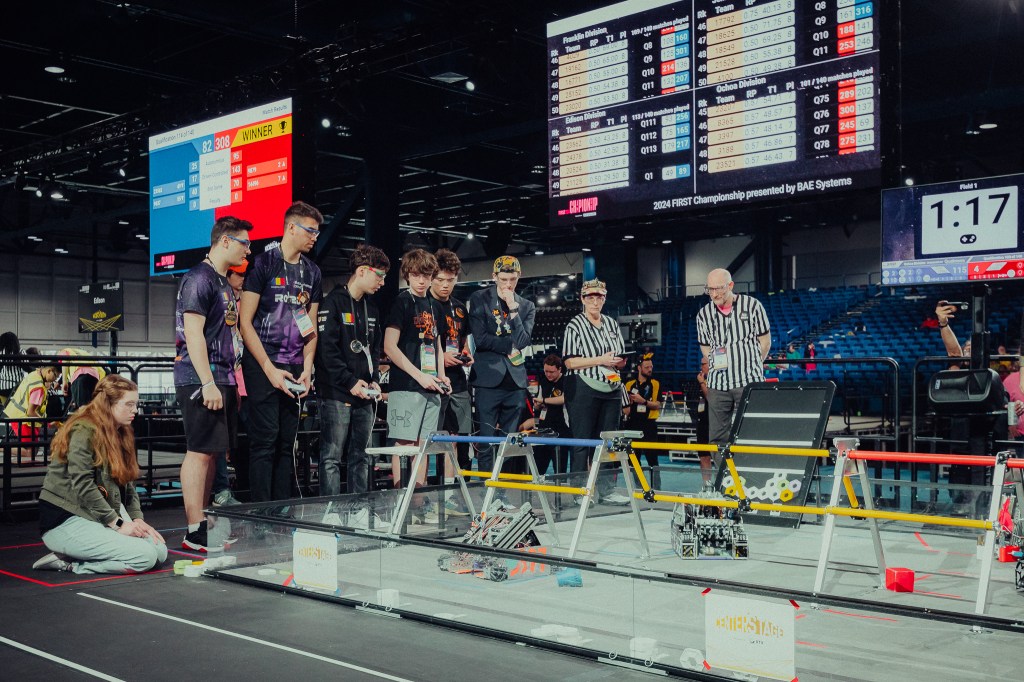
For RO2D2, the robotica was never about prizes. “Our pride at the beginning of each project was to see what we can improve compared to the previous year, how far we can reach personally, but also how our projects help. Everything has a meaning in our plan.” Complete Luca.
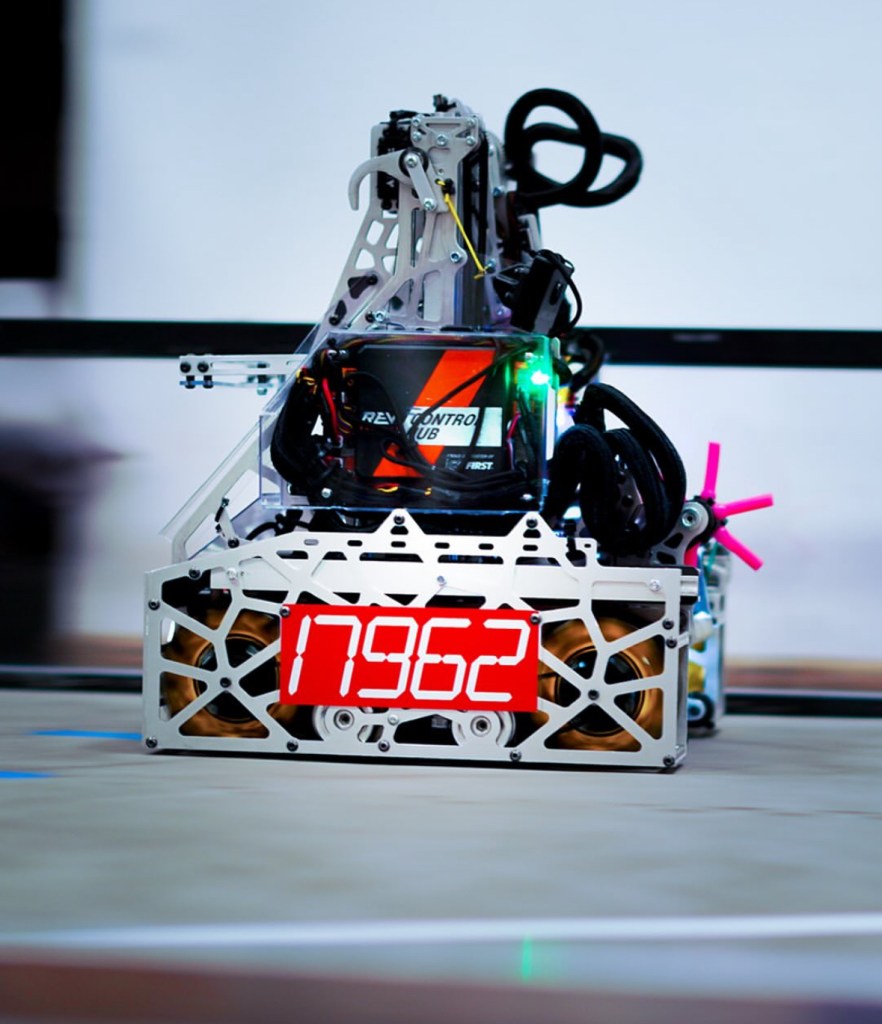
This way of thinking has brought them real performance and differentiated them from the other competitors: in 2024, Of 8000 participating international teams, RO2D2 became vice world champions at First Tech Challengethe largest competition in the United States of America and In 2025 it occupies the 3rd place. But their successes are not only measured in trophies-but in the way they have transformed their experience into a sustainable model of applied education. Last year they had four robots built from 0 entirely, until they reached the final version with which they competed at the World Championship. “That robot has represented over 1000 hours of work from each team member, but you must really like what you do, not be afraid to risk and be prepared to give up much of your time, to build a better version of you.”
From competition to community
RO2D2 is not limited to the technical side – it has become an inspiration for the new generations, transforming the play and practical work into learning tools. Beyond the intense training for competitions, the team leads the magic of robotics in schools throughout the county, from city to villages without access to technology, and even in social centers. There, he plants the seeds of passion for technology, forming the small innovators tomorrow.
“We have become mentors for younger children. First they participate in our courses, then enter the Lego team, and then make the transition to the big team. In this way we build, through sustainable actions, the future of tomorrow. Last year they left 10 members, and what surprised us is that the new ones took over the lessons and we had bigger.”
This form of involvement was also possible due to the support of partners who understood that real education means more than theory. Metaminds, a Romanian company specialized in technology services for digital services, has become an active partner in support of RO2D2. “With the help Metaminds We will organize an intensive robotic-lego-free robotics course to open new horizons to children who want to enter the world of technology and digitization. ”
“We have a new approach: SponsoShip-Partnership. We want more than financial support. We want real collaboration, projects together. With the help of partners and with the support of parents, we managed to rent a separate space for workshops, equipped with laptops, 3D printers, CNC, LEGO parts and tools for the work. The most important thing is that any child can be part of this initiative, you just have to have curiosity, the desire to learn and develop, along with the team. ”
Projects for the real world
Each year comes with a local impact project. Not for the image, but in response to real needs. Among the most relevant initiatives, are:
- an automated irrigation system for the Botanical Garden in Ploiești that you can control from a distance;
- a mobile application that mapped the historical monuments in the city belonging to the architect Tomas Socolescu in Ploiești, in order to develop tourism;
- An intelligent fish feeding system, mounted in the aquariums of museums in Ploiești and Tulcea, which works on an Arduino plate. This system is scheduled to disperse a certain amount of food for fish, at a certain interval and in addition it can check the purity of water.
“Someone asked us 3 years ago: what concrete benefit do you bring to the community? Since then, every year we do a new project, which solves a problem of the community.”
What is missing from digital education in Romania?
For RO2D2, the problem of the Romanian educational system is not the lack of technology, but the lack of applicability.
“We do physics, mathematics, computer science – but we have no lessons applied. The robotics could change this. We have colleagues who have learned mechanics, programming, teamwork, just being part of this initiative.”
In their vision, subjects such as entrepreneurship, social responsibility or cyber security could become useful subjects to be taught in schools. These could bring more clarity and could be folded on the needs of future society.
The opening exists, they say, but it takes perseverance and vision: “We hope that in 10 years the robotics will become subject in schools. It will not be a change overnight, but the beginning is already here.”
The education of the future is about collaboration and curiosity
The biggest inspiration comes when the children see the robot, practically a piece of metal, which makes certain movements, and then they realize that they can also build things with their own hand. “
The future of learning, in the RO2D2 vision, means a natural integration of technology in the educational process. From virtual tours with VR glasses, simulators, to applications that complement theoretical teaching, including not be afraid of new tools such as AI.
“You will not replace us. It will help us to focus on what matters. It will solve repetitive tasks and let us be creative. It is not a threat, it is a tool that will make your work easier, if you know how to use it and integrate it into your activities.”
What follows?
The team will go this summer to new international competitions, including in the US. Not for prizes. For trust, experience and confirmation that applied education has a future.
“At competitions we do not earn money. We leave with a trophy and the ambition to build further. We know that an international experience can change the future of a child, so we always take with new beginner members. We want our Fablab to become open to everyone and that the team will continue even after we are not a team.” It is a living demonstration that young people in Romania can change whole communities, when they have space, trust and partners who believe in them.
Article supported by Metaminds