The accumulation lake mouth of the water from Retezat, full of “scars”. Deep traces left by landslides

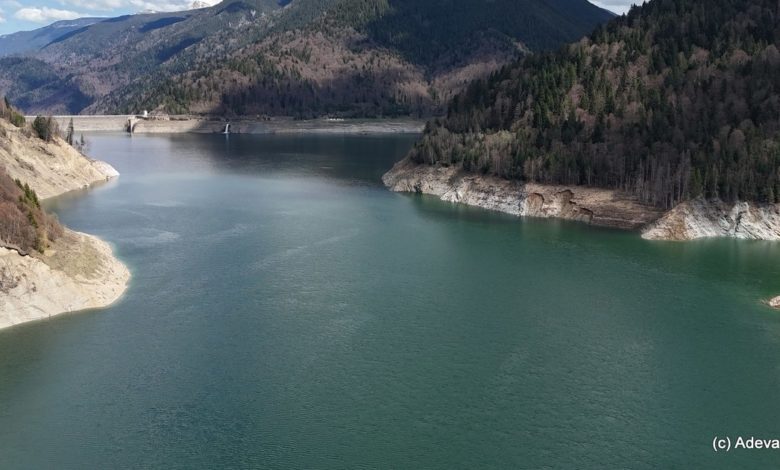
In the five decades from the beginning of the arrangement of Lake Gura Waters in Retezat, the passage of time and the rough climate from over 1,000 meters altitude left their mark on its banks.
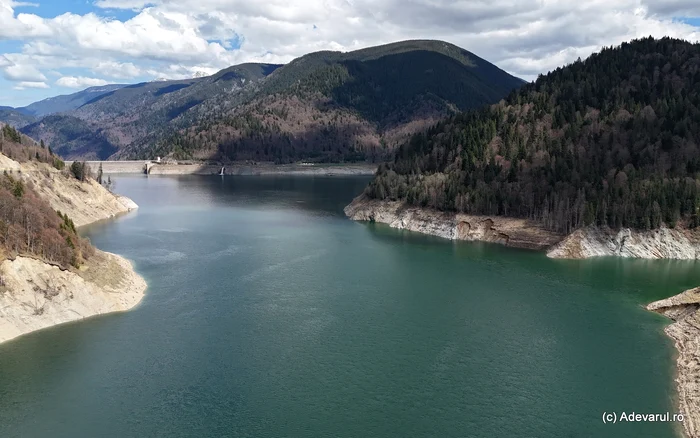
Lake Gura Water of Retezat. Photo: Daniel Guță. TRUTH
The arrangement of the accumulation lake mouth of the water from Retezat and its huge dam began in 1975, and time left “scars” on its shore.
From place to place, landslides affected both banks of the lake in Retezat (video) and have visibly modified their appearance. One of the largest outstanding areas affected by the fries has been reported since 2019.
“On the contour road on the left bank of the Gura Apeilor accumulation lake, at km 1 + 700, a landslide was found that rapidly in the first two days. The upper part (the forehead) is located at approximately 1,170 – 1,175 mdm. The slip is delimited by cracks (edges) in the area and about 150 meters. of the base of the slip. showed a report of Hidroelectrica.
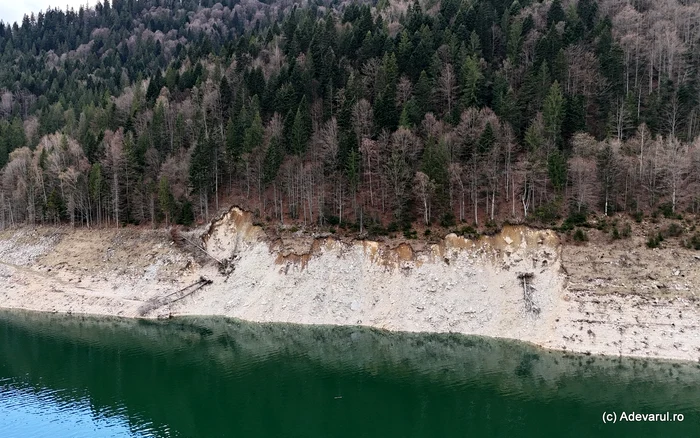
Landslide. Photo: Daniel Guță. TRUTH
The traces left by landslides are visible in other areas, on the banks, especially during the winter – spring periods, when the water level is low. However, they did not affect the functioning of the hydropower and were not registered in the area of the Gura Water dam.
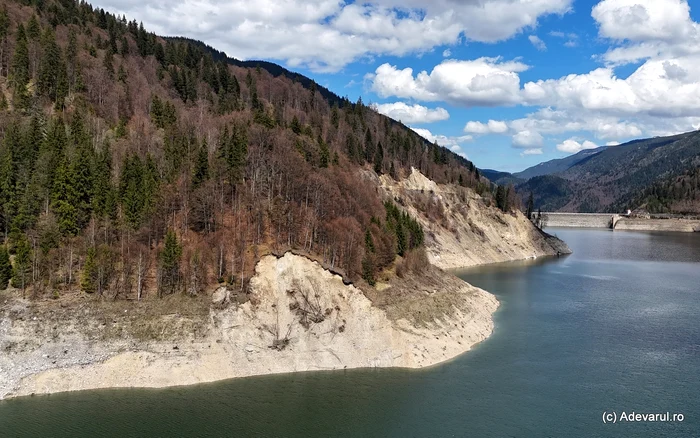
Landslide. Photo: Daniel Guță. TRUTH
“Batimetric lifts (no underwater) have shown that the degree of accumulation is very low, not not being 3-4 percent. The downstream riverbed did not present a large morphological phenomena (erosions, riverbeds through slopes, clogging),” It shows a recent report by Hidroelectrica, on the state of the accumulation lake.
The installations of the Dam and Hydroecentral Retezat, modernized
The Gura Water Dam, built between 1976 and 1998, was not affected by landslides. The specialists who tested it with the filling of the accumulation lake since 2019, when it reached the share of 1069.12 meters above the sea (MDM) concluded that they fall into normal values regarding the safety parameters.
The dam was included in intervention works for its safe operation. They aim to repairs and modernizations of the hydromechanical equipment and of some installations degraded by the passage of time.
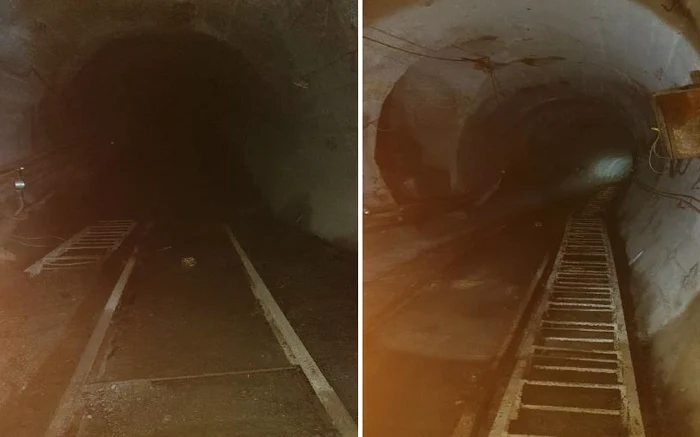
Interior the mouth of the water. Source: Hydroelectric technical documentation.
The Retezat hydroelectric power station, part of the river Mare – Retezat, will also be a refurbished, four decades after its inauguration. The contract regarding the re -technology of the boiler is in public auction, and the investment amounts to 136.5 million euros.
“The Retehnologization of the River Retezat is to obtain the following benefits: eliminating the operating restrictions of the generator (100/110 MW) and increasing its power from 167.5 MW (currently) to a minimum of 181 MW (following the retehnologization); the optimization of the costs per MWH produced in the central; investment above the initial level; shows Hidroelectrica, the contracting authority, in the announcement published in the Electronic Public Procurement System (SEAP).
Five decades since the start of works in Retezat
The works on the Hydro -energy arrangement Râul Mare – Retezat started on January 10, 1975 and lasted over a decade. It includes the accumulation lake of the water of the waters, the hydroelectric plants Retezat and Clopotiva (with a total installed power of 349 MW), the annoying dam built at over 1,000 meters altitude in the Retezat Mountains and tens of kilometers of underground galleries.
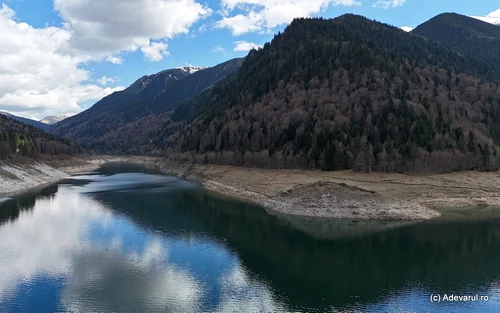
Image 1/18:
Lake Gura Waters Retezat Photo Daniel Guță (59) JPG
The Gura Water Dam was located near the confluence of the Lăpușnicul Mare rivers, the Ses river and Lăpușnicul Mic, in a popular tourist area that represented the access gate to the routes from Retezat and Godeanu.
“The works in this area start with the digging of the Water Deviation Gallery to execute the dam on the ground, whose maximum quota will reach 173 meters, being the highest dam in the country and will create an accumulation lake with a volume of about 200 million cubic meters and stretched over 400 hectares.”inform the engineer Nicolae Florescu in 1975.
The dam, built from anrocas, clay, groan and granite, was one of the largest in Europe at that time. Thousands of people worked under difficult conditions, due to landslides, floods and harsh climate, and the yard recorded over 30 victims, most of the 1999 flood that hit the colony at the foot of the dam.
At the construction of the dam were used over nine million cubic meters of rock, and the lake has an area of about 420 hectares, a maximum depth of over 160 meters and a maximum capacity of 210 million cubic meters of water.
The water is driven by a concrete underground gallery, over 18 kilometers long, to the Retezat power station, one of the main electricity producers in Romania. Another secondary underground gallery, 30 kilometers, captures the Nordic streams of the Retezat.
Although the initial execution term was five years, the arrangement was inaugurated in April 1986, 11 years after the beginning of the works, and the Retezat and Clopotiva hydroelectric plants came into operation in the coming months. The work at the dam continued until 1999, when it reached the final quota (1078.50 mdm).