People living at the foot of a volcano can show us why we don't see the fall of democracy until it's too late

The fall of the Berlin Wall in 1989 opened the path of democratization of many countries in Eastern Europe and inaugurated triumph was the global liberal democracy, which some researchers celebrated as “the end of history”. The idea was that the political history of mankind follows a constant course and that the Western liberal democracy represents the final point of the evolution of human government. Unfortunately, things have not evolved that way, write researchers Ralph Hertwig, director of the Max Planck Institute for Human Development, and Stephan Lewandowsky, head of the Cognitive Psychology Department at the University of Bristol, in the magazine The Conversation.
According to the two scientists, the last 20 years have not followed a linear trajectory of progress and have not marked the end of history. They remind that the growing election success of far-right or radical righteous parties in many democratic countries-from France, Finland and from Netherlands, to Germany-has transformed the “end of history” into a possible end of democracy.
Hertwig and Lewandowsky try to answer a difficult question: “What makes so many Europeans move away from a political system that successfully rebuilt the continent after World War II and transformed it into the most prosperous unique market in the world? ”.
They show that the reasons are multiple – from economic crises and increasing inequalities, to the negative impact of social networks on political behavior and violation of democratic norms by elites. But there is another factor, rarely discussed outside the academic environment: the power of personal experience.
Scientists emphasize how people's behavior is shaped by their past experiences
In the last two decades, researchers in behavioral sciences have widely explored how our actions are determined by experiences. Pain, pleasure, rewards, losses, information and knowledge resulting from the direct experiences help us to evaluate past actions and guide ourselves in the future.
While a positive experience associated with a certain option increases the likelihood that that option be chosen again, a negative experience has the opposite effect. Maping people's experiences – especially in relation to the risks of life – can shed light on otherwise difficult risky behaviors, such as building housing in floods, in high seismic risk or at the foot of an active volcano, the two researchers argue.
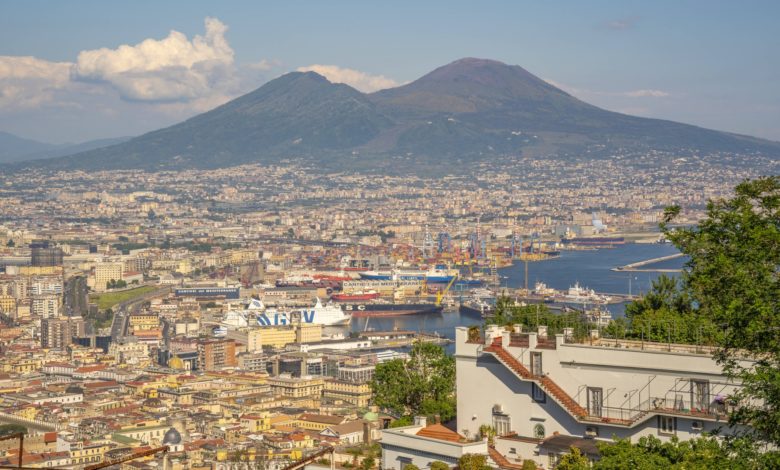
The last violent eruption of Vesuvi, the “clock bomb” of Europe, took place 81 years ago. Vesus is considered one of the largest risk volcanoes in the world. However, about 700,000 people live in the “red area” at its foot, apparently ignoring the strong warnings of volcanologists.
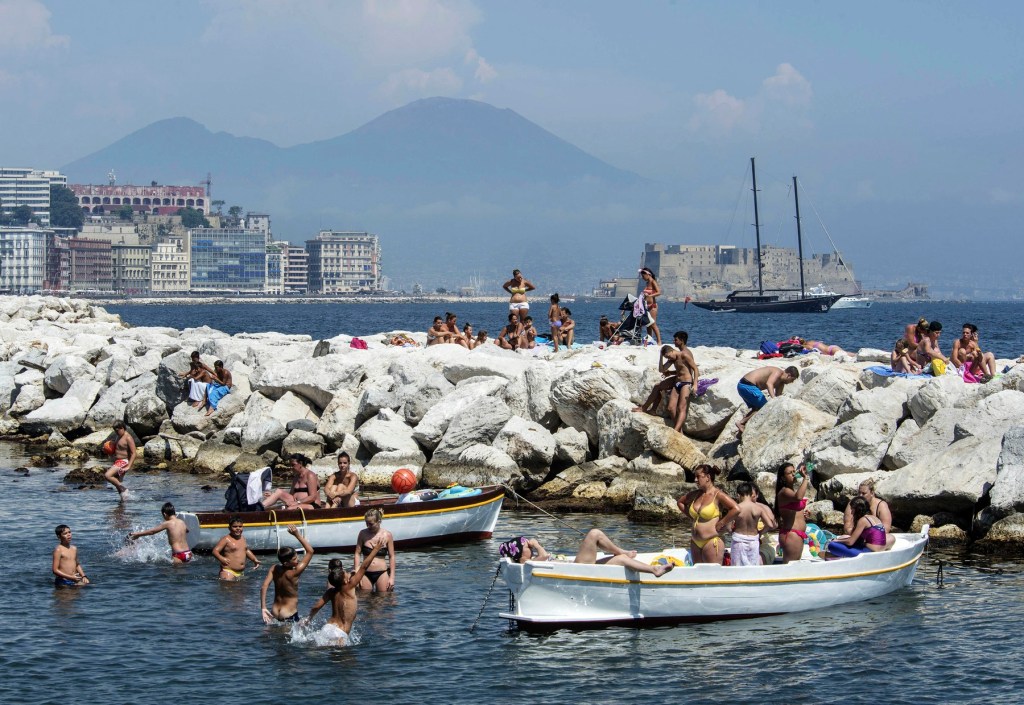
Hertwig and Lewandowsky write that, in order to understand this “complaint” in front of a possible Armageddon, the individual and collective experience related to that risk must be analyzed. Most inhabitants in the Red area did not personally experience a eruption of the vesuvis. Their daily experience gives them, most likely, a soothing feeling of “everything is fine”.
Numerous psychological experiments have confirmed how this daily behavior is manifested. Our experience tends to underestimate the probability and impact of rare events precisely because they are rare.
We are not prepared for a danger that we are not familiar with
The extremely rare and catastrophic events, especially those on the financial markets, have been called “black swan” events. Neglecting their possibility has contributed to insufficient bank regulations and devastating financial collapses, such as the global crisis of 2008.
The people of Western Europe have lived in democracy and in a growing prosperity for over 70 years. So far, they have been protected from the direct experience of autocratic power and therefore may underestimate the risk of collapse of democracy.
Paradoxically, even the success of democratic systems can resemble the seeds of their own disintegration, argues scientists, explaining that it is a phenomenon similar to the paradox of disease preventive: the success of preventive measures, such as childhood vaccines, can undermine their need, increasing the plination and hesitation.
There is another worrying connection between the erosion of a democratic system and the experiences of its citizens. “As history has demonstrated, democracies do not disappear in a fire. They tend to die slowly, with a blow after another, until a break point is reached,” the article published by The Conversation points out.
The public is unlikely to perceive a risk to democracy when a political leader violates a convention. However, when the repeated violations of the democratic norms by the political elites are tolerated, when the rhetorical skids intensify, and a wave of lies and manipulative statements becomes the new “normality”, not prolonging these early signs can have drastic consequences.
“Democrats may seem stable until the moment they slip into the autocracy”
“Just as a nuclear power plant may seem to work safely until the last safety valve gives up, democracies may seem stable until they slip into the autocracy,” notes Hertwig and Lewandowsky.
They state that a way to counteract these problems can be simulating the experience of risks, even if only through substitutes. For example, Japan's disaster preparation centers simulate the sensory dimensions of an earthquake and its rapid dynamics in a way that even the most graphic warnings can succeed.
“We claim that we can, in a similar way, simulate life in an authoritarian regime. From Berlin, especially when the guide is a former detainee ”, argues the two scientists.
They also emphasize that this would be only a variant among many other possibilities that can recreate the experience of oppression and authoritarianism, thus offering a deeper understanding to those who were fortunate not to live them.
“The seemingly persistent absence of risky events can be seductive and misleading. But we are not the prisoners of what we have not yet lived. We can also use the positive power to protect and appreciate our democratic systems,” they conclude.