Frank Swiss attacks the peak of the decade. The trade war means that SNB is standing at the wall

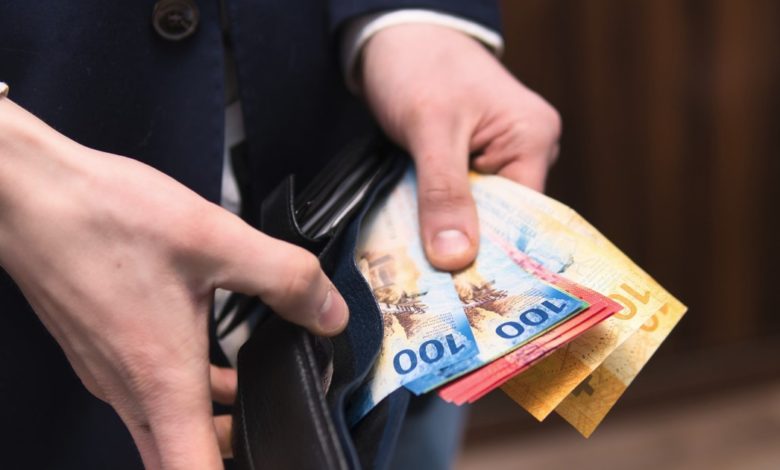

Escape to Frank is To a large extent, a reaction to drastic customs tariffs: The United States has recently imposed 31 % The duty to Swiss goods (suspended for 90 days, but still hanging over Bern like Damocles sword) and 125 % A barrier to import from China.
The flow of capital to the alpine currency accelerated when Investors undermined the credibility of Washington's economic policyand on the stock exchanges they evaporated trillions of dollars of value.
Switzerland will have to react
Such appreciation carries real economic costs for Switzerland. Strong Frank lowers import prices and can again draw in the country in deflation – CPI today is only 0.3 percent. The market quickly assessed that the only safe “valve” may be the return of negative interest rates.
The profitability of two -year federal bonds went slightly below zero for the first time since 2022, and timely contracts are valued OK. 80 % The probability of reduction of SNB foot to zero in June.
The dilemma of the monetary authorities is complicated by geopolitics. Switzerland, which is responsible for over 10 percent. his export to the USA, he wants to weaken the currency, but is afraid of the labels of the “course manipulator”.
President Karin Keller-Sutter, as the Financial Times notes, immediately called Donald Trump, and a few days later, together with the Minister of Economy, she talked in Washington with the Secretary of Treasury Scott Bessent, seeking for alleviating the tension. At the same time, SNB tries to avoid aggressive sales of francs on the market so as not to irritate the White House.
This is not an unprecedented situation for Bern. In January 2015, the Central Bank unexpectedly released a ceiling of 1.20 CHF per euro, what caused a shock revaluation of currency and an eight -year period of negative feet. Only in 2022, when postpandemical inflation accelerated, SNB raised the reference rate to 0.25 percent. Today's market pressure, however, threatens to reverse this normalization.
It is not yet known who will win on it
Analysts note that the game takes place on several fronts at the same time: the decrease in the dollar drives flows to the franc, which reduces the prices of imports and chokes the profits of exporters – especially high -harvest producers of pharmaceuticals and watches, for which the US remain a key market.
Each subsequent day of currency strengthening increases the pressure on SNB to work, although the tools are limited – Further cutting of the feet can push deposits abroad, and currency interventions under the magnifying glass of Washington.
Therefore, the market will follow the June SNB meeting as carefully as subsequent messages from the White House. If the trade war is dragging, the gap between the demand for francs and the possibilities of its weakening may still grow. A possible return to the politics of negative feet will then become not so much a tool for choosing as it is necessary.