
Drought in Romania and its effects – a large study analyzes the most serious episodes from 1852 to the present

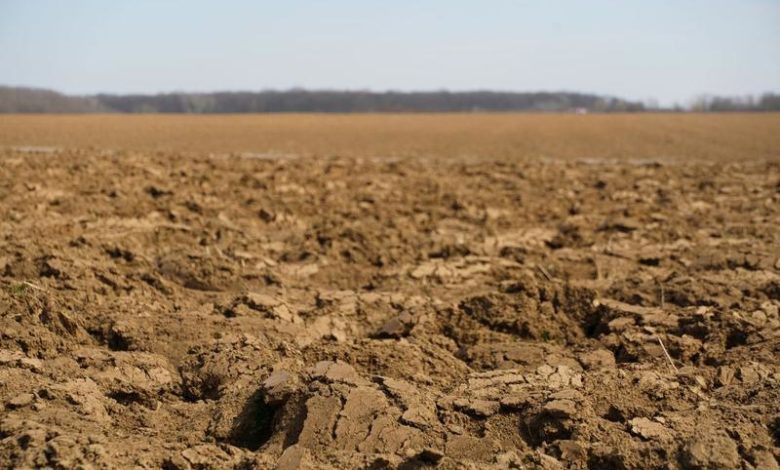
Romania has been affected by drought often in the last 175 years, and a few arid periods have been devastating for the standard of living in the country, as was the one after World War II. A study published by four Romanian researchers shows what were the longest periods when it rained too little and what effects they had in the country.
Romania is vulnerable to drought, and periods with too few rainfall have constantly appeared in the modern history of the country, research shows.
The research conducted a kind of “catalog” of the droughts in Romania, over a period of 172 years (the range 1852-2023), by combining some long -term meteorological data, of the documentary sources and two indices of the drought called Spi and Spei, which take into account a series of parameters.
The most dry periods of the last 172 years in Romania
- January 1866 – August 1867
- August 1873 – September 1874
- October 1945 – July 1947
- June 1990 – April 1991
- August 2000 – May 2001
- October 2018 – March 2021
Another period of serious drought was between 1918 and 1920, and recently, the period March 2022 – December 2023 came with severe precipitation deficit.
- The study was conducted by Monica Ioniță, a researcher at the Alfred Wegener Institute for polar and marine research (Bremerhaven, Germany). She collaborated with three other researchers: Bogdan Antonescu, Viorica Nagavciuc and Cătălin-Constantin Roibu.
Extremely dry months were September 1866, September 1946, August 2012, May 2020 and August 2022.
The oldest precipitation deficit period of which information is from December 1852 to June 1854.
The studies of the last decade have highlighted tendencies of increased frequency and severity in Romania, especially in the south and east of the country, where agricultural activities are predominant. About how the drought of the future will be you can read here.
Six periods with severe precipitation deficit
Episode 1866-67
The severe drought of 1866–1867 had a significant impact on agriculture, economy and public health. Articles in the Transylvanian press are talking about cholera and dysentery epidemics, and the food crisis has been aggravated by the outstanding fires. The drought revealed the structural vulnerabilities of the Romanian society, which was at the beginning of the reign of Carol I: inadequate infrastructure, deforestation and inefficient management of resources.
Episode 1873-74
The event was characterized by high temperatures, and the damage of crops was higher due to hail. The impact on society was severe. Whole communities have been threatened by hunger, and food prices increased strongly. The press of the time also wrote about episodes in which the communities prayed to God to give rain, as the last solution. The Danube level has decreased to unheard of values.
Episode 1945-1947
This period devastated Romania, especially since the severe drought came after the years of war that impoverished the country. The extremely low rainfall led to massive crop losses, especially in Moldova. Stories from December 1946 describe people who have only survived with water and salt, some consuming greens, rush, acorn, or a juice made of sunflower cakes, bran porridge and acorn flour.
There were mass migrations from Moldova, to the southwest of the country, at the end of 1946, due to the exhaustion of food reserves. The crisis was extremely serious in the Moldovan RSS in the former USSR.
Episode 1990-1991
The period with too few rains seriously affected agriculture, leading to significant decreases in wheat, corn and sunflower production. It was special that spring, usually a rainy season, was extremely drought, there are also areas where it rained five times less than the normal period. The Plain of Timiș was one of the most hit areas, corn crops, sugar beet, soy, sunflower, tobacco, potatoes and vegetables were weakly quantitative, due to lack of water.
Episode 2000-2001
The drought from 2000–2001 was a major agricultural catastrophe in Romania, with significant effects on crops, water resources and irrigation infrastructure. It was what, in specialized terms, is called an “extreme pedological drought”. The lack of drinking water has become a problem in several regions: the fountains have dried, and the price of the water has increased enormously.
Wheat and bread prices increased by over 20% in some cities. Animal breeders have experienced high fodder prices, being forced to reduce their herds
Episode 2018-2021
The first signs of drought appeared in Transylvania in May 2018, and in the autumn, the drought was also felt in Oltenia. The drought intensified in 2020, with a water deficit of 62%, mainly affecting the southern and eastern regions. Autumn cultures were compromised by important regions of Moldova and Dobrogea, and there were cases in which half of the production was lost.
“Through the combined use of drought indices and weather data we intend to identify spatial and temporal patterns in the occurrence, severity and duration of drought throughout the country. This wide analysis aims to support decision -making processes, attenuation measures and adaptation strategies in Romania,” the research said.
The study published in the International Journal of Climatology magazine has the title “Drought's Grip on Romania: Tale of Two Indices”.
Photo source: dreamstime.com


