Romania could recover annually over two tons of rare metals from electric waste recycling, shows an analysis of an environmental NGO

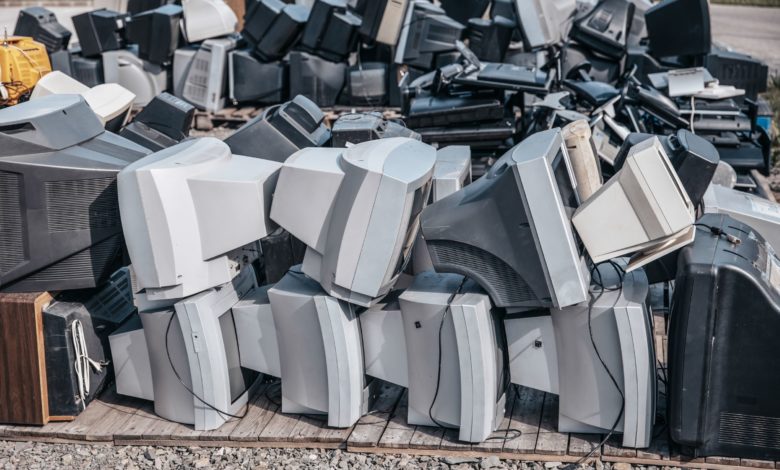
Romania has the opportunity to obtain two tons of rare metals annually only by recycling used electrical and electronic equipment, an analysis prepared by the Environ Association Association shows. The most important quantities of rare metals are found in fluorescent lamps, computers, mobile phones, TVs and video cameras.
- In relation to the amount of waste of electrical and electronic equipment that should be collected and recycled in Romania, the calculation made by the Environ Association shows that a ton of recycled mobile phones could generate 3.3 kg of rare metals. At the same time, two tons of monitors could generate 1.2 kg of rare metals, and 1 kg of rare metals could be obtained from a ton of fluorescent lamps. In total, through the Recycling of WEEE, Romania could recover two tons of rare metals every year.
Getting rare metals is one of the biggest challenges worldwide, given that they have become indispensable in recent years in a wide range of modern technologies and applications, due to their unique electronic, magnetic and optical properties.
In mid -April, the European Parliament adopted a regulation with clear provisions aimed at recycling electrical waste so as to ensure at least 25% of the annual consumption of EU strategic raw materials.
The Environ Association is a non-governmental and non-profit organization, established in 2007, currently operates over 4,000 national collection points. And it has collected over 250,000 tons of waste of electrical and electronic equipment.
What rare metals are in the most widespread electronic equipment
- The most important quantities of rare metals are found in electrical and electronic equipment such as fluorescent lamps, computers, mobile phones, TVs and video cameras. While the hard disks and fluorescent lamps contain the highest rare metal concentrations, especially neodim (ND), DISPOSIU (DY), YTRIU Y) and Europiu (EU), smartphones and computers contain the largest variety of rare metals.
Fluorescent lamps use phosphorus rich in ytriu and Europiu, which makes them electronic waste with the highest concentration of rare metals, up to 20,000 ppm (parts per million), ie 2%. In addition to Ytriu and Europium, significant amounts of heaven, Terbiu and Lantan can be extracted.
Hdd. Any hard disk contains NDFEB magnets, which are a main source of neodim and dysposiu, which reach concentrations of up to 15,000 ppm, ie 1.5%. Along with these rare metals, in a HDD there is a significant amount of praseodim.
Smartphone. Intelligent mobile phones often contain, in magnets, significant amounts of dysposium, terbium and neodim, in concentrations of up to 1,000 ppm (0.1%). Also, in screens, speakers or vibration systems, there are also Lanitan, Ceriu, Praseodim, Samariu, Europiu, Gadoliniu and Ytriu, which makes recycled smartphones with the largest variety of rare metals between the usual WEEE.
Computers. From the tiles with printed circuits, hard disks and speakers in a computer can be extracted the same categories of rare metals as in the case of mobile phones, Lantan, Ceriu, Praseodim, Neodim, Samariu, Europiu, Gadoliniu, Dismoiu and Ytriu, located in 1,000 ppm (0.1%).
TVs use important amounts of rare metals in their display components, such as phosphorus in cathodic tubes and LEDs in modern screens. We also find here a large variety of rare metals, such as Ytriu, Europiu and Terbiu, which reach concentrations of up to 100 ppm, ie 0.01%.
Video cameras. The screens and speakers contain ytriu, Europiu and Terbiu up to 100 ppm, ie 0.01%.
Where Romania is located in terms of rare materials
According to a recent report of the United States Geological Survey (USGS), the World Earth Market is dominated by China, with reserves of 44 million tonnes, followed Brazil (21 million tonnes), India (6.9 million tonnes), Australia (5.7 million ton), Russia (3.8 million tonnes), Vietnam (3.5 million tonnes), of tons), Greenland (1.5 million tonnes), respectively Tanzania and South Africa (900 thousand tons).
- Although there is no official public estimate of the total reserves of rare metals of Romania, we have an order of magnitude: our country imported 557 kilograms of scandal and ytriu two years ago.
- At the same time, Romania was included in the list of strategic projects of the European Union for the extraction of critical raw materials, as it has significant geological resources for manganese (18 million tonnes of ore distributed in several important deposits), magnesium and copper.
Regarding the recycling of electric waste containing rare metals, at the European Union level there is a major concern: last year, the European Parliament has adopted a regulation that provides, among others, that each Member State must adopt and implement, within two years, national programs to ensure the safe and sustainable supply to critical raw materials.
One of the declared goals is that the European Union increases its recycling capacity to allow at least 25 % of the annual EU strategic raw materials, Environ analysis shows.
The regulation provides for the intensification of the collection, sorting and processing of waste with a relevant potential for capitalizing on critical raw materials and introducing them into the appropriate recycling system. A special interest is granted to products containing one or more permanent magnets; These products will have to be labeled in such a way as to show the content of strategic metals, including rare metals such as Samariu (SM) or neodim (ND).
The regulation also identifies 34 critical raw materials, including 17 strategic raw materials, including rare lands for permanent magnets (ND, PR, TB, DY, GD, SM and CE).
- It is estimated that, at the level of Europe, 190 tons of rare metals could be extracted, of which 146 tons of ND, 28 tons of PR, 15 tons of DY and a ton of TB. On categories of WEEE, the highest amount of rare metals, about 92 tons, could be extracted from residual fluorescent lamps (10 tons of CE, 4 tons of EU, 4 tons of TB and 61 tonnes of Y).
Photo source: dreamstime.com