The film that has increased worldwide the number of adoptions of black cats has reached Romania and has the extremely rare quality of being seen at any age

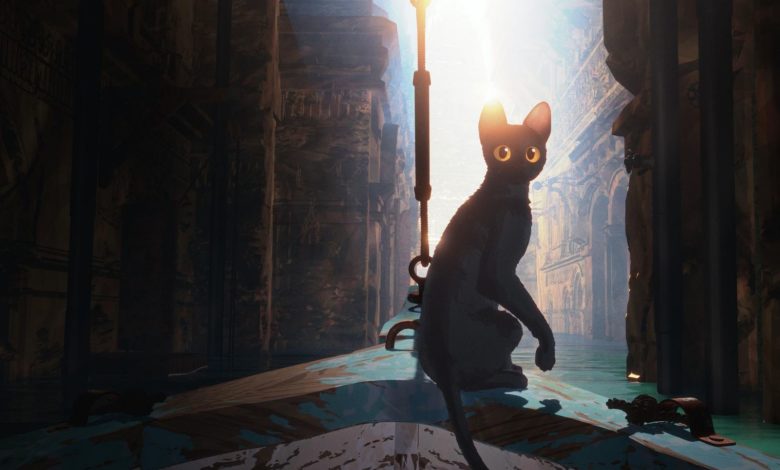
wonderful “Flow – a cat without fear” It comes at the right time, in the tension around us. Because it's the kind of movie that helps us accept change.
The psychologist CGJJA said that the thing you can resist not only to persist, but it grows in size. The more you oppose something with negative potential, the more insurmountable it will become. It is one of the messages of “Flow – a cat without fear”, a delightful award -winning animation, which is still running in the Romanian halls and is not just for children.
Gives each spectator what is right
“Flow” has a crazy success in the public of all ages and everywhere. He sold extremely well for an independent film, brought Latvia the first Oscar and the first golden globe in history, was purchased by HBO Max, increased the adoptions of black cats.
The success of this movie without dialogues is not due to any secret recipe, but to the fact that it gives each spectator exactly what they need. Each one chooses the message that fits his age and existence at that time.
For many adults, “Flow” talks about the foot on the pedals – which is almost impossible for someone learned to have control.
We have been educated from an early childhood that being the master of his own life means being permanently busy, doing something useful (even in his spare time), permanently controlling your life. Let us not let you live, but to dominate her.
We were told that only the lazy people stay. (The ants rob, the cricket is hungry.)
But this movie that assimilates as easily as flows (Flow In English it means flow, flow) shows us some animals and birds that, trying to stay alive after a flood, learns that it is sometimes enough to cling to a boat and you let it take you. Not to fight with water, but to flow with it.
My girlfriend who never lost the train
And me, like the cats in the movie, I was afraid of water (it was to drown twice) but, one day, at sea, the fearful adult who was left soft.
The more I saw that the sea keeps me, the more I left, until I felt one with water. It was a paradigm change. Accustomed to the competitive life in the press, with the struggle for survival in Bucharest, with the work nonstop and the stress of keeping everything in the fist, I had the revelation that life takes me and without shaking.
There were models before. I had a friend who also struggles for survival in Bucharest. Sometimes, when she went to Sibiu and had no money to return, her mother said: “Noh, let's get down and stay quiet, to appear the money.” What was happening. There was a neighbor, a friend, anything.
Annamaria has never lost the train from Bucharest.
In order to succeed you do not have to tighten your will, but to issue the intention and be quiet that it is resolved.
Sometimes you only need to hold on to the surface of life
When Dacian Cioloș's French wife proposed the introduction of mindfulness hours in schools, in 2019, the world made cool. Is that what we need? There are so many goals in the educational system. Now you can see what effects the pandemic has had on children, and small private initiatives show what good results the relaxation techniques have on children. (The first children's mindfulness workshops in Sibiu appeared.).
Even though the Pandemia is over, we all remained with the sensation of moving sands, and what is happening in the country and in the world increases our insecurity. Everything can tipping today tomorrow. Are we surprised that more and more people are fighting anxiety?
See, “Flow” teaches us to use the word carefully fight. Psychologists who do NLP (neuro-linguistic programming) know very well how much the language helps you to build your life.
It is time to forget the lyrics of Coșbuc “I fight his life; so fight” and understand that if we teach children that life is fighting, they will grow competitive and anxious, they will have disproportionate reactions to minor challenges, and others.
There is a solution, Jung has offered it a lot, and “flow” repeats it: let's not oppose the things we are afraid of.
Maybe they want to teach us something.
To separate what is yours of what is of the nation
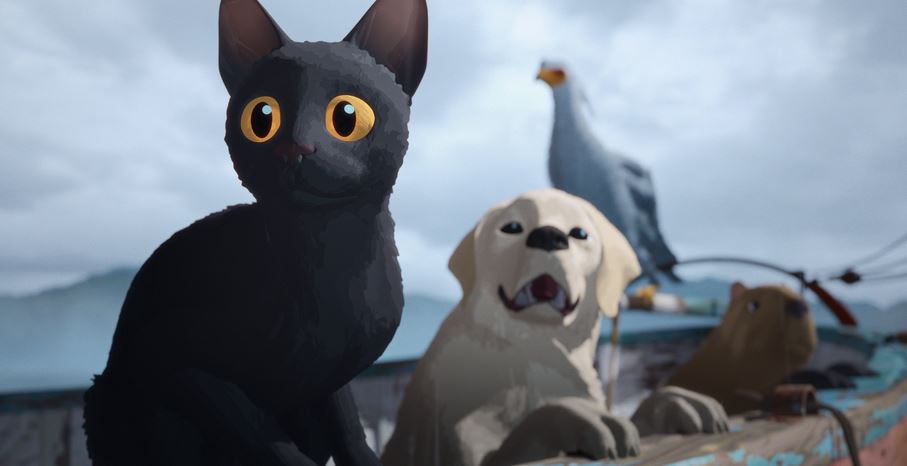
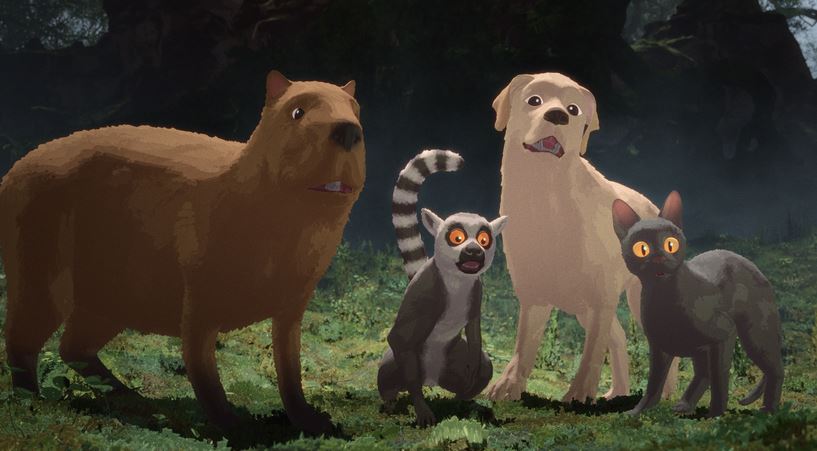
Another thing I liked about “Flow” is the way the characters-a cat, a puppy, a cap (water pig), a lemur and a secretary bird-learn on the same boat to form a community.
Lemur loves mirrors and tightens objects, the dog is social until gray, the cat is afraid of water, the secretary bird is inflexible, the cap is hard – but, once you reach the boat, each one gives up what was characteristic of the species.
Each separates what is his family, as you do in any growth or healing. The cat overcomes his fear of water, the secretary bird sees that rigidity is not useful, the lemur learns to be reflected in the other, shampoo.
There comes a time when you start to see the patterns, when you start to understand that sometimes you react from an instance that you are not.
And the sign that a reaction or idea is not yours is that when you wonder if someone speaks through you (most commonly, an invisible parent, beyond the curtain), you realize that the question itself makes orders. You calm down – and the reaction, the thought disappear.
Once you have identified the pattern, when you meet with it it will be easier for you because the neuroplasticity of the brain allows change. It's like when you don't use the woze. Once you have found a street alone, the second time you will not be wandering.
All the Self-Help books, from Jung, say the same thing: we cannot change the others, but we can change our behavior.
We have a spare arbitrator all the time
Viktor Frankl, the psychologist who developed existential analysis after escaping from Auschwitz, said that “there is a space between stimulus and answer. In that space is the power to choose our answer. In our response is our growth and freedom.” If someone who survived the worst nightmare of mankind could say that, believe it. (Also NLP says that where only one man has succeeded, the others can succeed.)
I looked with interest in Lemur, who is perhaps the most humanized character in the movie “Flow” and reflects today's narcissistic society. He looks at himself all the time in the mirror because he is focused on himself and the beauty criteria dictated by consumerism, and collects objects that are of no use. But the story also leads to healing.
The healing of a person without access to their own emotions and who relate to the others only transactively begins when they learn to use their free will. When it begins to make the difference between having/giving and being. Lemur manages to overcome its genetic limits and, using the freedom to choose, is assimilated by the group.
Tools to deal with this chaotic world
Learning the renunciation of control puts you in contact with you and helps you listen to your body messages more carefully. This does not mean being a spectator or sitting like a muffin waiting for the best. There is an inner voice that, if you are careful, tells you when it is good to stay good, and when to act. Maybe that's wisdom.
This was also the message that the late Val Kilmer gave to Tom Cruise, the pilot who has been blaming for 20 years for his colleague's accidental death, in “Top Gun: Maverick”: “It is to let go”. It's time to let the need to control what you can't control.
Taking peace in you is like training a muscle. (For me, which are a fast, it's very hard.). It takes time, but it is increasingly facing you towards your internal resources. When you let things flow, you start to see life as a process with a meaning of it. Sometimes it is enough to go through the storm to give the sun.
In addition to being a very beautiful movie, “Flow” gives us some tools to cope with this chaotic world. But, of course, having a free will, everyone makes the decision they want.