The traditional Romanian Easter was totally different from what practiced, today, most Romanians. Once, the feast was primarily religious, with a melan of Christian beliefs and rituals of pagan sources, respected with sanctity and which it was believed to influence the fate of man.
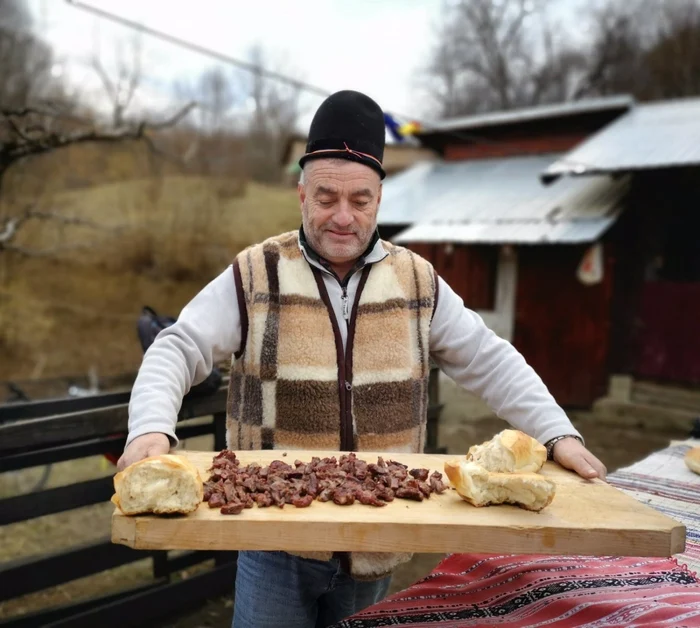
The traditional Romanian pasta is on the verge of disappearance photo archive
Easter is a celebration with origins lost in the dark of time. Initially celebrated by the Jews, as a symbol of liberation from the bondage of Egypt (in the Jews Passah Pessah – means “pass”), Easter was also adopted by Christians, but with other meanings. First of all, it is related to the resurrection of Jesus Christ, the most important symbol of the Christian religion.
Easter celebration has been adopted over time in all Christian states, starting with the early Middle Ages. In Romanians, the Easter celebration was attested at the earliest in the 13th-14th century, with the founding of the Romanian medieval states, Valahia and Moldova. The traditional Romanian Easter as it was kept especially in the rural world was different from what is practiced today. That is, it was a strictly religious, ritual holiday, in which Christianity often combined with the magic and superstitions of the pagan world. Each gesture had a significance and which the Romanians once believed would decisively influence their future.
Passover and boyar, a standard for people
From the Middle Ages and until the middle of the 19th century Easter in Romanians were celebrated differently, depending on the social status. One was the boyar Easter and the other was the one on the streets of the hamlets. And it did not necessarily belong to the richness of the dishes but especially to the strictness of the religious ritual. At the royal court, but also at the Boeresti courts, Easter was a religious holiday par excellence. He had nothing in common with the pursuit of shopping and food today, nor with the organizing parties.
The ruler and boyars had to keep the religious ritual in the letter of the law. In the three evenings from the beginning of the big week, the ruler with the boyars went and listened to Utrenia (evening service). Syrian Paul de Aleppo, the companion of Metropolitan Macarie, offers an exact description of the “need” of Boeresti and Domnești in the Passover Week. On Wednesday morning there was a maslu in the little backrest, where all the court boyars were gathered. Each boyfriend asked for forgiveness to the voivode if he was upset. On the Great Thursday, he went again to the church where all the boyars participated in the job and the “forgiveness” were divided.
Maria del Chiaro, the well -known Italian diplomat from Constantin Brâncoveanu's court, said that all the boyars were confessing and shared in Joia Mare. At the same time, the Metropolitan washed the feet of 12 priests, who played the role of the 12 apostles. Only after that, the ruler retreats to his apartments. The Great Friday was removed the Holy Epitaph and to do the job bypass the church. The procession was carried out in the order of ranks. On Easter Saturday, from 12.00, the ruler followed by the guard but also by the boyars, went to the Metropolis for the Resurrection service. The liturgy was served by the primary metropolitan, surrounded by the whole clergy. After His Holiness Exclaim “Christ resurrected!”, More than 101 salvs from the cannons on Spire Hill were drawn. In other words, to the Sunday table, the boyar, the voivode and the clergy took it to a post and prayer, as strict as possible.
Easter in peasants, a jerk of Christian and magic
In the rural world, Easter was perceived in the same way. That is, a strictly religious holiday. The Easter meal, on Sunday, at noon was the peak of a period of post and intense preparations. Unlike the boyar world, around the royal court, in the Wallachian or Moldovan hamlets, religious services were not so frequent and strict. In addition, the Christian ritual part specific to the Easter was complemented by magical, pagan practices, specific to the celebration of spring and the Renaissance of nature, the mother goddess. On Saturday, at night in the head, from the first hours of the morning, the housewives had to prepare the Easter meal. In many areas, it was actually “sealed” in the clay oven. Basically, the mouth of the oven was lit and opened only on Sunday at noon, on the first Easter day.
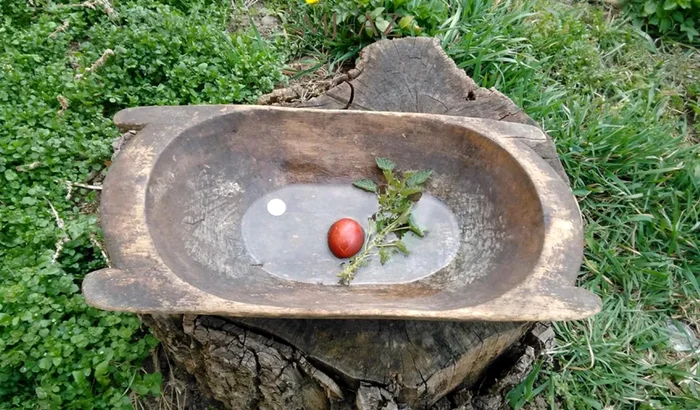
Washing on the first day of Facebook photo Easter
The resurrection service was respected with sanctity in the wooden, peasant churches, as well as the visit to the cemetery, to those who left among the living. At the same time, the priest sanctified the baskets with dishes brought by the housewives. The basket had to contain the red eggs, a symbol of the Savior's blood, a course on the cross, the cow cheese and the lamb. In fact, at the Easter table, everything was focused around the flesh, another symbol of Jesus Christ, gentleness, purity and sacrifice. In addition to this religious world, full of Christian symbolism, in the rural world there was another, parallel, a remnant of paganism in the Romanian villages, which actually marked the rebirth of nature, an old cult of fertility and fertility.
Joimares, Fire and Brotherhood of Cross
The Great Thursday has a special meaning in the Romanian mythology related to the Easter feast. These are pagan reminiscences, used in the Christian feast. On the Great Thursday, the people of Transylvania, believed that Joimărița, a woman disguised in the witch with a bucket of jerk, and ash. Joimărița punished the girls who did not finish the hemp until her arrival, on the Great Thursday. Joimărița also punished lazy men as well as children who did not help their parents. Also about Joia Mare, the ancient Romanians believed to open the graves of the dead, and the ancestors return home and stay there until after Easter. That is why, in front of the houses, big fires lit so that the souls of the ancestors can find the way easier.
At the same time, the fires had to drive away evil spirits and bad weather. In many areas, fire wheels light up, thrown from hills of young groups. There are rituals that are part of the solar cults left precisely from the Bronze or Iron Age. Also in the Transylvanian area, a ritual called “Lioara” was practiced. After the resurrection service, the young girls came out two by two and surrounded the church in pairs. They gave themselves, as a sign of friendship and “Felegi” (wipe). They became “sisters” and ate a “bradoș” together, that is, a kind of ritual colac. The ritual ended with the “Brotherhood of Cross” between girls and boys. In the Apuseni Mountains, on Easter night, it went with the church to the church in the cemetery and was guarded by a group of children. Another “team” of boys played the role of “thieves”. If those who guarded the toaca were fooled and remained without it, they would prepare a “waite” for “thieves”. The rituals were diverse in all corners of the country. In Brașov, the boys took eggs from all the girls in the village and then went to the hill and made all kinds of competitions. Also in Transylvania, the “splashing girls” was practiced in order not to “want” the good girls to be married.
What is done and not done in Easter days to go well
These magical rituals, of the Romanian pagan world, came to the package and with all kinds of prohibitions or obligations. A simple mistake, they believed in the old Romanians, could influence your whole destiny. First of all, there was the tradition for every villager to dress in a new, woven -woven, the symbol of the rejection of sins. Then there was the prohibition to sleep on the night of resurrection. Whoever adopts at the job will wake up without a vast year and with weak crops (consequence of the lion induced by the magical prohibition).
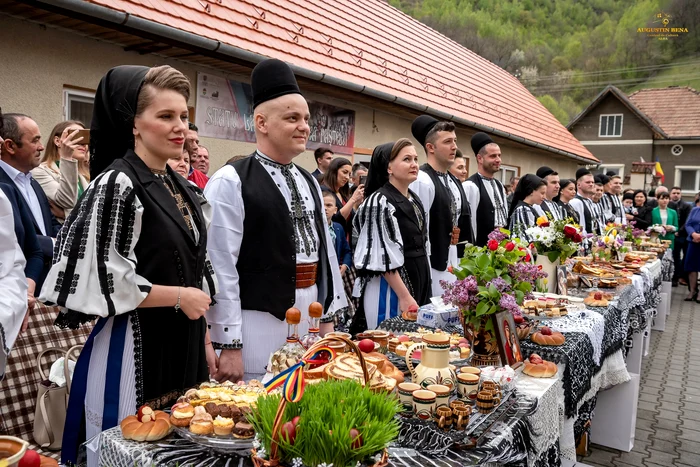
Easter rituals to Romanian Photo Mnir
The egg plays a central role in Easter rituals. Beyond the Christian faith of the red eggs, this product of the hen was also an ancient magic-religious symbol that symbolized the Renaissance during the spring. So the Easter meal had to start with an egg, precisely for the man to be reborn, to be healthy all year. After the egg, a piece of fish is quickly consumed, for sprinting, but also a mouthful of chicken, to be easy and clean to the soul. Attention, says another Romanian archaic superition: the egg at the Easter table should not be eaten with salt. Otherwise, the one who made the mistake will sweat all year. For Easter, the old Romanians put a piece of iron under the threshold to defend their bad house.
Others ate willow buds and apple flowers, to “purify”. In Vâlcea, the Romanians maintained the fire all night. They were coating cakes and they were praying to their household animals.
In Călărași, in the Easter basket, brought for sanctification, there was also a white cock. Obviously, alive. When the rooster sang was the sign that Jesus had risen, and the one whose oranitus gave the first one, he was lucky all year. Last but not least, the villagers were attentive to the fields. And this is because, he said an old tradition then flames are coming out over the treasures. Let us not forget, however, the ritual that says that in the morning, on the first day of Easter, the old Romanians were washed, the whole family, in a bowl of water in which a red egg was placed, a gold coin and a little nettle.