China has switched to a “war status” type of operating officials in Beijing and has launched a diplomatic offensive meant to encourage other countries to reject the tariffs imposed by US President Donald Trump, four familiar sources, quoted by Reuters said.
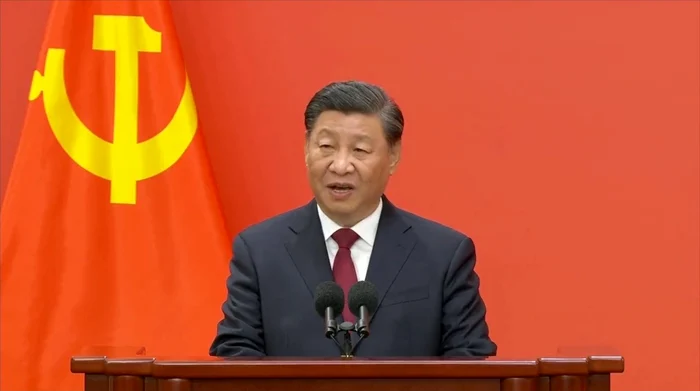
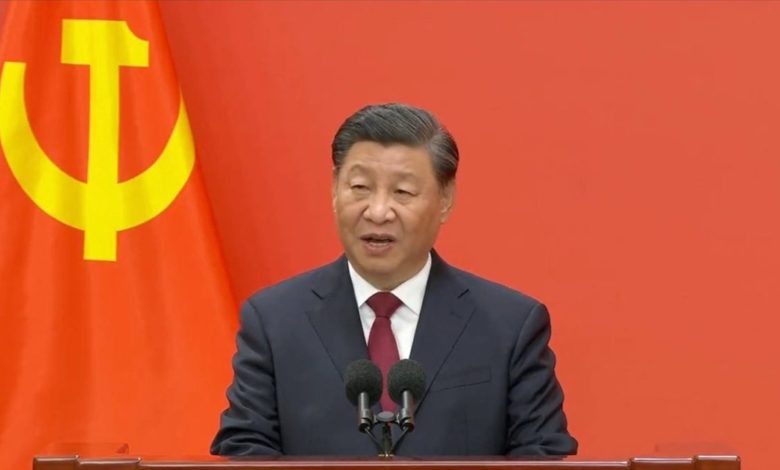
China President Xi Jinping/Photo: Profimedia
Some Chinese officials and analysts even hoped in a large agreement to include topics like Tiktok or even Taiwan. But this strategy has changed rapidly in favor of reprisals: response rates, threats and aggressive patriotic rhetoric.
China has contacted several governments affected by American tariffs – including traditional US allies such as Japan, South Korea and European countries – demanding cooperation against Trump's measures. The Chinese Foreign Ministry has not officially commented, but the Chinese Embassy in Washington has said that Beijing “does not want a commercial war, but is not afraid of it.”
The Chinese president begins a tournament in Vietnam, Cambogia, Malaysia and Indonesia, threatened countries by very high American taxes that have been used by China to send some of the exports to the USA in recent years. Also China will try to approach the European Union (usually not very united) through a summit in July, in Beijing. Europe will have to be careful not to become the collector of China's commercial surplus.
China could have much more books than Trump would think
In the China's commercial war he could have much more books than Trump would think-he could even have a winning hand. Beijing believes that it can cause the United States at least as many damages, but also to expand its global position, explains the Lingong Kong analyst for the Daily Star. For now, there is no direct dialogue between Beijing and Washington, and Xi Jinping and Donald Trump are engaged in a poker game that has a stake of hundreds of billion dollars and, finally, dividing the new world order (or world chaos).
Chinese leader XI Jinping has launched a call to Vietnam to support multilateral trade, in an approach meant to reposition China as a stable partner in the region, in contrast to the unpredictable policies of the United States. His official visit to Southeast Asia-which includes stops in Vietnam, Malaysia and Cambodia-comes at a time when the commercial war between Beijing and Washington reaches new tension rates, CNN reports.
While US President Donald Trump has temporarily suspended the rates imposed on most of the trading partners, moving his attention almost exclusively to China, the Beijing leader seems to look for new regional collaboration formulas. The stake is clear: attracting emerging countries in Asia in its sphere of economic influence, at a time when they feel the effects of the instability generated by the tariff policy of the White House.
Vietnam and Cambodia – among the most affected by American tariffs, with levels of up to 46% and 49% before the suspension – are also among the most active in strengthening the economic relations with Beijing. Xi Jinping wants to take advantage of this context to emphasize China's availability to collaborate and to defend the global trade system.
In an article published Monday in the official Vietnamese press, the Chinese leader warns the risks of protectionism and emphasizes that “there are no winners in a commercial war.” He calls on maintaining the stability of supply chains and strengthening an open and cooperative international framework.
China has become the largest trading partner of the Southeast Asia Association (ASEAN) since 2023, which was the United States and the European Union, according to Chinese customs. Only in the relationship with Vietnam, the volume of commercial exchanges almost doubled between 2017 and 2024, transforming the neighboring state into a key actor for the regional economic strategy of Beijing.
China's approach is not without risks
However, the proximity to China is not without risks. Officials in the region are afraid of a possible influx of Chinese products redirected from the American market, following the tariff barriers imposed by Washington. Currently, Beijing already records a commercial surplus in relation to Vietnam, exporting 1.6 times more than imports.
XI's visit to Hanoi is expected to result in about 40 bilateral agreements – from railway and agriculture infrastructure, to digital technologies and cooperation in the field of green economy. The projects discussed include the construction of a $ 8.3 billion railway, which will link Vietnamese Haiphong to China, a project that will benefit from partial Chinese financing.
Vietnam also analyzes the possibility of purchasing aircraft produced by the Chinese company Comac – a symbolic, but also strategic gesture, in full context of resetting the global production chains.
The Analist Wen-Ti Sung, Affiliate Atlantic Council, emphasizes that Xi's diplomatic initiative has a double stake: on the one hand, the extension of China's economic fingerprint, and on the other, attracting states in geopolitical uncertainty closer to the orbit of Beijing. “XI comes personally, not with threats, but with gestures of goodwill – and, perhaps, with some” commercial souvenirs “, notes the expert.
However, China's relationships with its neighbors are not without friction. In February, the military maneuvers carried out by the Chinese Navy near the Vietnamese waters – in the context of disputes in the South China Sea – amplified the tensions between the two states. In the article signed in the newspaper Nhan Dan, Xi pleaded for wise management of maritime divergences: “The successful delimitation of our terrestrial borders and in the Bay of Beibu proves that we can solve the differences through consultation and dialogue.”
At a time when the global balance of power seems more and more fragile, the diplomatic tour of the Chinese leader brings a clear message: China wants to play the Book of Stability. It remains to be seen how many of his Asia partners will be willing to rely on this strategy-without upset Trump.