Polish earnings are getting better against the background of the EU. However, we still have a long way ahead of us

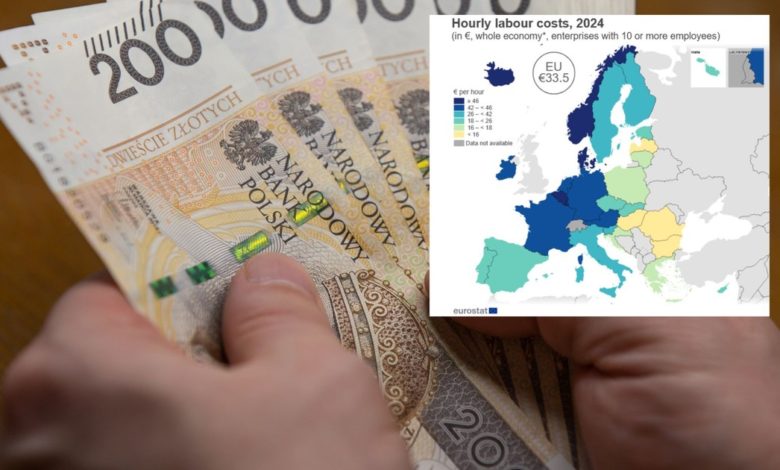
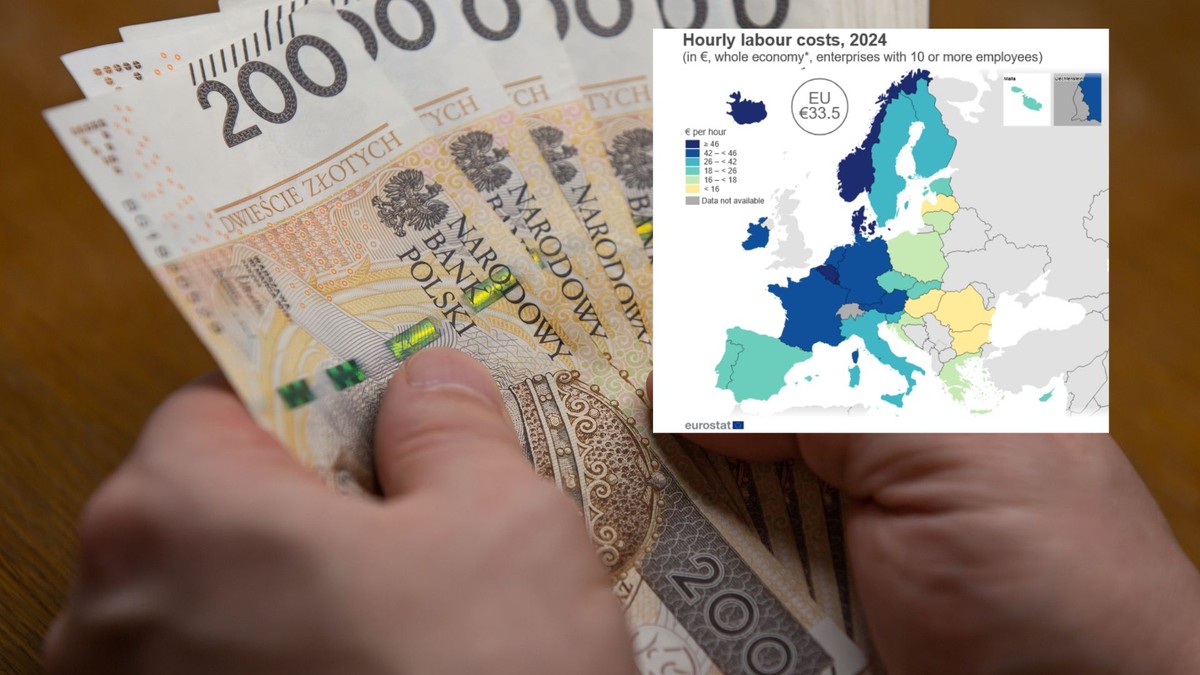
At the end of March, Eurostat published a given one regarding the average hourly cost of work in the European Union countries in 2024. These data include not only net earnings, ie “on hand”, but also the other of them, i.e. various types of work. It is worth emphasizing that these data only apply to enterprises employing at least 10 people, and also do not cover agriculture, neither the public sector or uniformed services.
Read also: You have to earn so much to be in 5 percent. the richest in your city [KWOTY]
The presented data show that The average -hour work cost in Poland was 17.3 euros. These earnings were located in the area of most Central and Eastern European countries, such as Lithuania (16.3 euros), Croatia (16.5 euros), the Czech Republic (18.2 euros) or Slovakia (18.5 euros). Polish hourly rate It was higher than in Hungary (EUR 14.1), in Romania (12.5 euros) and even Greece (16.7 euros).
However, as you can see, Poland still has a considerable distance to countries from the so -called Old Europe and we are far below the EU average. The average for the entire EU amounted to 33.5 euros per hour. Our hourly cost of work was much lower than in Germany (43.4 euros), France (43.7 euros), the Netherlands and Ireland (EUR 45.2 each), Belgium (48.2 euros) or Denmark (50.1 euros). Even better in the countries of the European Economic Area not belonging to the EU was paid. In Norway, this rate was 53.7 euros, and in Iceland 53 euros.
It should be remembered that in only 2024 Polish wages expressed in euros increased by as much as 12.8 percent. rdr, However, it was a derivative of both a strong increase in nominal wages and zloty fortifications in relation to the euro. A similar (and even slightly higher) dynamics of the hourly rate calculated in the European currency were observed in Hungary, Bulgaria or Romania.
Read also: NBP with a gigantic loss for 2024. What does this mean for the state budget?
However, Poland is catching up with its arrears towards richer European countries. If you look at the ratio of hourly labor costs in Poland to costs in Germany, it is clear that this distance is increasingly eliminated on the Vistula. As early as 2016, the average hourly rate in Poland (i.e. in gross terms) was only 8.7 euros, which accounted for just over a quarter of the employee's salary in Germany (then: 32.8 euros). Last year it was already 40 percent. It can also be seen that countries such as Spain (25.5 euros) or Portugal (18.2 euros) are already within our reach and we have a chance to chase them away soon.