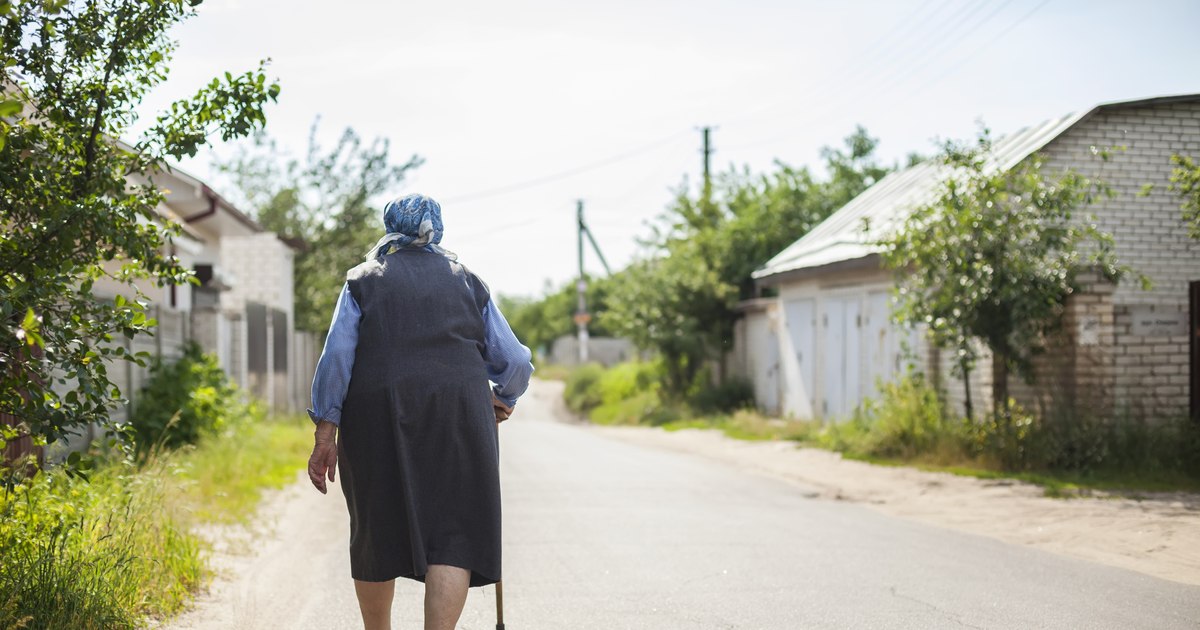
In a video recorded at the beginning of March in an unknown place in Mauritania, a young woman who claims that she comes from the coast of ivory, sits on earth with a child in her arms, speaks to the camera and mourns her suffering. Her husband and other relatives were taken from home in the middle of the night and arrested. She herself, freshly after the imperial cutting, can barely move and eat.
In this usually noticed North-Western African country, which in terms of area is the size of Spain and Germany combined, but poorly populated-it is inhabited by 5 million people-things really get lost when it comes to combating migration. In recent months of Mauritania it has become the most important outlet point on the route to the Canary Islands – and now the government in Nadakszut is dealing with this problem: foreigners, regardless of whether they want get to the EU illegallyor not, they are systematically caught and taken from the country. Mainly to Senegal, but also to Mali.
One raid occurs after the other – in residential districts, at construction sites, at bus stations. Injured persons – like a young woman with a child who, on the recording, asks for help, saying that “people from the ivory coast go through hell in Mauritania,” they inform about it in social media, and the actions of the authorities have been confirmed by Welta by European security circles. It is not clear how many people have been deported from the beginning of March; The Mauritania government did not respond to Welt's inquiry regarding mass deportations.
At the end of March, a government spokesman announced that over 120,000 Foreigners simply did not renew their permits of stays issued in 2022. The deportations were only “routine operations”. Many people they concern do not agree with this: they say that there is simply no legal way to extend the visas.
Amadou Diagne, a Senegalese construction worker, who has lived in Mauritania for years, talked to Welt on the phone and informed about people who “work with dignity and do not plan to go to Europe”, but they are arrested anyway. – Everyone comes with a visa or money, but there is not a single office where you can renew your documents. And now they will arrest people on their basis – he says.
The case of a friend, a bricklayer, is typical, says Diagne: – He was arrested at eight in the morning on his way to work and was transported from one police station for hours. Late in the evening he was loaded onto the gendarmerie bus along with over a hundred other people and taken to the border. The deported citizens of Guinea, Mali, Gambia, Cameroon and the ivory coast were among the deported. Others – like Malian Mohamed Magassa – claim that they were captured in civil taxi by unknown men. “I didn't even realize that they were police officers,” Magasa said.
In the video recording of March 25, Senegalese says that he received a residence permit for barely two weeks earlier, valid for three months: “I was still deported,” he says. Others report to destroy their little businesses in which they previously invested all their assets.
Stringer / PAP
Chairwoman of the European Commission Ursula von der Leyen at a press conference as part of the EU-Azja Central Azja peak in Samarkand, Uzbekistan, April 4, 2025 (illustration photo)
Contract with the EU
Many migrants suspect that NAWAKSZUT acts on behalf of the EU and refers to the migration agreement from the beginning of 2024.which provides for European financial assistance – EUR 210 million [902 mln zł] At the first stage – in exchange for closer border controls and repatriation.
Joint investigations on smuggling networks and the return of people applying for asylum rejected in the EU were also agreed. According to the EU, the fight against illegal migration should be conducted “respecting the rights and dignity” of people affected by it.
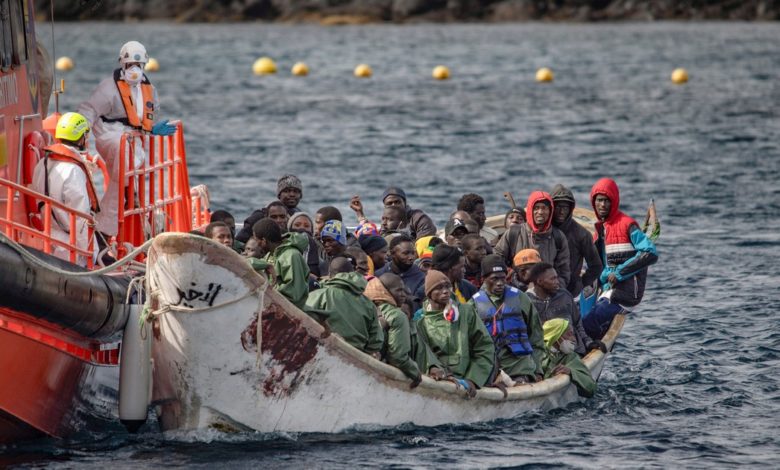
“Lack of security and economic prospects in the region prompts many people to migrate. This often leads them to mauritania first,” said the chairwoman of the European Commission Ursula von der Leyen. Cooperation with Mauritania is particularly important for Spain: the number of people arriving with boats to the Canary Islands has increased enormously in recent years, and the number of people arriving illegally has never been as large as in 2024 (about 48,000).
Madrid maintains the constant presence of security services in Mauritania since the so -called “Cayuco crisis” [cayuco to nazwa małych łodzi, na których przypływają migranci] In 2006, when tens of thousands of people went to the Canary Islands. According to the Ministry of the Interior, 43 officers of the Policia Nacional and 34 members of Guardia Civil are currently stationed in Nawakszut and Port City of Nawazibu, one of the most important metastatic points for migrants in North Africa.
They are involved in joint patrols with local officials, training of Moorish Safety Forces, intelligence activities and monitoring of migration routes. The boats of the Spanish coast guard, off -road vehicles, helicopter and aircraft were also arranged.
Continuation of the material under the video
No consistency
The situation in the country deteriorated at the end of March, when death was recorded. The young Senegalese was stabbed by six men on the street in Nadakszut. Already at the beginning of March there was tensions on the border from Mali. In Gogui, a group of migrants who were to be deported attacked the police station and set it on fire.
The actions of NAWAKSZUTU caused a stir in neighboring countries. In Bamako, the Mussy Minister of Foreign Affairs Moussa Ag Attaher condemned repatriation as “a gross violation of international principles.” In Dakar, the Minister of Foreign Affairs Senegal Jacine Fall described deportations in parliament as “unacceptable”. Consequences of criticism? None.
Even when two weeks ago, delegations from Senegal, Mali and Gambia went to Nadakszut – including foreign ministers, parliamentarians and diplomats – the situation did not change; The deportations were continued without warning.
And so the Office of the International Organization for Migration (IOM) in the Rosso border city has become a shelter for deported people who do not know what to do – people from Gambia, Cameroon, Guinea and Mali. Many of them have no money to return home.
However, it is not clear to what extent this initiative limits illegal migration to the Canary Islands. The fact is that the number of arrivals is still growing. Only in the first quarter of 2025, the Spanish authorities registered over 12,000 people – twice as much as in the same period last year.
I’m Ashley Davis as an editor, I’m committed to upholding the highest standards of integrity and accuracy in every piece we publish. My work is driven by curiosity, a passion for truth, and a belief that journalism plays a crucial role in shaping public discourse. I strive to tell stories that not only inform but also inspire action and conversation.