The winners of the Nobel prize that were born in Romania. What origin did they have and for what they were distinguished with these prestigious prize


Five people born in Romania have managed to obtain the prestigious Nobel prize over time. One of them, however, was considered controversial. Most received the prize for the activity, only one being obtained for literature.
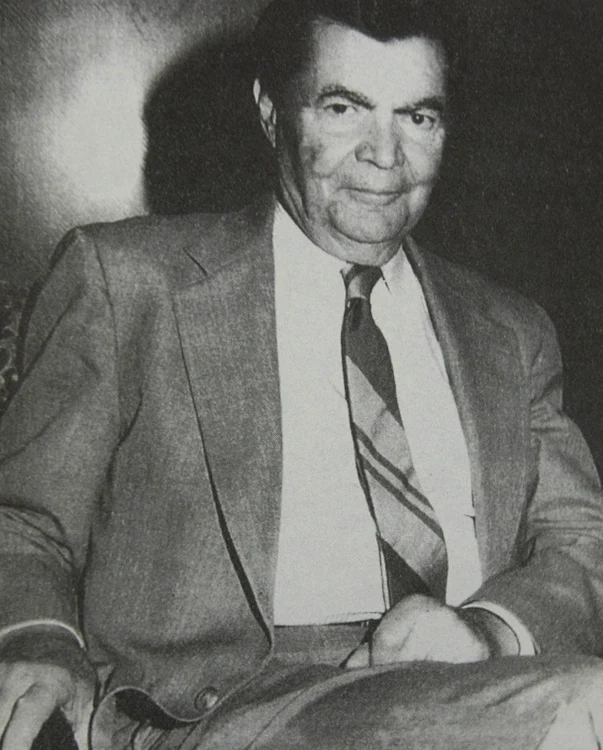
George Emil Palade Photo Truth
Romania ranks 31st place worldwide, in 83 countries, according to the number of Nobel prizes over time. Officially, our country has four Nobel laureates, the majority in the scientific field. They are Stefan Hell, Elie Wiesel, George E. Palade and Hurta Muller. Basically, Romania is in the first half of the world ranking regarding the number of Nobel laureates.
“For the greatest benefit to humanity”
The Nobel Prize was first awarded in 1901 and was offered for five categories or fields of activity: physics, chemistry, physiology or medicine, literature and peace. Since 1968, the sixth prize, the one for economic sciences, founded by the Central Bank of Sweden in the memory of Alfred Nobel was also awarded. Between 1901 and 2025, the five Nobel prizes and the Award for Economic Sciences (from 1969) were awarded 627 times to 1,012 persons and organizations. Five people and two organizations received more than one Nobel prize. These awards are administered by the Nobel Foundation and awarded in accordance with the principle “for the greatest benefit of humanity”. Each laureate receives a 14 karat gold medal, a diploma and a money prize. Starting with 2023, the prize has a value of 11 million Swedish crowns, the equivalent of over one million dollars.
This prize is awarded on the basis of the will left by Alfred Nobel, a chemist, businessman and Swedish inventor who lived between 1833 and 1896. It is famous for the invention of dynamite, but has over 355 important inventions, including artificial rubber. However, the invention and manufacture of dynamite brought it a considerable fortune. Through his last will, signed at the Swedish-Norvegian club in Paris, on November 27, 1895, left 94% of his wealth to set up his name. More precisely, it left the equivalent of 150 million euros for setting up the foundation that offered the prizes of all those who in their field of activity bring “the greatest benefit of humanity”. The five basic categories of the prize were left by Alfred Nobel, by will. In 1897, the executors, Ragnar Sohlman and Rudolf Lilljequist, formed the Nobel Foundation to take care of wealth and to organize the awards.
The first Nobel for Romania
The first Nobel prize obtained by a Romanian was that of George E. Palade, a genius biologist. He received the Nobel Prize for Physiology or Medicine in 1974, together with Albert Claude and Christian de Duve. The prize was awarded for its innovations in electron microscopy and cellular fraction. He laid the foundations of modern molecular cellular biology and his most notable discovery were the ribosomes of the endoplasmic reticulum, in 1955. Paladi was born in Iasi, in a family of teachers, in 1912. His father taught philosophy and his mother taught sciences in high school. After finishing high school, Palade attended the courses of the Carol Davila Medicine Faculty in Bucharest. In 1940, the young Palade also took his doctorate in medicine, so that he could remain as a professor of the University of Bucharest. In 1946, George E. Palade left for the United States for post-doctoral studies. While attending Robert Chambers in the Biology Laboratory of the University of New York, he met Professor Albert Claude.
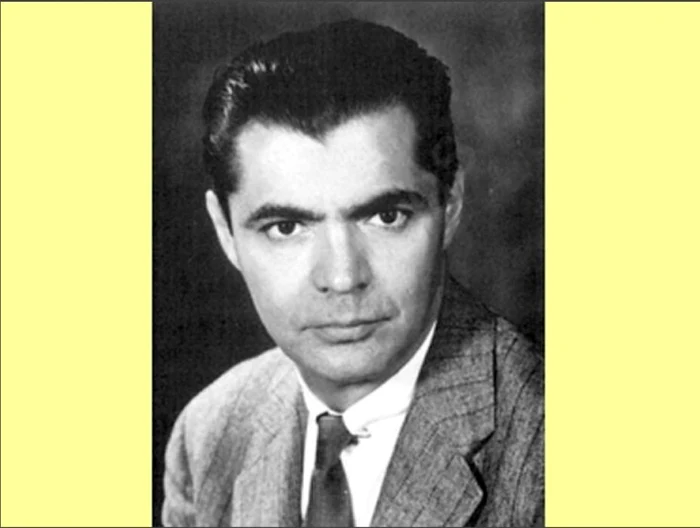
George Emil Palade Photo Truth
Later, he came to work with him at the Rockefeller Institute for medical research. Noticing the situation in Romania, especially after the establishment of the communist regime, but also having all the conditions to dedicate to the study, the Romanian biologist decided to remain permanently in the United States. In 1952, Palade became an American citizen. The American continent worked at the Rockefeller Institute and was a professor at the Faculty of Medicine of Yale and the University of California, San Diego. Palade was a professor of resident medicine in the Department of Cell and Molecular Medicine, as well as dean for scientific affairs within the Faculty of Medicine in Jolla, California.
Due to its qualities, it was multipremiated internationally, receiving, in 1986, including the United States National Medal in the field of biology, especially for “The pioneering discoveries of a range of fundamental structures, extremely organized, in living cells“He was a member of the National Academy of Sciences in the United States and the Romanian Academy.
Two Germans with German Nobel winners winners
On the list of Nobel laureates born in Romania are two Romanians of German origins. It's about Stefan Hell and Herta Muller. Stefan Hell received the Nobel Prize for Chemistry in 2014 for the development of the fluorescent microscopy with super-resolution. He is one of the directors of the Max Planck Institute of Multidisciplinary Sciences in Göttingen and the Max Planck Institute for Medical Research in Heidelberg. Stefan Hell was born in 1962 in a Roman Catholic family of Swabians (no German ethnic) from Arad. He attended the primary school in his hometown and then learned at the Nikolaus Lenau High School in Timisoara. In 1978 he emigrated with his family to Western Germany, his father being an engineer and the teacher. The Hell family settled in the German city of Ludwigshafe.
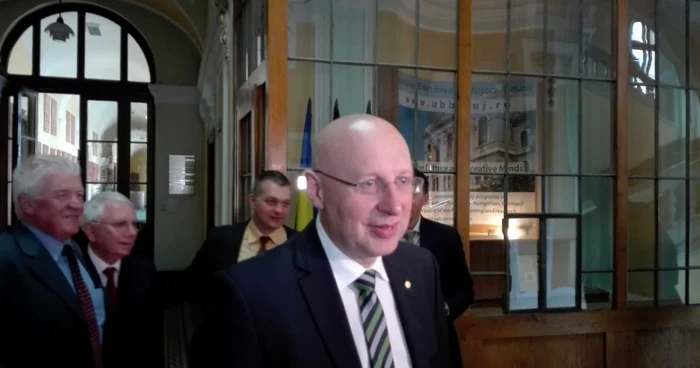
Stefan Hell Photo: Adevărul
Hell graduated from the University of Heidelberg in 1981 and then obtained the doctorate in physics in 1990, being a passionate of exact sciences. After the doctorate, Hell became a well -known inventor especially in the field of microscopy. He worked on improving the depth resolution in the confocal microscopy, which later became known as the 4PI microscope. Hell also worked in the European Molecular Biology Laboratory in Heidelberg, where he managed to demonstrate the principles of Microscopy 4-PI. Later, he worked as a scientific group leader at the University of Turku (Finland), as a researcher invited to Oxford's university, and has become director of the Max Planck Institute for Biophysical Chemistry in Göttingen. Here he founded the nanobiophotonic department. In short, a top researcher worldwide. With the invention and subsequent development of the microscopy with exhaustion of stimulated emissions and related microscopy methods, it has managed to demonstrate that it can substantially improve the resolution power of the fluorescence microscope, previously limited to half the wavelength of the light used.
Also from the community of the Banat swords, Hurta Muller, a Nobel Prize for Literature in 2009, Hurta Muller is a novelist, poet and essayist distinguished with the Nobel Prize for his recognized and appreciated literary works. His books have been translated into over 20 languages, being noticed mainly for his works that describe the terrible effects of communist terror and the oppressive regime of Nicolae Ceausescu. Herta Muller wrote especially in German, but she also has numerous works in Romanian. One of his most appreciated novels is the “angel of hunger”, in which the cruel aspects of the deportation of the Germans in Romania are depicted in the Soviet gulags, in the first years of Romanian communism. In fact, Herta Muller was a fierce opponent of communism and totalitarianism that she felt on her own skin. Muller was born on August 17, 1953 in Nichițdorf, in Timiș county. He came from a family of swabs. After the war, the father worked as a truck driver and the mother was deported to a work camp at Novo-Gullovka, on the territory of Ukraine.
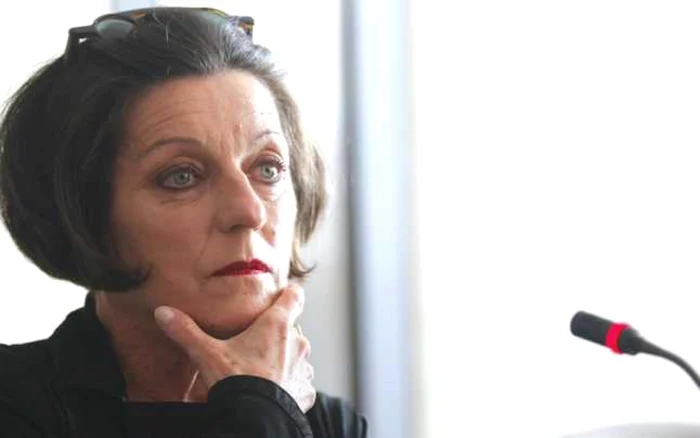
Hurta Muller PHOTO: Adevărul
Herta Muller attended the courses of the University of Timișoara, attending German and Romanian literature studies. During the faculty, he entered a group of Swabian writers and intellectuals from Timisoara called the “Banat Action Group”. This group was considered a reactionary by the communists and Herta Muller came to the attention of the Security. After finishing the faculty he refused the position in education but worked as a translator at the Tehnometal Enterprise and as a substitute teacher at the Nikolaus Lenau High School in Timisoara. He started literary in 1982, with the volume “Low lands”, but being strongly censored by the communists. In 1984, the uncensored manuscript was also published in Federal Germany, which brought to Hurte Muller a terrible verdict from the communist authorities: he was no longer allowed to publish. She was pursued by the Security and in 1987 she managed to emigrate to Western Germany, along with her husband, Richard Wagner. In Germany it imposed it as a very talented writer, being accepted in 1995 in the German Academy for Language and Poetry. There were three proposals for the Nobel Prize for Literature from the German Government. In 2009 he won the Nobel.
From a childhood and a teenager on the edge of the knife to the Nobel Prize
The fourth winner of the Nobel Prize born on the territory of Romania was the well -known Elie Wiesel. He was born in Romania, at Sighetul Marmatiei, on September 30, 1928, in a Jewish family. Throughout his life he was a writer, teacher, political activist. He wrote 57 books in French and English. The best known is the “night”, in which he describes his experiences as a prisoner in the Nazi camps in Auschwitz and Buchenwald. As a political activist, Elie Wiesel has become an ordinary speaker on the Holocaust and has remained a firm defender of human rights throughout his life, pleading for justice in many causes throughout the world. He was a professor of humanist sciences at the University of Boston, where the “Elie Wiesel” Center was created for Jewish studies, in his honor.
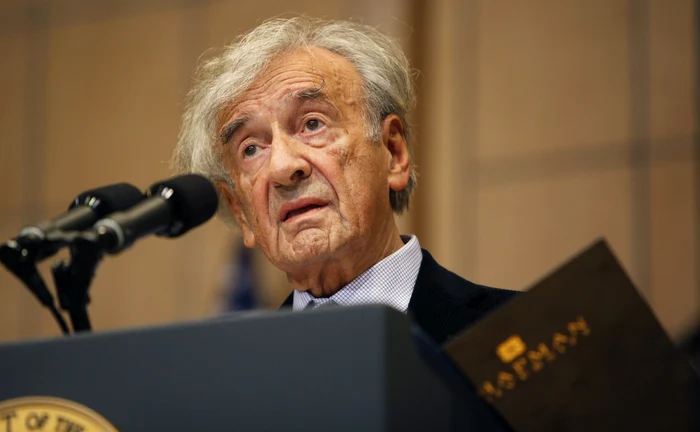
Elie Wiesel Photo Truth
Last but not least, Elie Wiesel was a founding member of the Board of Directors of the Human Rights Foundation. For his work, he received the Nobel Peace Prize in 1986. The most tremendous period of his life is that of the anti-Semitic persecution in the years of World War II, an experience that has deeply marked and was an important engine in Elie Wiesel's fight for various humanitarian causes. The cruel story of Elie Wiesel's torments began in 1944, when Nazi Germany occupied Hungary in the operation “Measure” and began the purification of the Jewish population and in North-West Transylvania. Eli Wiesel's family was taken to one of the two ghettos established in Sighet. In May 1944, they were taken to the Auschwitz concentration camp. Upon arrival, the younger mother and sister were killed in the gas rooms. Elie and his father were sent to the forced work camp. Later, he was transferred, along with his father to Buchenwald.
Elie Wiesel was saved after the third American army released the camp on April 11, 1945. His father died just days before. Orphan, undernuting and grieved by the despair that he survived while his family died in the camp, Elie Wiesel had the power to go forward. After staying for a period of placement, Wiesel traveled to Paris, where he learned French, studied literature, philosophy and psychology in Sorbonne. He lived and educated himself in an extremely select intellectual company. He listened to lectures of the philosopher Martin Buber and of the existentialist Jean-Paul Sartre. Later, he would settle in the United States.