
publication
2025-04-11 12:36
Observers of a strong oil discount had the right to expect a significant decrease in fuel prices. However, this did not happen. Retail rates for diesel or gasoline barely twitched, despite the fact that the Brent oil course was the lowest in over 4 years.
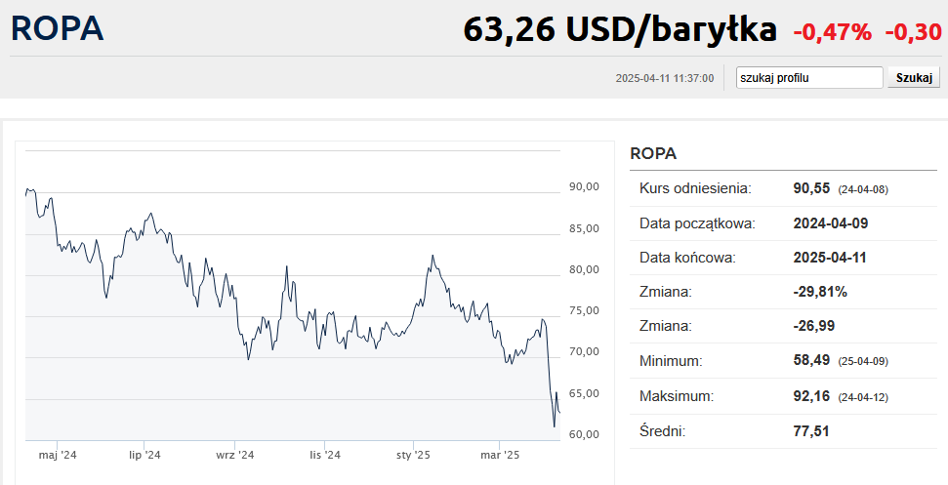
Since the beginning of April, Brent oil has become cheaper from around USD 75 to USD 63 per barrel. On Wednesday, for the first time since February 2021, it was valued below $ 60 per barrel. This is of course the effect of fears that the customs wars of President Trump will paralyze international trade and reduce fuel demand.
It would seem that in such a situation we will see significant discounts at distributors quite quickly. None of these things! Yes, some corrections could be seen, but so far they were rather cosmetic. At the end of the passing week, the average retail price of PB95 gasoline was PLN 5.98 And it was only three grosze lower than a week earlier – according to BM Reflex data.
Diesel oil was tanked on average after 6.06 PLN/lso just 4 gr/l cheaper than a week ago. Both in the case of ON and PB95 these were the lowest average retail prices for half a year. For the previous time, we observed average rates below PLN 6/l at the turn of September and October last year. At that time, Brent oil cost $ 75-80 per barrel.
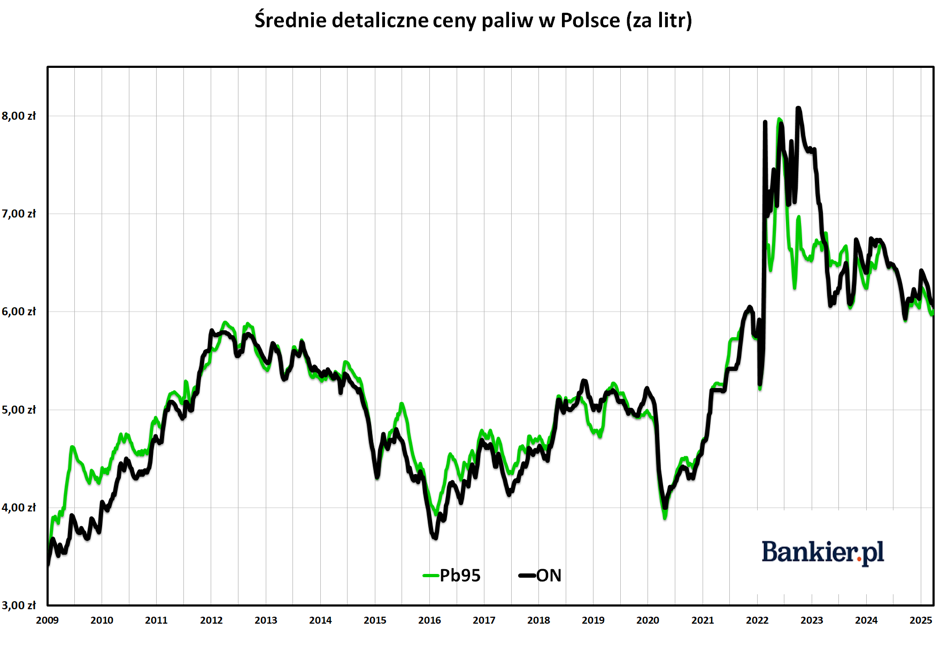
It must be noted that we refuel much cheaper than a year ago. The average retail price PB95 on April 10 was 69 gr/l lower than 12 months ago, while diesel at that time got cheaper at 67 gr/l. Only autogas prices remain significantly at levels (i.e. by 26 gr/l) higher than in April 2024.
What do fuel prices depend on?
Let's start with the fact that fuels could be much cheaper were it not for taxes imposed by the authorities. From each liter of gasoline purchased or diesel, over 40% goes into the hands of the state. For example, if the VAT rate was still 8%, gasoline could cost about PLN 5.00/l, and diesel oil in PLN 5.10/l. In addition, the rulers could bear the “emission fee” introduced by their predecessors, which would reduce gross prices by another 10 gr/l.
Secondly, global fuel trade is settled in American dollars. And here in the last few dozen hours we have also received very good news. On Friday before noon, the dollar cost slightly less than PLN 3.76 and was the cheapest since June 2021. Therefore, this is another argument for a decrease in retail fuel prices expressed in PLN.
However, taxes, oil and dollar are not everything. We do not refuel oil, but ready fuels. And the cost of the raw material is only a dozen or so percent of the gasoline price. Fuel ratings on global stock exchanges are decisive here. At the end of the week, gasoline gallon in New York was valued at around $ 1.95. On Wednesday it was even less than USD 1.90 and the least from September. However, these were not low prices by the standards of what we got used to before the Russian invasion of Ukraine in February 2022.
On the lowest level since 2021, there were stock market lights of diesel. Fuel for London ICE was valued at less than USD 600 per ton. It is over 100 USD/t less than at the end of February.
Cheaper in wholesale, cheaper in detail?
And only these prices are transferred to the Polish wholesale market, and from it with a considerable delay they only “permeate” to detail. On April 11, Orlen offered Eurosuper95 gas 4,470 PLN/m3, which after adding 23% VAT translated into PLN 5.50/l. It's as much as 26 gr/l less than a week ago! While maintaining such wholesale prices in the following days Gasoline at stations could easily cost less than PLN 5.80/l.
Similarly, diesel, which in the Friday price list of Orlen was 4509 PLN/m3, i.e. about 5.55 PLN/l after adding VAT. It's as much as 27 gr/l cheaper than a week ago. In such a liter system, at stations, it can soon cost less than PLN 6.
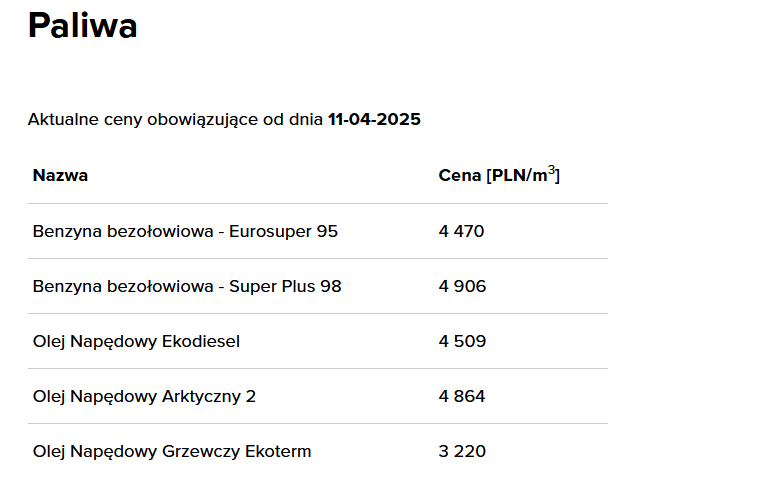
An open issue is what price policy the largest station operators with Orlen will accept. In the nearby past, more than once and twice it happened that prices on pylons were very sluggishly and only reflected the situation on the wholesale market only to a small extent. Here, everything depends on the strength of competition in local (i.e. in individual cities or poviats) markets and the price policy of the largest players.