From the sending of Ukraine to Orban's ally. Who will sit on the papal throne. Possible successors and their positions to the Russian-Ukrainian war

After Pope Francis's death, which occurred on April 21 at the age of 88, the Catholic Church is preparing for one of the most important moments in its recent history: the choice of the new Pontiff.
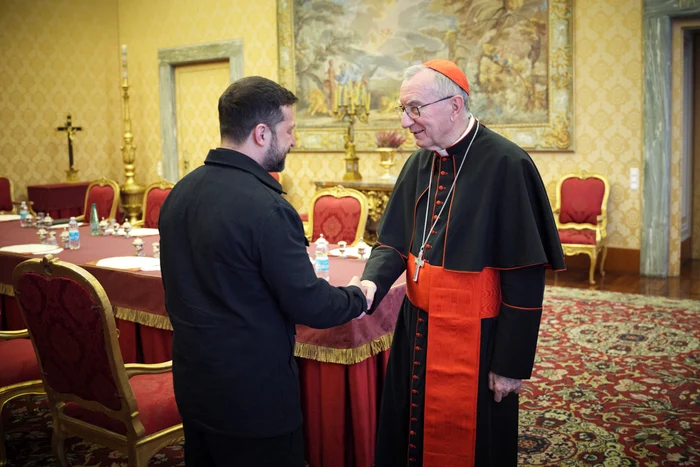
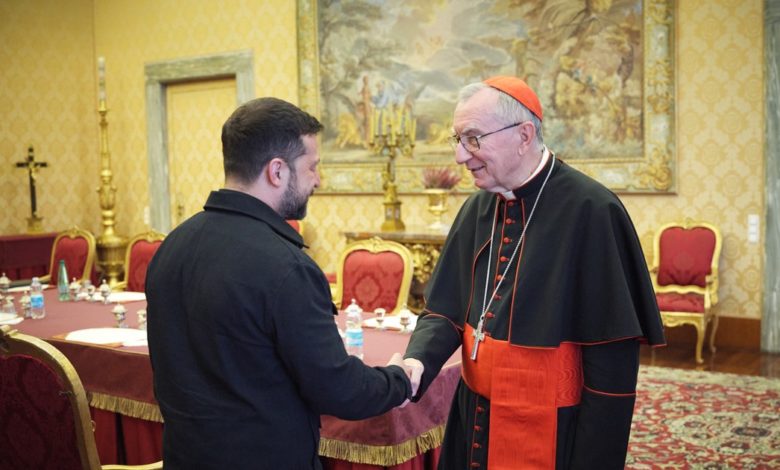
Volodimir Zelenski's meeting with Pietro Parolin, favorite at the papal/photo chair
Described by his admirers as a gentle reformer, close to people, Pope Francis left behind a controversial inheritance in Eastern Europe. In Ukraine, his statements regarding the war started by Russia have aroused dissatisfaction: repeated calls between Fraternity between Ukrainian and Russian “brothers” were perceived, in full genocide and war of aggression, as a form of relativization of Moscow's guilt, writes Kyiv Independent.
In this tense context, the choice of the future Pope also acquires a geopolitical dimension. Could the new pontiff repair the wounds left by the words of his predecessor? Will he be able to formulate a clear moral position compared to the worst conflict in post -war Europe?
Favorites of Conclav and the shadows of the East War
The conclave is about to start in the next two weeks. 135 Cardinals Electors will decide the future leader of the 1.4 billion Catholics. Among the “papabili” – the cardinals considered with real chances – are veteran diplomats, rigid conservatives, progressives willing to dialogue and even figures with questionable links with authoritarian leaders.
Pietro Parolin: career diplomat, Ukraine connoisseur
The Italian cardinal Pietro Parolin, 70 years old, former Secretary of State of the Vatican, is seen by many as a favorite. With a diplomatic career for over 30 years, Parolin has actively involved in the sensitive files of the church, from relations with China to those with the repressive regimes in Venezuela and Vietnam.
Although his visit to Vladimir Putin in 2017 was criticized, Parolin later consolidated his image in the eyes of Kiev. The ambassador of Ukraine to the Vatican, Andrii Iuraș, described as “a man who knows Ukraine very well” and who “constantly supported the Ukrainian position in front of the holy chair.”
Parolin visited Ukraine during the war and said that military support for self -defense is morally justified. His message is clear: peace is not imposed, but is built over time, with mutual respect – but without ignoring the reality of aggression.
On Saturday, on the funeral of Pope Francis, the President of Ukraine, Volodimir Zelenski, met with the Vatican Secretary of State, Cardinal Pietro Parolin.
The President of Ukraine and the Vatican Secretary of State have paid special attention to the problems of the way of making a straight and lasting peace. The president informed common diplomatic efforts with the United States, Europe and other countries of the world to establish a complete, unconditional fire cease that should be the first step.
Zelenski was pleased with Cardinal Parolin for his position against the right of Ukraine for self -defense and the impossibility of imposing peace conditions to a country that has been attacked.
“Ukraine matters the Holy See to continue playing an important role in uniting international efforts to make peace, the return of Ukrainian children illegally and deported by Russia and the release of prisoners”, It is shown in the statement of the Ukrainian Presidency.
This is not the first communication between the head of state and Pietro Parolin. Previously, Volodimir Zelenski spoke with the Secretary of State on the return of Ukrainian children abducted by Russia and the assistance to their return.
The holy chair received a list of Ukrainians held in Russian prisons and camps, and Ukraine is based on its assistance to release these people.
Matteo Zuppi: Pope Francis's man and peace messenger
Only a younger year, Cardinal Matteo Zuppi, Archbishop of Bologna and president of the Conference of Italian bishops, is perceived as Francisc's spiritual heir. In 2023, he was appointed the Vatican emissary for peace in Ukraine.
Although he sought the dialogue with both parties, including Russian officials accused of war crimes, his relationship with the Sant'Egidio community – a group close to the Patriarchate of Moscow – arouses suspicions among the Ukrainians. Moreover, this approach led to the explicit avoidance of the term “aggressor” in the official statements.
Peter Erdo: Cardinal Hungary and Orban's ally
The Archbishop of Esztergom-Budapest, Peter Erdo, is the favorite candidate of the conservative wing. At 72, he is known for his harsh positions against migration and LGBT rights – convergent with the policies of Prime Minister Viktor Orban.
Erdo did not condemn the Russian aggression, but preferred a vague speech about the “sadness of the war” and organized peace processions. In a climate in which Hungary constantly blocks the aid for Ukraine and seeks reconciliation with the Kremlin, a possible choice would transmit an ambiguous signal.
Raymond Leo Burke: Radical Conservative, Trump's ally
US cardinal Raymond Burke, 76, is a declared opponent of Francis's reforms. Former head of the sovereign order of Malta, he became known by ultra -conservative positions and conspiracy theories – from the opposition to vaccines, to Donald Trump's praise.
He claimed that Joe Biden should not receive the communion because of pro-avort policies. Burke is a vehement critic of Western secularism, but has not offered a coherent position on the Ukraine war. The proximity to Trump, which has been pronounced against support for Kyiv, is grieving.
Robert Sarah: Traditional African with Russian sympathies
The 79 -year -old Guinean Robert Sarah became a favorite of the radical right for his austere style and for the criticisms of the “secularized West”. In a volume of 2019, Sarah prahiogy The moral recovery of Russia through the Orthodox Church-although it opens the aggression on Ukraine.
His statements about the conflict are vague, but before the invasion claimed that the opposition between Ukraine and the Patriarchate of Moscow is a “stupid challenge”. In the current context, these positions raise question marks.
Luis Antonio Tagle: Filipino Cardinal and the voice of compassion
Another increasingly spoken name is that of Luis Antonio Tagle, 67, former president of Caritas Internationalis. Although its direct involvement in Ukraine's humanitarian support was significant, its speech remains moderate and general.
Tagle lamented the tragedy in Mariupol, when two Caritas employees and their families were killed by a Russian howitzer, but without explicitly denouncing the aggressor. Subsequently, it was removed from the leadership of Caritas, in the context of some administrative problems.
Among the other possible candidates are the Pierbattist Pizzaballa, the Latin Patriarch of Jerusalem, the Maltese Mario Grech or Ghanul Peter Turkson.