In Europe, there is a conviction that Ukraine should increase its own armament production, and its allies must invest in the development of the Ukrainian military-industrial complex, writes “The Economist”.
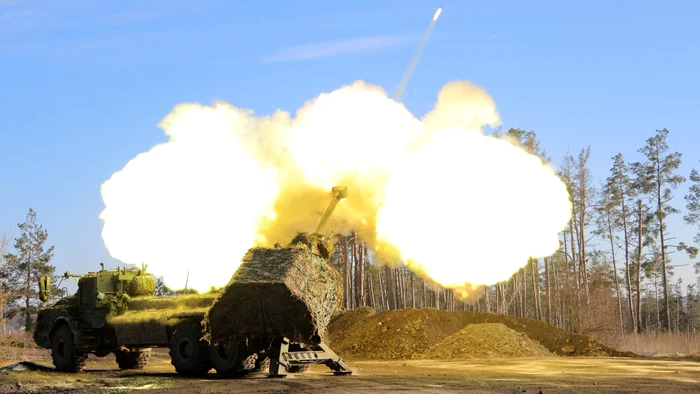
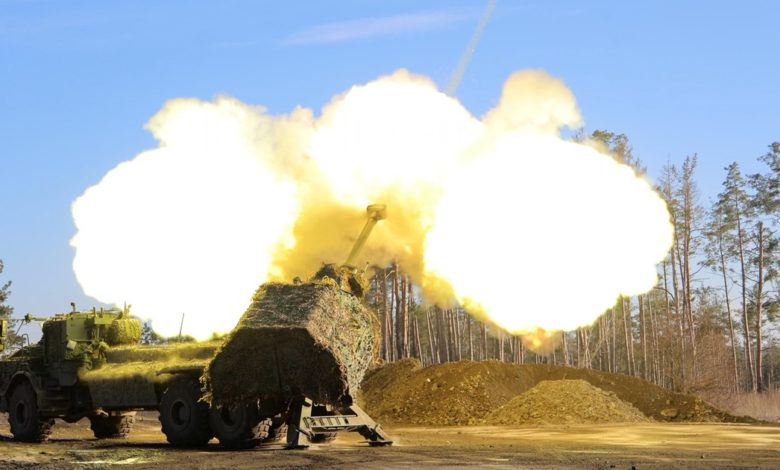
Archer artillery system in Ukraine Photo Shutterstock
An cessation of fire between Russia and Ukraine still seems like a distant goal, and Europe progresses slowly in creating “security forces” that require it. The US military aid decreases, and will soon be completely exhausted, unless Donald Trump will resume this support, which seems extremely unlikely. The best way to guarantee the security of Ukraine, support its supporters, is to arm the teeth, whether or not there will be a cessation of fire. In this regard, on March 19, the European Commission presented a “Pork strategy of steel spies” in two stages for Ukraine.
First of all, Europe will purchase several ammunition and weapon systems for Ukraine, including essential anti -aircraft defense missiles. Second, Ukraine's defense industry will be strengthened “The most efficient and economically profitable way to support Kiev's military efforts.”
The plan was designed by the former Estonian Prime Minister and the current head of EU diplomacy, Kaja Kallas, who intends to double this year military aid, reaching 40 billion euros.
Investments in the Ukrainian military industry
Arguments in favor of investments in the Ukrainian military industry are extremely convincing. Ukraine was a major manufacturer of armament during the Soviet period, but this industry was considerably weakened after the country achieved independence in 1991. However, three years ago, when Russia launched a large -scale invasion, there was still an engineering basis and a flourishing technological sector to rely. Ukraine had a solid foundation: a well-established production and many engineering schools and universities, which provided specialists for the military-industrial complex, says Andrei Zagorodiuk, former Minister of Defense and now head of the Center for Defense Strategies in Kiev.
“From 2022, the development was extremely active. The innovations are constantly implemented”he adds. In the West, military acquisitions usually last for years, but in Ukraine, an idea can become armament in the hands of a soldier in just a few months.
Last year, Ukrainian armament companies produced products worth $ 10 billion, according to a March report of the Ukrainian Institute for the future. The growth is truly amazing: three times more than 2023 and ten times more than 2022. Over 800 private and state -owned companies hire 300,000 skilled workers. Aleksander Kamișin, who supervises the defense industry in the team of Ukrainian president Volodimir Zelenski, says that this year the volume of production will reach about 15 billion, but the potential of the industry is about 35 billion. The main obstacle is the lack of money, but it hopes that the Allies will help in this regard.
World leader in electronic war technologies
It is not clear what proportion of the needs of Ukraine's armed forces are covered by local production. The report of the Ukrainian Institute for the future indicates a figure of 30%, but Zagorodiuk believes that it is in reality approaching 50%. Certainly, production is constantly increasing, despite continuous Russian blows on factories. “Some targets have been hit five times or even more often.”says Zagorodniuk. “But they persevered.” The factories are dispersed throughout the country and occupy a vast surface, which makes them more resistant to attacks.
This year, Ukraine expects to produce 5 million FPV drones, which dominate the battlefield, compared to 2 million last year. It also intends to launch 30,000 larger drones, long -range, for deep -back strokes. In addition, Zelenski has set the goal of producing 3,000 modern cruise missiles, such as Neptune, with a radius of 1,000 kilometers (one of them recently hit a Crimea oil refinery), and “Rocket drones” like the Palianița turboje. Ukraine also tests their own ballistic missiles on Russian targets: they are extremely fast and therefore harder to intercepted. However, Fabian Hoffman's missile expert believes that these big missiles are very bold.
The constant updates made Ukraine a world leader in electronic war technologies. Niko Lange, former official of the German Ministry of Defense, believes that Ukrainian systems are now superior to both Russian and Western. One of the best is the Lima electronic war system, which suppresses the guided guide systems, which until recently devastated the defensive positions of the Ukrainian armed forces.
Ukraine also increases its standard ammunition production. Last year, he sent more than 2.5 million artillery and mortar supplies to the front, which was much facilitated by partnerships with the Norwegian and Franco-German company KNDS. (However, it should be mentioned that there have been complaints related to the quality of the mortar butter products produced in Ukraine.) The monthly production of the Bogdana self -propelled howitzer, highly appreciated by the heavy car factory in Kramatorsk has increased from six to almost 20 units. It is three times faster than the production of the French company Nexter for more expensive self -propelled howitzers. With more funds from Europe, Bogdana production could double.
Partnerships with European and American companies are vital
However, there are significant gaps in Ukraine's production capacities, so partnerships with European and American companies are vital. In particular, it is still necessary to import chassis for the armored vehicles necessary for the transfer of staff on the front line. German giant Rheinmetall recently opened the first of the two factories planned in Ukraine for Lynx infantry combat vehicles.
Another important task is to reduce Ukraine's dependence on Western anti -aircraft defense systems, especially American ones. “The required number is so large that it cannot be satisfied even with imports”recognizes Zagorodiuk. In January, the chief commander of Ukraine's armed forces, Aleksandr Sîrski, confirmed that Ukraine develops a system that could bring down the ballistic missiles. A collaboration with the French company Thales (part of the consortium that produces the Samp-T air defense system) will provide access to advanced radars and optoelectronic.
European direct investments in Ukraine defense companies are prevented by the country's imperfect legislative system and its low credit rating. Lange believes that investments should go to more dynamic private companies than to the state. In addition, Ukrainian companies are facing difficulties in supply chains. Fabice Potier, former director of NATO for politics and planning, is worried about Kiev's addiction to Chinese Hubs for drones. He believes that Europe should provide Ukrainians with “optics, gyros, sensors and flight control systems.” Zagorodiuk believes that Europe could ensure Ukraine supremacy over Russia by providing advanced cars and software.
The fastest way to arm Ukrainian fighters (and almost everyone agrees with it) is the so-called Danish model: Ukraine sets priorities, Copenhagen pays, and Danish experts evaluate suppliers and monitor the fulfillment. Last year, the Danes bought 18 Bogdana howitzers, who reached the armed forces of Ukraine. Other funds were directed to long -range drones and rocket systems. 125 million euros came from the Danish national fund for Ukraine, 20 million from Sweden, 2.7 million from Iceland and 390 million euros from the interest of frozen Russian assets. On April 3, Denmark promised to allocate another 264 million euros. Ukraine hopes that at least one billion euros will be allocated for this initiative this year. Kamîșin says that “More than five ” European countries have already adopted the Danish model.
Unfortunately, the Kallas plan failed at the European Summit on March 20. Some have accused her of not carrying out adequate diplomatic work and that he did not obtain the prior consent of his colleagues. As a result, the plan was mitigated: only 5 billion euros for ammunition will be allocated. However, Kallas is determined to revitalize the plan. And, if it fails again, Europe will deny Ukraine the fastest and most efficient opportunity to defend itself on its own, conclude The Economist.