Pakistan offers to host Iran-US talks. What are the chances of a diplomatic settlement of the war

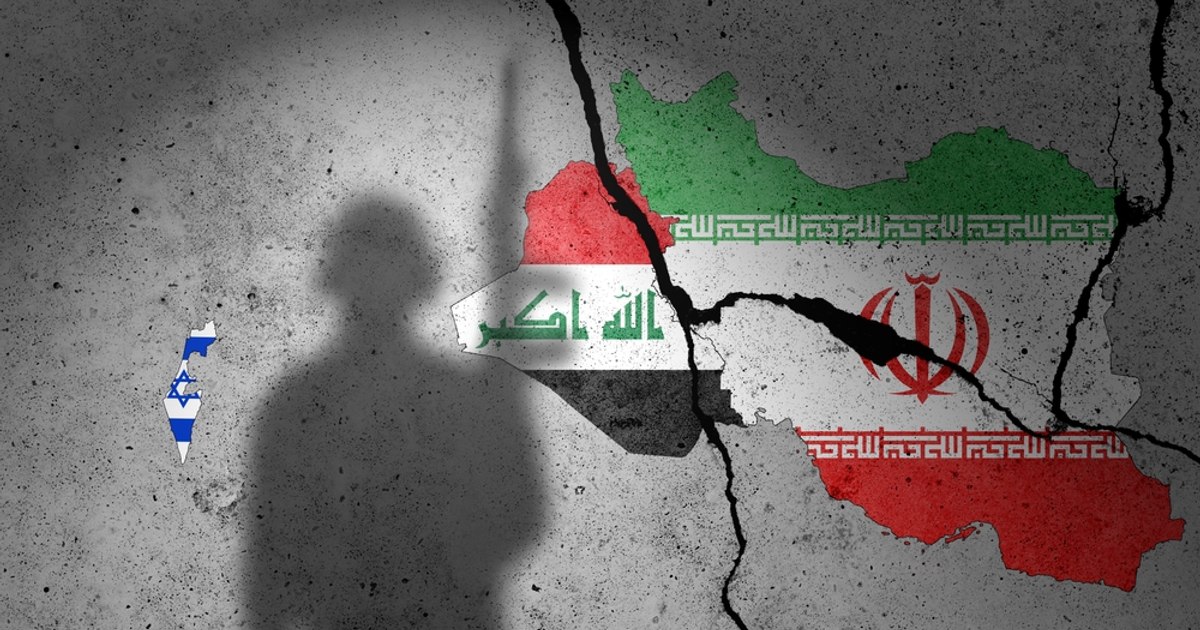
Pakistan has expressed willingness to host talks between the United States and Iran, while conflicting claims of ongoing negotiations highlight the fragility of diplomatic efforts surrounding the conflict that has led to one of the biggest energy crises in recent history, Al Jazeera reports.
SHUTTERSTOCK PHOTO
The mediation offer came from Pakistan's Ministry of Foreign Affairs. “If the parties wish, Islamabad is always willing to host talks,” spokesman Tahir Andrabi told Al Jazeera on Tuesday. He added that Pakistan “has consistently supported dialogue and diplomacy to promote peace and stability in the region.”
Shortly after, Prime Minister Shehbaz Sharif reinforced this message in a post on X. Pakistan “is ready and honored to host to facilitate meaningful and conclusive discussions towards a comprehensive resolution of the ongoing conflict.”
Conflicting Statements on US-Iran Negotiations
The diplomatic initiative comes amid deeply different versions presented by Washington and Tehran. US President Donald Trump claimed that negotiations are already underway and that the two sides have reached “major points of agreement.”
However, Iran has categorically denied that it is involved in direct talks with the United States.
However, several US and Israeli publications report that there are indirect channels of communication, with Pakistan, Egypt and Turkey acting as intermediaries. These steps are aimed at mediating an exit ramp from a war that has caused the worst energy crisis in modern history, notes Al Jazeera.
Some reports suggest that Islamabad could host talks as early as this week. According to Axios, two possible formats are being considered: one in which Iranian Foreign Minister Abbas Araghchi would hold talks with special envoy Steve Witkoff and Trump's son-in-law Jared Kushner; another would involve a meeting between US Vice President JD Vance and Iranian Parliament Speaker Mohammad Bagher Ghalibaf. The latter rejected Trump's claims, categorizing them as an attempt to “break out of the impasse in which the US and Israel are caught.”
Discreet diplomacy behind the scenes
Although formal negotiations remain unconfirmed, a number of high-level contacts indicate an intensification of diplomatic activity. Pakistan's army chief, Field Marshal Asim Munir, spoke with President Trump on Sunday, and Prime Minister Shehbaz Sharif called Iranian President Masoud Pezeshkian on Monday. Foreign Minister Ishaq Dar also held separate talks with his counterparts in Iran and Turkey.
Iranian Foreign Ministry spokesman Esmaeil Baghaei confirmed receiving messages through “friendly countries” that relayed a US request for negotiations, adding that Tehran responded in accordance with the country's “principled positions.”
An Iranian official quoted by Press TV said Tehran's conditions for ending the war include guarantees against future military action, the closure of all US military bases in the Gulf, full reparations, an end to regional conflicts involving Iran-allied groups and a new legal framework for the Strait of Hormuz.
The White House declined to provide details. “These are sensitive diplomatic discussions and the US will not negotiate through the media,” spokeswoman Karoline Leavitt said.
Experts describe the situation as one of fumbling, enough to put some military action on hold, but not one that will bring substantial progress for now. Mehran Kamrava, director of the Iran Studies Unit at the Arab Center for Research and Policy Studies and a professor at Georgetown University in Qatar, said Washington's approach follows a familiar pattern. “This is consistent with Trump's recourse to coercive diplomacy and the assumption that he can force Iran to negotiate,” he said, noting that Iran has traditionally resisted such tactics.
Trita Parsi of the Quincy Institute says the war paradoxically strengthened Iran's position. “The reality is that the war gave Iran de facto sanctions relief. Iran now exports more oil than before the war, at double the price,” he said. “He has leverage and will not accept an end to the conflict without formalizing the easing of sanctions.” He added: “I see no signs that the US is fully ready for serious diplomacy.”
Former Pakistani diplomat Khalid Masood believes pressures are mounting for all sides. “The US has realized that there are limits to hard power,” he said. “There is war fatigue with regional and global consequences, and US allies are feeling it. When you put all of this into context, you come to the conclusion that the US is now eager for some form of understanding.”
The entry of the EU into the territory once strictly reserved for US interests
However, Dania Thafer of the Gulf International Forum warned that any deal would require sustained diplomatic efforts. “Iran may seek to impose sufficient costs to strengthen its long-term deterrence,” she said.
The war is fueling the global energy crisis
Diplomatic efforts are taking place amid a rapid escalation. The current conflict began on February 28, when the US and Israel launched coordinated attacks that killed Iranian Supreme Leader Ali Khamenei and other senior officials, just a day after Oman's foreign minister announced progress was “within reach.”
Iran responded with sustained missile and drone attacks on Israel, US bases and infrastructure in the Gulf states.
The global impact was severe. The International Energy Agency warns that the disruptions exceed the oil crises of 1973 and 1979 combined. The Strait of Hormuz, through which about 20% of the global oil flow passes, has been virtually closed, although limited transit has recently been allowed for certain countries.
Trump initially issued a 48-hour ultimatum to reopen the strait, later suspending the threats for five days. Meanwhile, the Pentagon has ramped up military deployments, including sending the USS Boxer and some Marine units, while considering additional options, such as targeting Kharg Island.
Masood said this mobilization is deliberate. “If the talks fail, the situation could escalate,” he warned, adding that Israel could act as a disruptive factor.
Pakistan's strategic role
Pakistan's possible mediation reflects its unique geopolitical position. The country maintains relations with both Iran and US Gulf allies and is the only Muslim-majority nuclear-armed country that does not host US military bases.
Trump has previously acknowledged this advantage, saying Pakistan “knows Iran very well, better than most.”
Islamabad has been active in diplomatic efforts since the beginning of the conflict. Foreign Minister Ishaq Dar told parliament that Pakistan is “ready to facilitate dialogue between Washington and Tehran in Islamabad.”
Analysts believe these relationships provide credibility. “Everyone is open to Pakistan playing a mediating role,” Masood said.
Former diplomat Salman Bashir pointed out that mediation also serves Pakistan's interests. “Pakistan's relations with the Trump administration have been very good and we have also discussed with Iran. It would also be in our interest as we could be affected by this conflict.”
Mojtaba Khamenei would agree to negotiate peace with the US, Israeli sources claim
Regional dynamics and the limits of mediation
The groundwork for the latest diplomatic action was laid in Riyadh last week, when Saudi Arabia convened an emergency meeting of foreign ministers from 12 Arab and Islamic countries, including Pakistan and Turkey.
During the meeting, a joint statement was issued condemning Iran's attacks on the infrastructure of the Gulf countries and affirming their right to self-defense.
Saudi Foreign Minister Prince Faisal bin Farhan Al Saud warned that Riyadh's patience was not unlimited and that the kingdom “reserves the right to take military action if necessary.”
In parallel, the foreign ministers of Pakistan, Saudi Arabia, Egypt and Turkey also held a separate meeting, the first of its kind, and some Pakistani sources say the proposal of Islamabad as a potential venue for US-Iran dialogue stems from this meeting.
Meanwhile, the Gulf states that have been targeted by Iran have notably avoided formal mediation.
Thafer, of the International Gulf Forum, said that calculation was unlikely to change until attacks on Gulf countries stopped.
“For some Gulf states, the cessation of hostilities against their country would be a prerequisite for assuming any meaningful mediation role,” she said. “If a country like Pakistan or any other country could facilitate this outcome, it would probably be perceived positively in the Gulf capitals.”