Globalization cannot be reversed. Donald Trump pushes the US on the side of the road

The reaction of the markets allowed to compare what was happening, with the events of 2020 or 2007-2008. In just two days, the value of American companies dropped by $ 8.1 trillion. (approx. PLN 3.2 trillion), and the S&Pt S & P500 stock index dropped by 10.5 percent. Experts began to talk about A full -scale trade war – especially after China, the main economic and geopolitical competitor of the US, announced symmetrical retaliation.
There were even analogies between the decision of the White House and the infamous Smoot-Hawley act of 1930, considered one of the factors that deepened the great crisis.
Today, there is no doubt that new trade restrictions are a radical reversal of the main dominant trend in US economic policy since World War II: reducing all trade barriers and demanding the same from all your partners. As a result of this policy, the average global customs tariff dropped from 40 percent. In 1946, up to less than 7.5 percent in 2005
High protectionist rates have become the share of “undeveloped” peripheral countries. This course was the driving force of globalization for a long time, a America followed him even when it seemed unfavorable. At the end of the 90s, when the Asian financial crisis broke the currency of the region's countries, making their goods more competitive, the United States in no way limited imports from Southeast Asia.
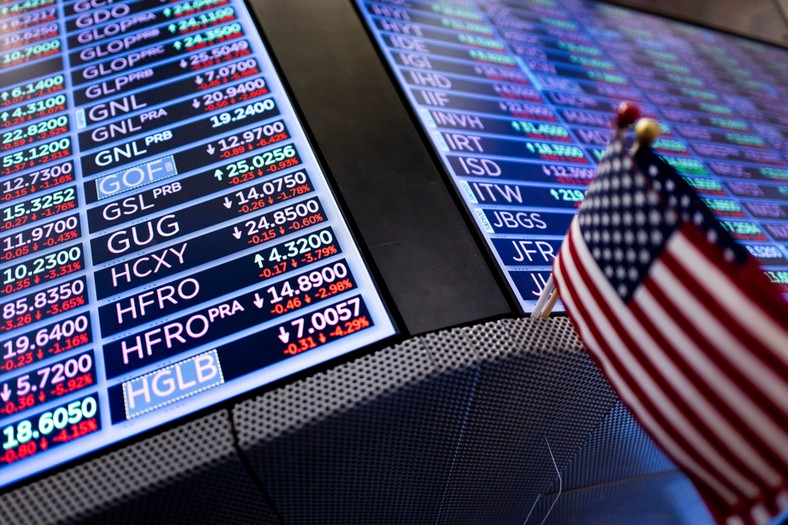
The screen on the New York Stock Exchange, April 8, 2025.
Now that trends are changing, it is worth asking two questions: why is this happening and how can the rest of the world react?
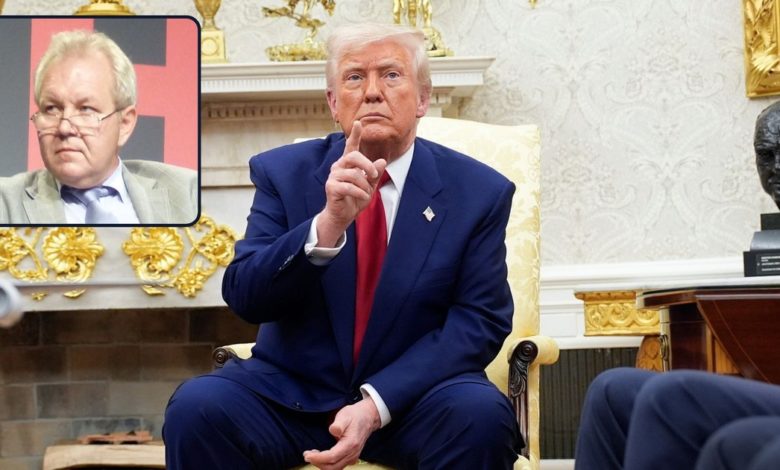
The answer to the first question should not be reduced to the peculiarity of Donald Trump's psyche and the mental instability of his voters. The president speaks directly about the “exceptional state” in the economy and in many respects is right – The problem, however, is that this state of emergency did not arise yesterday.
The problem of too low duties has been discussed for hundreds of years and each time it turns out that he is most interested in it A country that was a global economic leader at one or other time. In the 19th century it was Great Britain – and everyone remembers how many brochures were written by progressive economists about how free trade ruins poor countries.
World War I weakened England and strengthened supporters of protectionism; In response to the growth of customs in Europe in 1922, the Congress approved the Fordney-McCumber Act, increasing the fragmentation of the global economy and By tightening the trends that led to disaster at the turn of the 1920s and 1930s.
When World War II ended, the United States, as the undisputed economic hegemon, has already become an indicator of trends in free trade – and the fact that the situation is now uncomfortable for them says only one thing: Their dominance is over, as it used to be Great Britain.
The desire to protect against competition comes with the realization that you are losing – and the rapid increase in the US trading deficit from the beginning of the 1990s. This is what shows this, no matter how much we hear about “one -handed moment” (according to Charles Krauthammer – a short period of total US domination after the Cold War). So I think that Donald Trump's initiatives are not intended to help the United States “become great again”, but prevent their role in the global economy – Which is very likely.
The world will manage without America?
Hence the preferred response to changing the US course: the world should do everything possible to avoid engaging in a “tariff race”, and even on the contrary, Try to continue to liberalize trade beyond relations with the USA. As Jim O'Neil rightly writes in Project Syndicate, “Limiting the excessive dependence of the world economy on the” unsaturated American consumer ” – if it is carried out carefully – he will only lose the Americans themselves.”
I would even add that the country that could benefit the most on Donald Trump's policy are … China, which since 2008 have been maintaining the position of a leader in industrial production and has long been able to afford a more liberal commercial policy. This could open new horizons for Beijing and make them a real leader of globalization – which, I think, has little chance of inhibition even in the context of new duties. Today's world is much more technologically advanced and open than 100 years ago: It is almost impossible to divide the global economy into separate parts in one information and social space.
The main area of competition in the first half of the 20th century – Europe – It has changed a long time ago into a uniform economic zone; Oil, gas and other raw materials have become the main replacement goods and are sold for hundreds of billions of dollars a year. The transport infrastructure is so advanced and the costs are so low that international industrial cooperation cannot stop.
President Trump decided to impose duties on his own “personal assessment” of the dominant economic role of the United States. Although it may still apply in some aspects, it is almost no longer in the field of international trade in goods.
America is a huge economy, which means that a significant part of the consumed goods and services is produced locally. The share of shipments to the USA by the main exporters (excluding Canada and Mexico) is quite limited. Replacing them will be a difficult but not impossible task – especially since Their partners send to the US mainly equipment and consumer goods that will find their buyers elsewhere.
However, retaliation – if these countries put them on American goods – they can be more painful: oil refining (closely related to local and Canadian raw materials) will be paralyzed, LNG exports will be problematic (energy products constitute almost 1 percent of American exports), and the agricultural sector will encounter difficulties. The largest single export position – planes and components for the aviation industry – will also suffer because competitors will increase the substitution of imports.
In other words, while international companies will start investing in the United States to maintain their presence on the market, I would suggest that if the duties we heard about last week would persist, The global economy will simply try to deal with America (Once again – this does not apply to Canada and Mexico; the two you can only advise “hold on there”).
It is too early to say whether it will succeed or not, but even such an attempt would be a very important signal that It is impossible to benefit from the united global economic space and at the same time try to change its rules. So far, many countries declare their readiness to think about their own economic policy and provide Americans with more favorable terms of cooperation (some of them will certainly succeed – as Argentina has already done).
It's not a time for hysteria
I would not exclude that all this confusion in Washington is nothing more than tedious an appeal to negotiate a more fair trade agreement. However, at sharp turns, every car can skid, and no one knows where and how the commercial confrontation can end.
Let's hope that nothing terrible will happen – but if the United States decides to follow the path of a relative autarki, they have the right to do so. I don't want to hysterize. Yes, everyone or almost everyone will have problems. Global economic growth will slow down. Action markets will look for a new balance for a long time. However, I see nothing that would resemble the destruction of the liberal trade orderwhich tightened the world's economic problems 100 years ago.
Today's world is much less Euro- and American than then, and Globalization has long been a process that simply cannot be stoppednot to mention his reversal. If someone does not want to move at the pace of the last decades, they can “go to the side of the road” and take a break – but I would not advise anyone to enter the opposite lane!