[P] Blepharoplasty: medical need or aesthetic desire? An objective look at the surgery of the eyelids

The expression of the eyes – when fatigue becomes visible, even when there is no
Have you ever looked in the mirror and had the impression that you seem more tired than you feel? It is not an illusion and no mere aesthetic whim. The eye area is, in fact, one of the first regions of the face that reflects changes in stress, sleep, diet or simply … the passage of time.
The gaze transmits more than we realize. In social interactions, in professional meetings, in close relationships – eyes are the first contact point. Therefore, when the eyelids become cumbersome, the skin is left or the bags under the eyes appear, the general expression of the face changes.
What disturbs most often is not the age itself, but the contrast between how you feel and how you seem. And this discrepancy is not related to vanity, but with the natural desire for coherence between the inner state and the outer image.
Sometimes, the feeling of “tired look” is not just for sleep hours, but slow anatomical changes, which occur naturally with age. In other cases, it is simply genetic inheritance-there are young people who develop the appearance of eyelids left since 25-30 years.
And the natural question becomes: what can be done? But especially – do you need to do something?
What is, in fact, blepharoplasty – and what is not
For many, blepharoplasty sounds complicated or scary. It's a medical word that seems hard to close. In fact, it is one of the most common and best understood interventions in the sphere of plastic surgery.
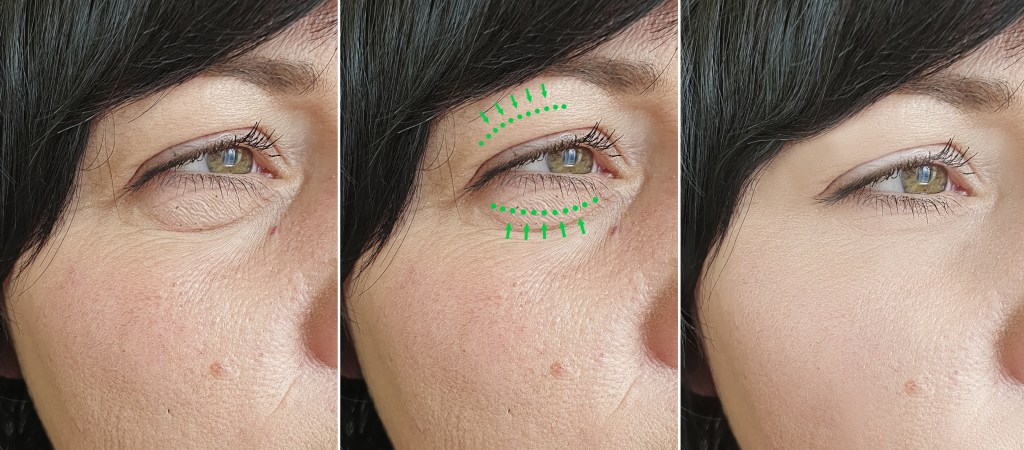
In simple terms, blepharoplasty It is a procedure that removes excess skin or fat from the upper and/or lower eyelids. But beyond the technical definition, blepharoplasty is a means of playing the expression of the face a more open, more rested shape – without changing the basic features of the patient.
It is important to say what not It is blepharoplasty. It is not an intervention that “transforms you”. It does not change the shape of the eyes, it does not stretch the face, it does not make you “someone else”. It is not about deleting all the signs of time, but about restoring a harmony that has been lost in time.
For some patients, blepharoplasty also has a functional component, not just aesthetic. When the upper eyelids hang long enough to affect the field of view, the intervention becomes not only optional, but recommended.
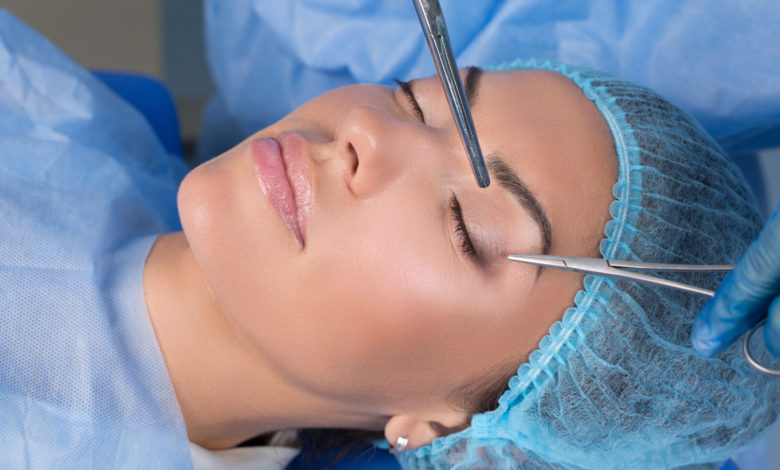
The procedure itself is done, most of the times, with local anesthesia, it lasts about an hour, and the recovery is relatively easy. However, the decision to do should never start from a impulse or social pressure.
Because not everyone needs blepharoplasty. And that takes us to the next point.
If not every fallen eyelid needs a scalpel, how do you know when appropriate?
That's the essential question. After you understand what blepharoplasty is and what the following dilemma is doing: how do I know if I really need this intervention?
The truth is that not every aspect that “looks tired” around the eyes is solved with an operation. There are cases in which what seems to be a fallen eyelid is, in fact, a loss of volume in the cheeks. Other times, the problem is not the skin, but the pigmentation of the circles or a deeper bone structure.
The personalized consultation is the one that makes the difference. There is no universal guide. There are young people who have an aged appearance only because of inherited features – and there, a non -surgery can be sufficient. There are also cases in which 50 -year -old patients are experiencing constant fatigue, vision or physical discomfort – and blepharoplasty is justified not only aesthetically, but also functional.
It is important not to start from the premise that only the “solve the problem”. In many situations, what you are looking for is not an intervention, but a sincere explanation of what happens to your face and what real options you have.
And the options do not start and end with surgery.
Before you choose the procedure, you need to understand what you want to change – and why
Not everything you can see needs “corrected”. And not everything you feel is wrong has a surgical solution. But when you are constantly concerned about an area of the face, when in each photo you feel that “you no longer show how you felt”, maybe the question is not “what to do?”, But “Who can I honestly discuss what would fit me?”
The decision to appeal to an aesthetic procedure – whether surgical or not – is less about intervention and more about clarity. About that moment when someone, with medical training, can tell you what is real, what is reversible, what is optional and, above all, what you do not need to change.
Not infrequently, during the consultation, patients discover that the problem that kneaded for months has a simpler solution than they thought. Other times, I understand that what seemed like an “aesthetic problem” also has a functional component, which justifies a different approach.
The consultation is not about promises. It's not about discounts, packages or pressures. It's about the answers – and that rare feeling you were really listened to.
There any good decision begins. Not in the mirror, not on Instagram, not in Facebook groups. But in a cabinet where your questions receive an answer.
Not everything is resolved with the scalpel – and it's good to do so
When it comes to the eye area, the instinct of many is to believe that the only real solution is a surgery. The reality is much more nuanced.
There are cases in which the fatigue or “fallen” look is not caused by the eyelids itself, but by much more discreet factors – the volume lost in the cheeks, the elasticity of the skin, the texture of the dermis, the genetic pigmentation of the circles or the tension of the face in other areas.
For all these situations there are non -surgical options – injections with hyaluronic acid, skinboostere, PRP, mesotherapy – each with its own role and its own limits.
And no, you don't have to know the difference between them. What you need to know is that aesthetic medicine has evolved. Today, a well -made consultation can mean a complete plan that does not involve a scalpel – or can combine minimally invasive methods for a discreet and natural result.
The truth is simple: there are procedures that can play the expressiveness of the face without surgery. But there are also cases where only surgery can correct the real causes.
Therefore, the first important decision is not “what procedure to do?”, But “Who do I talk about?”
Clarity does not come from Google. Comes from a sincere conversation
You can read dozens of items. You can compare hundreds of photos “before and after”. You can track testimonials or interviews for hours. But none of these sources will tell you what suits you.
And it's normal. Medical aesthetics is not done in generalities. No algorithm can replace the direct experience, empathy and detailed analysis of each face.
Therefore, what is missing most often in the decision process is not the courage, but the certainty that you have all the correct information for you. Not for your age, not for your sex, not for the media of the Internet – for you.
The aesthetic consultation is, in essence, a conversation in which someone listens, asks and responds. Without pressure. No predefined recipes. Without impossible promises.
For some, the result of the consultation is an intervention recommendation. For others, it is a recommendation to do nothing.
But for all, it's the same gain: clarity. And from here, whatever the next step, he really belongs to the patient.
The tired gaze is not always about age
In many cases, what seems fallen eyelids or deep circles can be the effect of an inherited anatomical structure or subtle changes that occur over time. Although blepharoplasty was chosen by over 1.5 million people in 2024, it is not a universal solution. For some, it is necessary. For others, no.
The difference is made in the consultation. Where no “transformations” are sought, but sincere explanations and solutions adapted to each face.
Aesthetics should not start with the procedure, but with the correct question: “What do I feel and what I would really change?”