The European Commission has prepared the response at the tariffs imposed by the US. List of goods that could be charged additionally

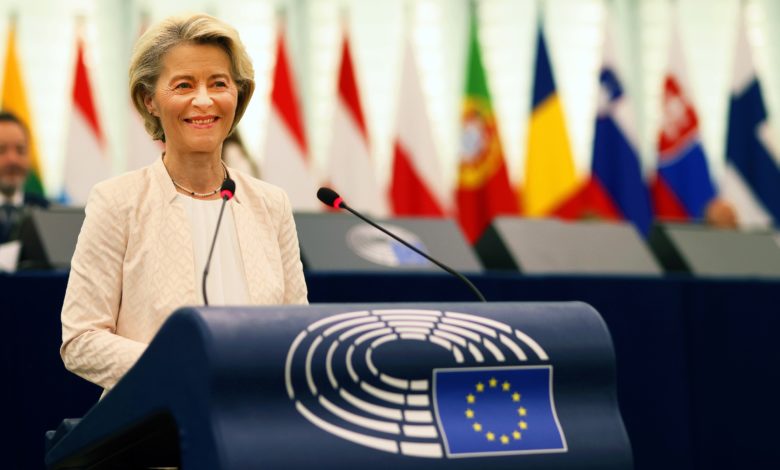
The countries of the European Union will try in the coming days to adopt a unitary position against the new customs tariffs imposed by US President Donald Trump, to approve a first set of retrival measures aimed at imports from the United States worth up to $ 28 billion, from dental thread to diamonds, CNBC reports.
Such a movement would align the EU to the answers already announced by China and Canada, marking an early escalation of a possible global commercial war, with the risk of expensive billions of consumers and pushing the world's savings in the recession.
Alcohol taxes, a delicate topic
The block of the 27 Member States are facing 25% rates for imports of cars, steel and aluminum, as well as with “mutual” rates of 20%, starting on Wednesday, for almost all other goods.
Trump rates cover about 70% of EU exports to the United States, totaling 532 billion euros ($ 585 billion) last year, and other customs duties are expected to affect copper, pharmaceuticals, semiconductors and wood.
 Trump's taxes give results in Asia. Three great economic powers will not resort to reprisals and seek alternatives to customs war
The European Commission, which coordinates the Union's commercial policy, will propose a list of American products on Monday evening to be targeted by additional taxes in response to US and aluminum tariffs, avoiding the generalized application of “mutual” rates. The list would include meat, cereals, wine, wood and clothing, but also products such as chewing gum, dental floss, vacuum cleaners and toilet paper.
A product that has sparked debates inside the block is the American bourbon. The Commission proposed a 50% rate, which caused Trump's threat to introduce a 200% rate for European alcoholic beverages if the measure is adopted. The wine exporters from France and Italy have expressed their concern.
Divergent interests in EU states
The EU, whose economy is strongly dependent on free trade, wants to obtain wide support for any reaction, thus maintaining the pressure on Trump to go into negotiations. On Monday morning, Luxemburg will host the first political meeting at the EU level at the announcement of the rates, where the ministers responsible for the 27 Member States will discuss the impact of American measures and the best reaction routes.
European diplomats have stated that the main objective is to express a common position: the availability to negotiate the elimination of tariffs, but also the preparation to adopt the countermeasures if the negotiations fail.
“Our great fear after Brexit was to break the unit through bilateral agreements, but this has not happened. Of course, we now have a different situation, but everyone understands that interest is in a common commercial policy,” said an EU diplomat.
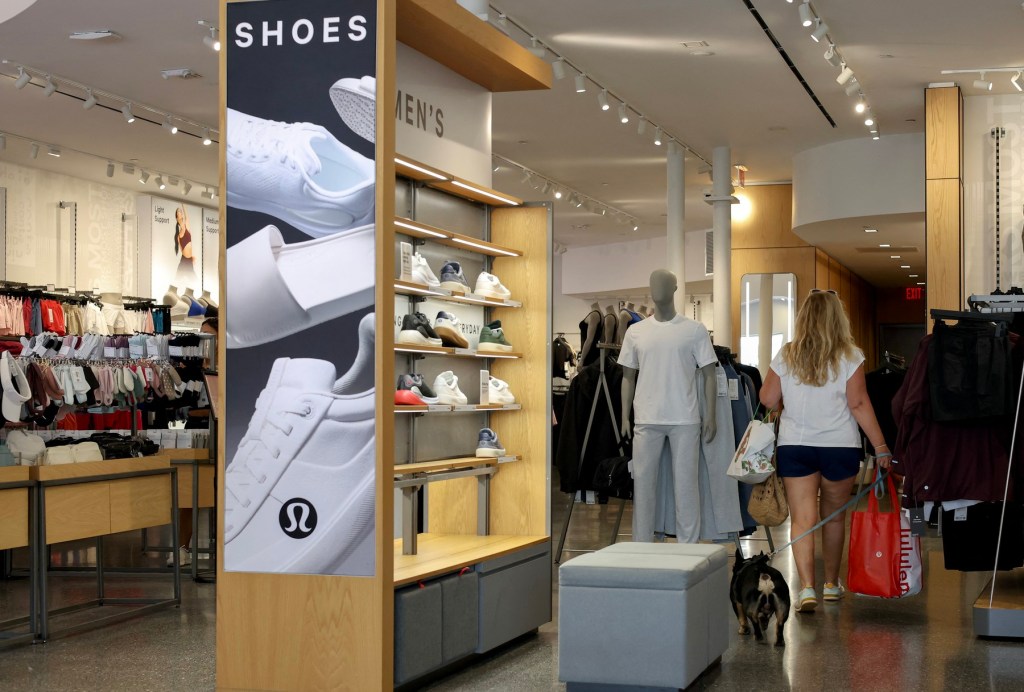 American producers warn that Trump's rates will increase sports shoes, jeans and almost everything Americans are wearing
Inside the Union, the opinions on the answer vary. France believes that the EU should go beyond rates, and President Emmanuel Macron suggested that European companies suspend investments in the US until “things are clarified.”
Ireland, which sends almost a third of exports to the US, has called for a “balanced and rational” reaction, while Italy, the third largest exporter from the EU to the US, has questioned the need for retrosrsement measures.
“It is a difficult balance. The measures cannot be too weak, because they do not bring the US to the negotiation table, but not too harsh, because they risk climbing,” said another European diplomat.
Discussions without result with Washington
Discussions with Washington have not led to results so far. The European Trade Commissioner, Maroš Šefčovič, described the two-hour dialogue with American officials as “direct”, explaining to them that US tariffs are “harmful and unjustified.”
The vote on the first wave of response rates will take place on Wednesday, and it is expected to be approved, except for a qualified majority, 15 Member States representing 65% of the EU population, opposes. These countermeasures would come into effect in two stages: one part on April 15, and the rest one month later.
 China wanted to negotiate with Trump, but was not received at the discussions. Now he is armed for a new commercial war
The President of the European Commission, Ursula von der Leyen, will also have separate discussions, Monday and Tuesday, with executive directors from steel, car and pharmaceutical industries, to evaluate the impact of tariffs and to decide the next steps.