
Former ambassador about how to play Putin and Trump: phone to Orban and change of law


In an interview with Kyiv Post, a longtime adviser to former US president Joe Biden says that Europe must keep his involvement in relations with the Trump administration, even if Washington changes its tactics, especially in delicate issues such as Ukraine, Russia and Sanctions.
The latter have long been the basis of Western foreign policy, but their use rarely runs without friction. In the face of the perspective of a more uniform United States to the EU, the former Ambassador Gitestein presented his own strategy for Brussels to be able to exert his influence.
In terms of Trump's approach to sanctions, consisting of the “you first” principle, under which the United States seems to require the EU to take action before Washington, Gitestein said that he would not speculate about the motivation of the White House, but noticed a legitimate role for a cooperation approach based on cooperation.
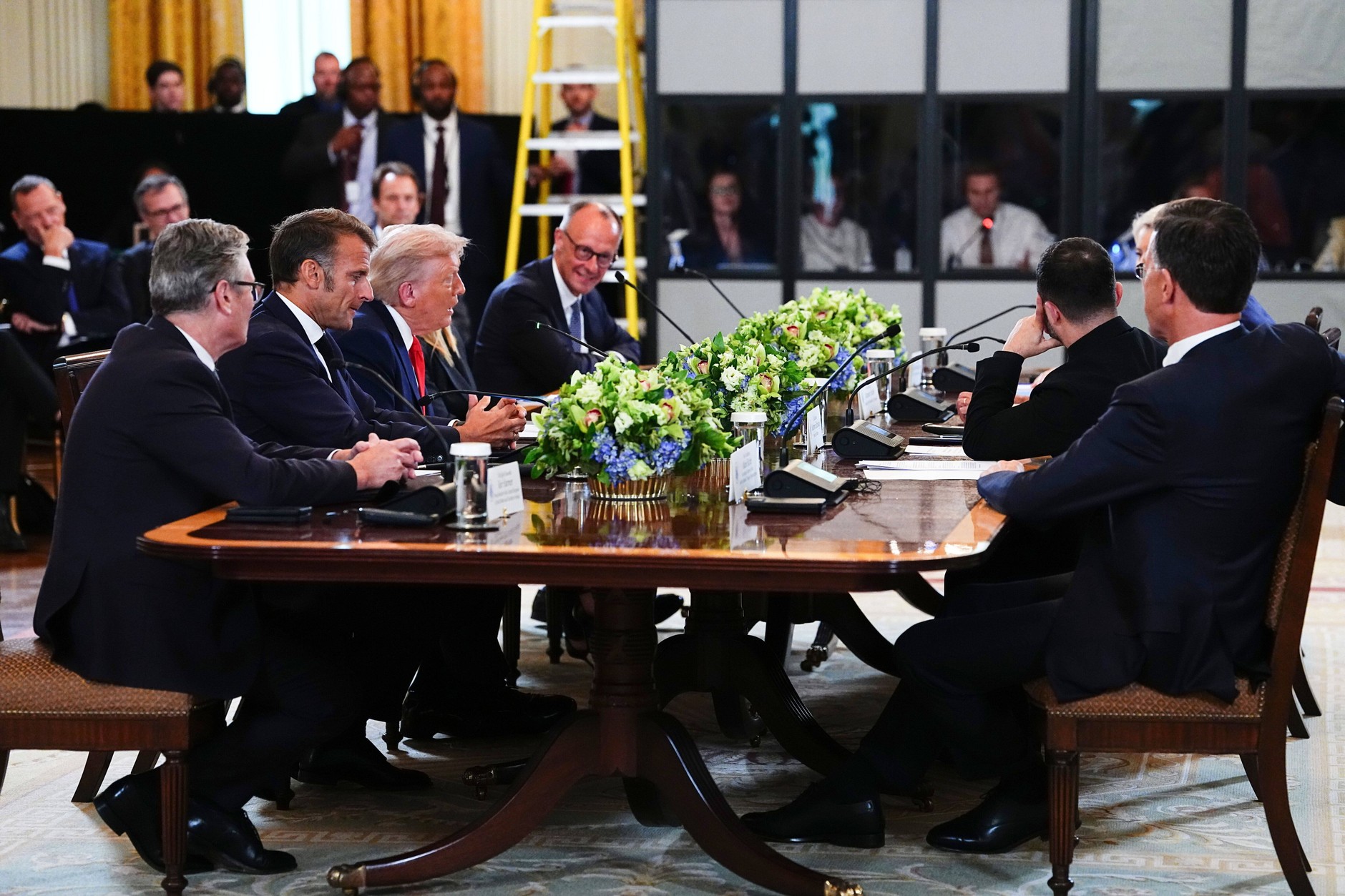
The President of the United States Donald Trump (Ś) during a multilateral meeting with European leaders in the Eastern Hall of the White House in Washington, DC, USA, 18 August 2025.Aaron Schwartz / Pool / PAP
He mentioned three key countries that “work together”: Turkey, Slovakia and Hungary. – Turkey in the case of NATO as well as Slovakia and Hungary in the case of the European Union – all three countries have leaders who maintain very good relations with Donald Trump – he noted and added: “Perhaps Donald Trump could so call these three leaders, which would be helpful.
Gitenstein supported the goal of the stronger position of Europe on Russian energy. – It would be good if all three countries – Slovakia, Türkiye and Hungary – supported the position of the United States and the European Union, which involves cutting off all the sales of energy from Russia. I think that this would have a great impact on hostilities, because it is from there that most Russian money comes to the war machine – he argued.
However, he pointed to An important institutional obstacle, which is facing the EU. Pursuant to the applicable provisions [tymczasem to właśnie Turcja, Węgry i Słowacja są krajami, które nie zrezygnowały do tej pory z rosyjskich paliw i nie chcą tego zrobić, a nawet, w przypadku Ankary, zarabiają na jej sprzedaży. Równocześnie prezydent Trump domaga się od Europy, by przestała kupować ropę od Rosji, jeśli USA mają się zgodzić na sankcje wobec niej. Stąd propozycja zmiany przepisów, którą Mark Gitenstein przedstawia w dalszej części wywiadu].
In connection with Gitenstein was in favor of a significant structural change in the Union's decision -making process. “In the long term, the EU should consider changing the treaties so that unanimity is not required in this field of policy, and decisions regarding sanctions could be made by a qualified majority of votes,” he said.
– It would be a serious reform that should be considered. I know it is difficult, but probably necessary – he added.
“Very wise” EU strategy
This pragmatic approach to relations between the US and the EU was reflected in its wider assessment of the current administration.
Before the meeting of world leaders in New York next week, Gitenstein advised the EU to continue the strategy, which he called “very wise and in his opinion very effective.”
Gitenstein thinks he The plane of the agreement is to recognize the main strategic rival. As for Trump, he said: – I understand that he recognized what Biden and Obama recognized before him, namely that the People's Republic of China is currently the greatest threat to the national security of the West.
The former ambassador said that the most important task for Europe and the United States is “agreeing a common position on the use of economic policy. In particular, 40 percent of the world GDP, which control to manage these relationships.”
He added that this unity would be best manifested through coordinated trade and safety activities. “The best way to achieve this goal is to agree on the position on sanctions, Ukraine and the threats resulting from the mercantile actions of China aimed at manipulating economies and democracies,” he said.
– I think that what they are trying to do, both in terms of trade and Ukraine, is very wise and must continue these actions, continue to convince Donald Trump and lead to the agreement – said the diplomat.
Continued article under video material
New battlefield: drones and disinformation
When asked about the recent drones of drones near Romania, Gitenstein, who once served as the US ambassador in Bucharest, presented his “intuitive” opinion, claiming that they were “intentional” and reporting two key fears.
The first concerned a technological gap in military response. -From the Laika point of view, it seems a bit absurd that the only way to deal with drones is to mobilize F-16 or F-35 aircraft … it's a bit funny. Of course we need [odpowiedniej] technology – he assessed.
His second, “equally important” fear concerned the strategic use of social media for disinformation. He emphasized that Russia effectively “convinced Poles that drones [które wtargnęły w polską przestrzeń powietrzną w ubiegłym tygodniu] They came from Ukraine “, calling it” an important lesson “for the whole block.
The diplomat stated that the European Commission has a “special obligation” to enforce the Act on digital services to require more transparency from media platforms in the use of their systems and platforms. “
Gitenstein ended his argument with a strict warning: – If we do not know the truth in the field of national security, we will never be able to properly defend NATO or Europe.
Protection of democratic elections
The emphasis on the digital border was also reflected in the recommendations of the former US ambassador regarding the upcoming elections in Moldova, where, as he said, the West must “advocate for democracy and the rule of law.”
Gitenstein added that the EU must “insist on enforcing the provisions of the Act on digital services so that we can know if there is foreign media manipulation by armed forces.”
Ultimately, as he said, “the decision belongs to the Moldovan society”, but he insisted that the debate would participate in “real Moldovans”, not “a group of bots working on a farm somewhere deep in Russia.”


