While Trump threatens to take over Groeland, a documentary became a climax in the Arctic Island's struggle

A documentary broadcast in January on Danish national television (DR) and later withdrawn after a wave of critics claims that the Cryolit Mine of Groeland was robbed by Denmark, according to The Guardian.
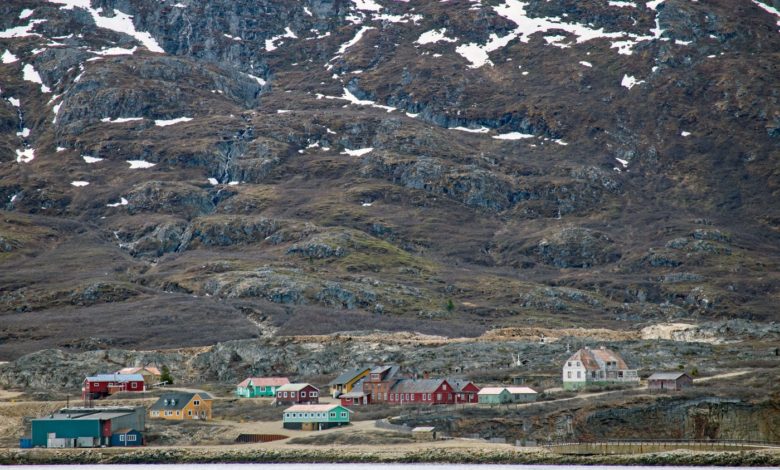
The documentary “White Gold of Greenland”, directed by Claus Pilehave and Otto Rosing, shows how Denmark has exploited for decades the underground assets of Greenland, adding from the country an essential mineral for aluminum production, known as cryolite, worth nearly 58 billion dollars.
The film had a strong impact in both Greenland and Denmark, its former colonial leader. But the reaction of the two could not have been more polarized, writes The Guardian.
In Greenland, which continues to be part of the Danish Kingdom, the documentary launched just when Donald Trump reiterated the US plan to “buy” the artic island, caused feelings of deep anger and sadness. And, according to a poll conducted for the Groenlanda Sermitsiaq newspaper, more than one third of the voters said the film would influence their vote.
There was also a long-awaited feeling of recognition-the fact that the stories that people have heard of what happened in the city, now abandoned, were finally confirmed by a public institution as DR, the Danish national television.
From a political point of view, the documentary was seen as a earthquake in the country's capital, Nuuk.
“A new documentary film shows that Denmark has won at least 446 billion pounds from a single me,” said the prime minister of Greenland at that time.
https://www.youtube.com/watch?v=m7wketxj2js
The documentary was withdrawn by the Danish national television
Although initially there were some positive comments, the Danish press quickly went on the attack, after one of the economists who appeared in the documentary denounced the interpretation of the figures.
The criticisms of the documentary focused on the figure of 400 billion Danish crowns, the amount that the team calculated as the gross income of Denmark in the mine over 133 years, adjusted to today's value.
Torben M Andersen, an economy professor at the University of Aarhus and president of the Greenland Economic Council that appears in the documentary, questioned this figure, urging caution regarding the calculation, which he said refers to the turnover between 1854 and 1987, not profit.
The documentary takes care to emphasize that the figure – calculated using the on -board journals in the Danish National Archives – refers to the total turnover, because, as recommended when approaching the colonial economy, the production costs were spent in Denmark, using Danish workers and equipment.
For 10 days, DR supported the documentary. Despite the critics from several politicians, including from the Minister of Culture of the Danish Moderates, Jakob Engel-Schmidt, who criticized the “poor journalistic mastery”, and the economists, DR's news director, Sandy French, refused to give up, declaring “there were no violations of the steering lines, factual errors or reserves that have not been made ”.
But eventually they changed their minds. They announced that they will withdraw and “subside” the documentary and that the editor-in-chief of DR, Tholmas Falbe, will resign. He stated that he resigned because of new information about a graph of the total cumulative sales, which had been eliminated from a previous version of the documentary.
In the Danish media “there can be only one story”
A minister in the last Groenlandic government and in the current government, Naaja Nathanielsen, said that the DR movement to withdraw the documentary is an “exaggerated” and that it has more to do with “Danish self-interpretation in Greenland more than what it is in this film.”
“It is not an unfair presentation of the economy between Greenland and Denmark,” said the official, who also said that if we focus so much only on the figures the conversation “deviates” from what the real debate should be.
“In Greenland we can have both narratives. Yes, there is something in the past with Denmark that was wrong, which was not correct, which violated the rights. But we can accept and recognize all the good things that Denmark has done. So, for us, both narratives can exist,” said Naaja Nathanien.
But in Denmark, or at least in the Danish media, she says, “there is only one story that can exist, namely that Denmark was good with Greenland.”