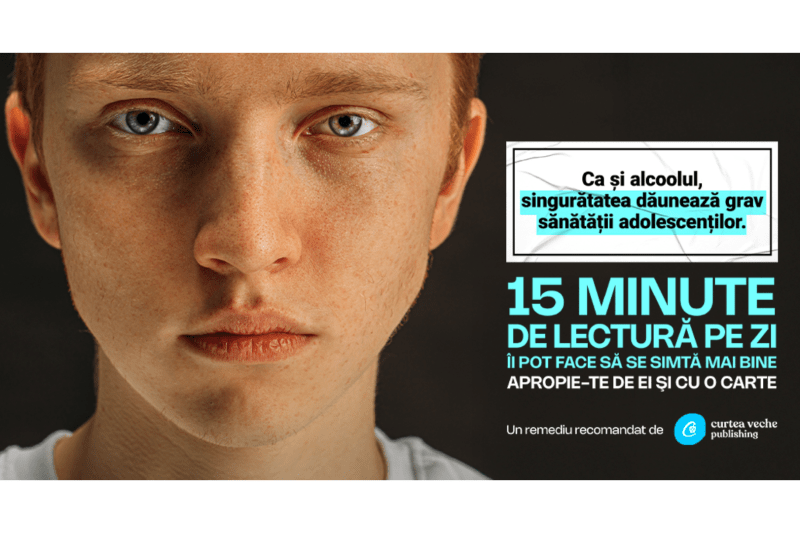
Photo: The Old Publishing Court
As parents, we do our best to know our teenagers safely. We constantly warn them to stay away from the visible dangers: not to take drugs, not to consume alcohol, not to smoke, not to eat junk food. But there is an invisible danger and yet as serious: loneliness.
The World Health Organization (WHO) and top researchers point out that loneliness has become a true global epidemic, with concrete and measurable effects on physical and mental health.
The data is alarming:
- Loneliness affects the body as if smoking 15 cigarettes a day.
- Increases the risk of premature death with 26%.
- The same as drugs, changes the functioning of the brain and induces toxic stress.
- Increases the risk of cardiovascular disease and diabetes with 29%.
- It weakens the immune system, making the body more vulnerable to infections and chronic diseases.
- Disrupt sleep, which aggravates the states of anxiety and depression.
In a society where adolescents spend a lot of time in the online environment, but real interactions are becoming rarer, loneliness becomes a threat.
15 minutes/day reading can make them feel better
Loneliness cannot be “healed” overnight and does not have a unique recipe.
Studies show that only 15 minutes of reading a day can have surprisingly beneficial effects on the emotional state of adolescents.
How does reading help?
- Reduces anxiety: Reading for only 6 minutes a day decreases the stress level by up to 68%.
- Develops emotional intelligence: Through stories, teenagers learn to express their emotions and communicate more clearly to others.
- It offers positive models: The characters who go through difficult situations become sources of inspiration and courage.
- Normalizes personal experiences: discovering that others “live” the same fears or questions, teenagers no longer feel alone in their problems.
- Encourages introspection: Reading offers a space of personal reflection, a break from the constant pressure of the digital world.
When they close in them, a book can open their world.
In a fast-forward world, where parents cannot always control everything that happens in their children's lives, a book can be a refuge and an ally. It does not replace the friends, family or real connections, but it can become a bridge to them.
The Old Publishing Court proposes the collection “Remedies for loneliness”thought precisely to give teenagers (and not only) stories to make them feel less alone, more understood.
Article supported by the Old Publishing Court