The county who lost 100,000 jobs in the heavy industry receives the last blow: the Combined, definitively closed


With the closure of the Hunedoara steel combination, one of the most industrialized counties of Romania in the 20th century loses one of the latest economic symbols. In the 1980s, Hunedoara counted over 100,000 employees in the heavy industry.
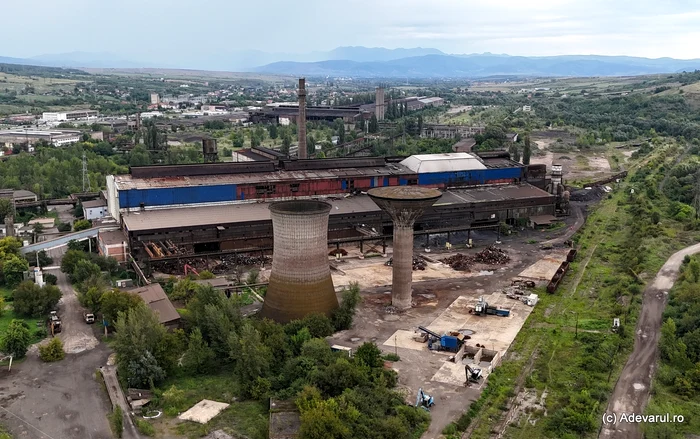
The Hunedoara Combined. Photo: Daniel Guță. TRUTH
With less than 500 employees, most already pensioners, the Hunedoara Combined in recent years had become a shadow of the steel colossus in the 1980s, when its factories had over 20,000 employees and made Hunedoara one of the most industrialized counties in Romania's history.
Closed after a century and a half
Privatized in the early 2000s, when it was taken over by the current ArcelorMittal group, the Hunedoara steel combination permanently stopped its activity in September 2025.
The management of the company announced, in a statement, that the closing decision was determined by the impossibility of the plant to remain competitive on the internal, European and international markets. In Hunedoara, profiles and corners intended for energy, construction and infrastructure sectors were manufactured.
“The very difficult market conditions, generated by the high prices for electricity and the pressure of imports at low prices outside the European Union, made it impossible to continue the activity. ArcelorMittal Hunedoara can no longer absorb additional financial losses,” is shown in the statement.
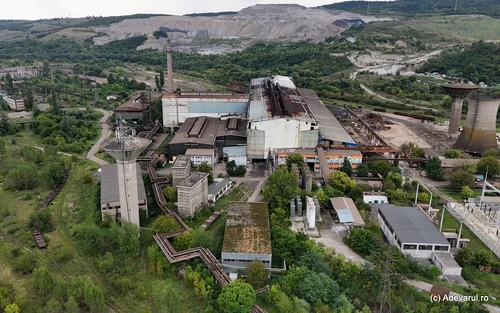
Image 1/19:
The Hunedoara Hunedoara Insidelor PHOTO DANIEL Guță Adev (43) JPG
The Hunedoara steel combination, with a history of almost a century and a half, had 477 employees, most of whom were workers who met the conditions of retirement, but continued to come to work to complete their income. People were sent in technical unemployment, and after closing some of the employees will be kept to protect the factory until the legal entity closes, according to the company.
With a metallurgical and mining tradition that finds its roots in antiquity, developed in the 18th -19th centuries, Hunedoara had reached less than half a century ago to have over 100,000 employees in the heavy industry. The largest industrial centers were closed, some after centuries of activity.
Hunedoara plants had 20,000 employees, a quarter of the city's population
The first furnace of Hunedoara was built in Toplița, a locality on the Cerna Valley, about 20 kilometers from the city, in the second part of the eighteenth century. Inaugurated on July 13, 1781, the furnace in Toplița worked until the beginning of 1837, when a powerful fire took fate. Only his foundation can be seen today.
Meanwhile, another furnace was built on the Govâjdiei Valley, at the beginning of the 19th century, and worked until the years of the First World War.
The furnace in Govâjdia resisted the passage of time and remained an emblematic historical monument for the Hunedoara industry. Near the city, on the banks of Streiului, another furnace was built in Călan, between 1869–1871, and around it would develop an important metallurgical center, for over a century, until its closing in the 2000s.
The first furnace in Hunedoara was inaugurated in 1884, and until 1902 five furnaces were built here that, like the old toplița and Govâjdia, used as the raw materials extracted from the Teliuc and Ghelari iron mines, the wood from the vast forests of the Poiana Ruscă Mountains, transformed into the Mangal. Hunedoara, who are also in the land of the forests.
In the twentieth century, the factories gradually expanded, and in the early 1970s the Combined had over 20,000 employees. Its production exceeded three million tonnes of steel – almost half of Romania's production half a century ago. Hunedoara, together with the localities Ghelari and Teliuc, had a population of over 80,000 inhabitants, of which a quarter worked in the steel complex.
After 1990, numerous production capacities considered unviable-including Siemens-Martin, Cocseria, Furniture and Furniture-were closed, decommissioned and demolished, and the number of staff gradually reduced, as a result of availability and restructuring.
Mines in the Jiu Valley had over 40,000 employees
The first coal mines in the Jiu Valley were opened in the middle of the 19th century, but the area of the Southern Hunedoara area reached its peak in the 1980s, when mining companies produced about ten million tons of coal.
In 1990, the Jiu Valley included 14 coal mines, set up along a mining field of over 60 kilometers, which stretched from Lonea, to the east, to the Brazi Valley, in the west. Around them were operating factories and installations serving the mining activity, and in the early 1990s the sector provided over 40,000 jobs.
The closure of the mines began immediately after the Revolution, and the first targeted were the last open units, in 1986: the Iscroni mine from Aninoasa, the South Petrila Mine, the Lonea Pilier mine and the career at the Field of Neag.
New waves of restructuring followed, and at present the mining industry in the Jiu Valley includes about 2,000 employees, in Vulcan Mines, Lupeni (video), Livezeni and Lonea, and at the Paroseni power plant, established in the 1950s. In the coming years, coal mines could become history.
Metal and non -metallic mines had over 20,000 employees
Over 200 tons of gold were extracted in the last century and a half of the Apuseni Mountains, in the mines around the city of Brad, and along with the precious metal, the mining industry produced silver, copper and complex ores. The valuable deposits in Apuseni have been exploited since ancient times, and from the eighteenth century the mining has entered its modern era.
The “Barza” mining center, the largest employer in the Bradului area, and the factories around it had over 10,000 employees half a century ago, but the industrial decline, started in the 1980s, was steep. The mines were no longer refurbished, they worked with equipment and installations that had exceeded the term, mine, miners and miners were insufficient, and the improvisations were used to extend the agony of the mining sections.
The availability from the late 1990s and the new pension law of 2001, which provided that the miners could retire at 45 if they were 20 years old underground, led to the massive reduction of the number of employees from Barza in the early 2000s. Until the end of the decade, all the Mines of the former Barza Complex were closed.
Along with the gold, silver, copper and other metal miners in the Brad area, the mining industry in Hunedoara included, in the 20th century, several dozen exploitations, where over 10,000 people worked. In the early 1990s, statistics show that over 60,000 employees in Hunedoara were working in mining: two thirds in the Jiu Valley, and the others in the mines set up in the Poiana Ruscă Mountains and the Metaliferi Mountains.
The disappeared combined from Călan
The metallurgical factories in Călan were established around 1870 and reached their maximum potential a century later, when they reached over 10,000 employees.
Călan's furnaces, the crowded factory and the coconut used in the technological processes, coal, gross ore in the Jiu Valley, homogenized ore, and produced Cocs, cast iron and slag. After 1990, they entered decline, and in the 2000s the old combined, responsible for the pollution that had encompassed the surroundings of Călan, was definitively decommissioned.
The Paroseni and Mintia power plant (video) they also added almost 5,000 employees to the heavy industry in Hunedoara. Currently, several hundred people are still working in Paroseni – in the Jiu Valley, while the Mintia power plant is in the process of refurbishment.
With the closing of the big industrial centers in Hunedoara, several thousand other jobs disappeared in the freight transport, most in the railway knot Simeria, through which, in the early 1990s, it passed most of the millions of coal and other raw materials from the Jiu Valley and Hunedoara.