
The countries of the European Union close their gates for Russian citizens: Germany tightens the visa criteria, and Spain suspends their release


The countries of the European Union raise new barriers to Russian citizens who want to travel to the EU. Germany has announced the tightening of the criteria for granting national visas and Schengen, invoking the risks of security generated by the war, and Spain temporarily suspended the requests.
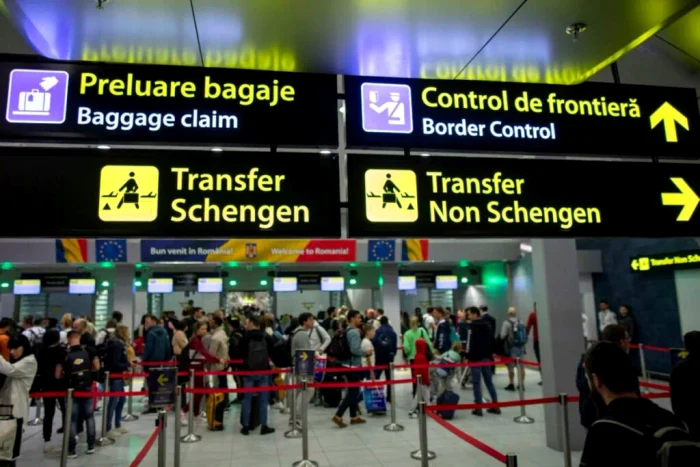
Germany no longer releases Schengen or national visas for Russians / Photo source: Archive
Germany and Spain convey clear signals to Moscow: The Russians have nothing to do in the European Union
Germany and Spain convey clear signals to Moscow: the access of Russian citizens to the European space is becoming more and more difficult. If Berlin has decided to tighten the procedures for granting national visas and Schengen, invoking the security risks generated by Russia's aggression in Ukraine, Madrid announced the temporary suspension of receiving visa applications, for technical reasons.
Germany's Embassy: “The Government has tightened the criteria for granting visas for Russian citizens / Germany has tightened the criteria for granting Russian visas, both national and Schengen.” This was reported by the press service of the German Embassy in Moscow, in response to a request of RTVI to comment on the information of the DPA agency according to which Berlin aims to tighten the visa regime for Russian citizens at Pan-European level, within the 19th pack of sanctions.
The embassy of Germany has said that Russia's military actions against Ukraine “create increased security risks for the EU.”
“In this regard, the federal government has tightened the criteria for granting the visas of Russian citizens. This applies to both national visas and Schengen visas, in accordance with EU directives. Russian applicants who have no convincing reasons must be prepared for longer and more rigorous procedures,” transmitted the German Embassy in a comment for RTVI.
At the same time, the German diplomatic mission did not specify whether Germany is actually pursuing “Serious restrictions” For Russian citizens who want to come to Europe for tourist purposes, as part of Pan-European sanctions, as DPA reported.
In January 2024, Germany's ambassador to Russia, Alexander Graf Lambsdorff, said in an interview for RTVI that the visas continued to be given to the Russians-although it was not mainly about Schengen tourist visas.
“I think it is very important to emphasize that we continue to give visas, especially to Russians who want to come to work in Germany. We also release visas for family reunification, for students who go to study in Germany, ” explained Alexander Graf Lambsdorff.
According to the current information on the website of the German Embassy, the requests from the Russians in Moscow continue to be accepted at the Visameric Service and the visa center at the new address on Prospekt Mira.
And Spain suspended the release of visas to Russian citizens who want to reach Europe
In turn, a message appeared on the website of the Consulate General of Spain in Moscow on the website “For technical reasons, until new orders.” These reasons were not specified, nor the estimated period for resuming applications.
Meanwhile, Politico reported that the EU intends to issue recommendations to Member States on tightening the rules for Russians and citizens of others “Hostile states.” These will be published at the end of December 2025. However, the measures will not be mandatory and will not be included in the sanctions package.
Previously, the Italian agency Ansa has learned that the EU is discussing the tightening of the Schengen visas for the Russians, of which there were “too many” this summer in Italy, France and Greece, especially in the 19th sanctions package.
The Press Service of the European Commission has told RTVI that it cannot enter into the details of these discussions, but recommended to consult the recent speech of the European Commission, Ursula von Der Leyen. He talks about the proposals for the 19th package, but does not mention anything about visas.
The new EU sanctions package is to be presented on September 15.


