On Tuesday, September 9, the Prime Minister of Kadga Pragad Szarma Ola announced his resignation, and his successor is not yet known. In a letter addressed to the president, he wrote that he was giving way to “create a space for a political agreement.” It was a reaction to the death of 19 protesters who died in clashes with the police.
The officers used tear gas and rubber bullets for the crowd. However, according to the organization of human rights, Amnesty International also fired acute ammunition. About 400 people were injured, including over a hundred policemen.
President of Nepal Ram Czandra Poudel appealed for the National Union.
– he emphasized.
Protests in a country that has the largest percentage of social media users in the region caused a government decision about their blockade. On Thursday, the Nepal government announced that it would block access to 26 platforms, including Facebook, WhatsApp and X, arguing by the lack of registration in the local system.
“Unregistered social networks will be deactivated from today,” said spokesman for the Ministry of Communications Gajndra Kumar Takur. However, after 19 people were killed during the pacification of the demonstration, the government withdrew from this decision.
We want to end of corruption in Nepal. Politicians in campaigns promise one thing and then never realize it. They are the source of all problems
-a 19-year-old bin student of the Central Committee said in an interview with BBC Nepali. She added that the ban on social media hindered her education, limited access to online courses and study materials.
The anxiety of young people intensified the belief that the blockade was intended to silence the growing criticism of the government. Recordings in which young Nepalese openly talked about corruption.
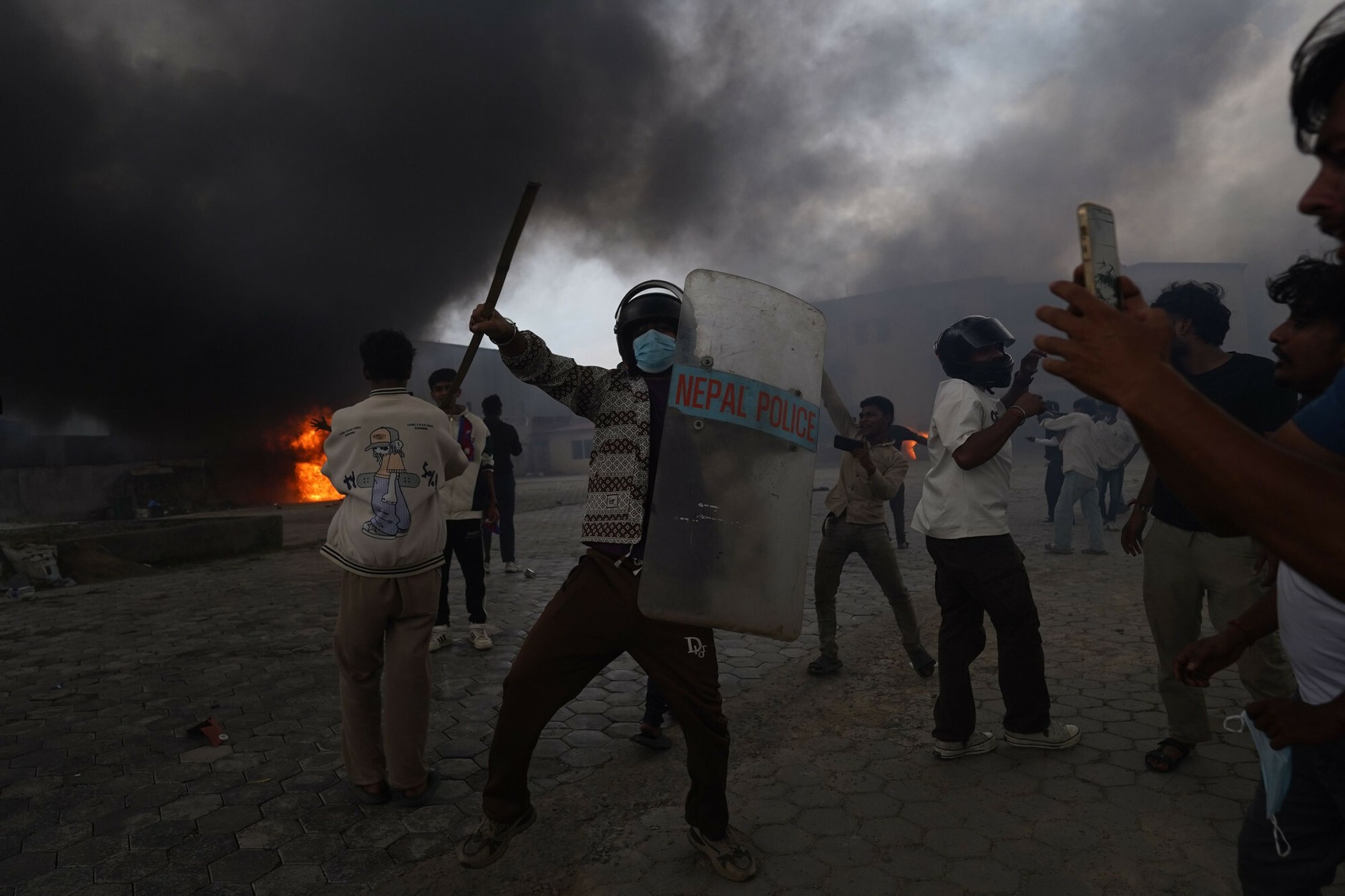
Protesters after conquering and demolishing the Police Post in Nepal, September 9, 2025.Rex features / east news
Who are “Nepo Babies”?
Part of the informal anti -corruption campaign has become movies on Tiktoku and Instagram marked with the hashtag #nepokids or #nepobaby. They refer to children of politicians, actors and people from the elites whose lifestyle is dramatically different from the everyday life of the average inhabitants of Nepal.
The country is one of the poorer in the world. It is not surprising, therefore, that in order to find the work of many Nepalese, he emigrates – to Malaysia, South Korea or the Middle East. They send their money to home to keep their families.
Protesters say that the so -called Nepo Babies They live at the expense of taxpayers – They travel, wear branded clothes, buy luxury cars and real estate – while ordinary young Nepalese are forced to emigrate.
Protest without leaders
Demonstrations in Nepal differ from earlier – political parties or expressive personalities are not behind them. Movement is made up of young people, mainly from the generation from: students, students and online creators.
They mobilized on the web, which was accelerated by a government blocking at 26 platforms. Transparents with the inscription “Gen with” have become a symbol of resistance to corruption and unevenness.
Traditional groups – the communist party of Nepal, Maoists and Nepalese Congress – this time perform as enemies, not leaders. The only significant politician who openly supported the protests is the independent mayor of the capital of Nepal Kathmandu Balen Szah.
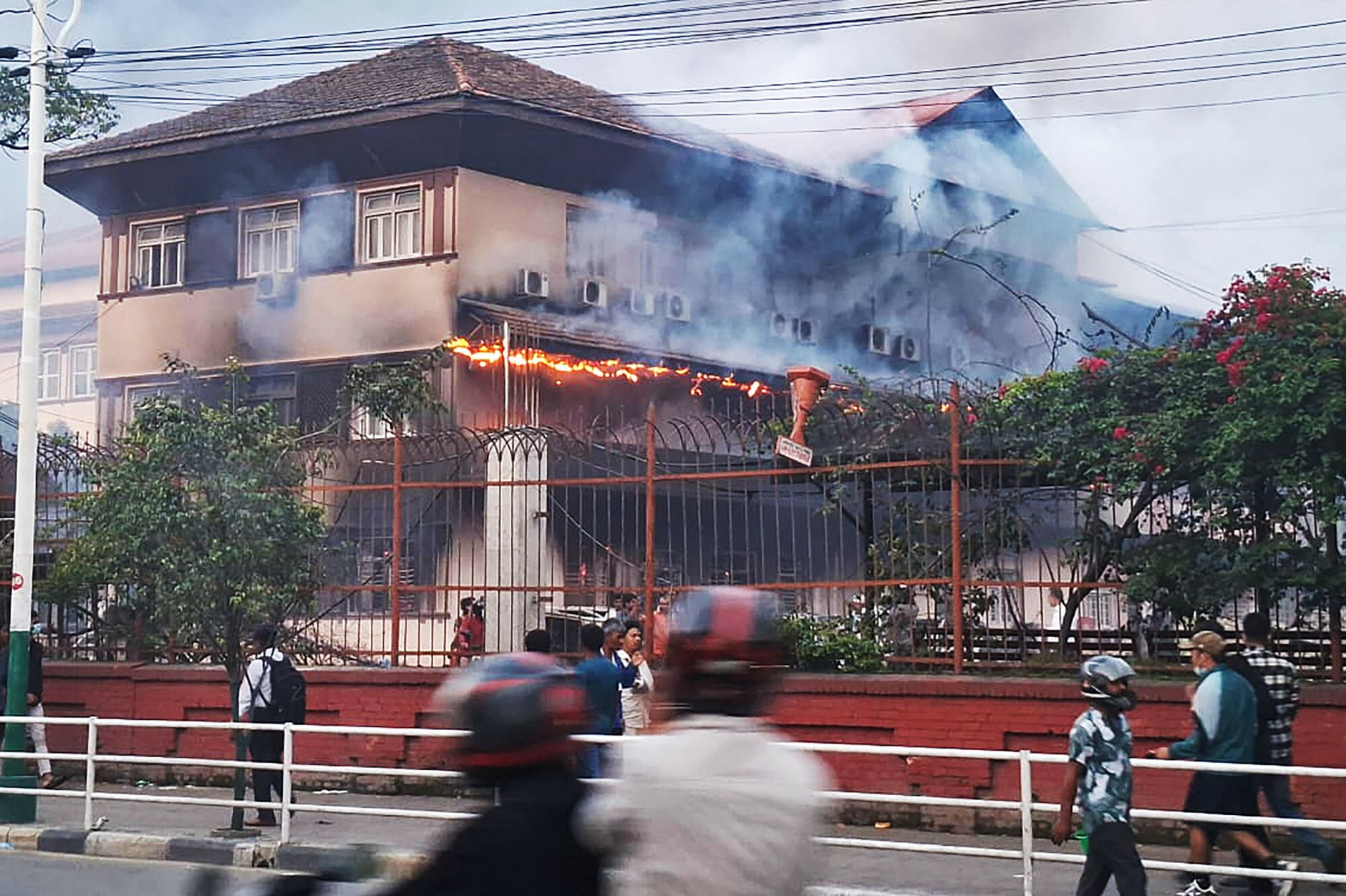
The burning building of the Supreme Court in Kathmandu, September 9, 2025.Anup Ojha / AFP / East News
Monday rallies in the capital turned into violent riots with the participation of tens of thousands. The demonstrators surrounded the parliament building and tried to break inside.
Demonstrators set fire to the houses and private residences of leading politicians, including The gray of Olie, the leader of the Nepalese Congress of Szera Bahadura Deuba or President of the Crand of Poudel. The parliament building itself also stood on fire.
Despite the police hours introduced in Kathmand and other cities, the protests are ongoing.
The UN High Commissioner for Human Rights Volker Turk expressed the escalation of violence in Nepal.
I call on safety forces to maintain maximum restraint and stop further bloodshed. Violence is not a solution
– he emphasized.
He stated that the key to solving Nepal's problems is dialogue and listening to young people. He drew attention to “disturbing reports of unjustified and excessive use of force” and demanded “immediate, transparent and impartial investigation.”
At the same time, he called the protesters to stop violence. – I am worried about reports of attacks on public buildings, companies and private residences, which in some cases were set on fire. I was also concerned about the assaults on high state officials – he added.
From monarchy to a democratic state
Nepal has been a federal parliamentary republic with the constitution of the House of monarchy since 2015 has been transformed into a democratic state. The head of state is the presidentcurrently the Czandra Poudel Ram, mainly performing representative functions.
The real executive power is provided by the government, headed by the Prime Ministerchosen by parliament. Before the explosion of the riots, he was Kadga Pragad Szarma Ola – leader of the communist party of Nepal, the largest leftist political force.
The second pole is the Maoist partywhich once led an armed uprising, and today acts as a parliamentary force with acute anti -elite rhetoric. The third pillar of the political scene is the Nepalese Congress – a liberal center -right party.
Frequent disputes, passing MPs between parties and short -term coalitions cause frequent changes in government. That is why Olie's dismissal not only created a political vacuum, but also opened the way to new systems between rivals.
I’m Ashley Davis as an editor, I’m committed to upholding the highest standards of integrity and accuracy in every piece we publish. My work is driven by curiosity, a passion for truth, and a belief that journalism plays a crucial role in shaping public discourse. I strive to tell stories that not only inform but also inspire action and conversation.