The history of George Enescu, first of all, told by Enescu himself to the French musicologist Bernard Gavot: “This story begins far away, on the Moldavian plains, and ends here, in the heart of Paris. To get from my hometown in the big city where I finish my road, I took it on a dusty path, guarded by the trees far, far, endless. The road was long, of course. How short it seemed to me!“…
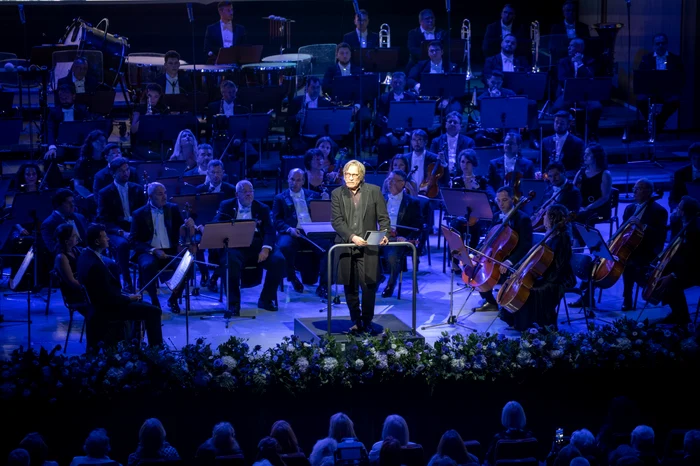
And how exciting he called on the stage of the Palace Hall, on the evening of the Enescu Festival, this life story reduced to the essence, as a moment, in the interpretation that came to Marius Bodochi: The actor was Enescu who tells his beginnings, the road, and Romanian poem It was the most suitable companion.
It wasn't a random choice – how could it be? The artistic director Cristian Măcelaru told the journalists: “This is the first published composition of Enescu, opposite no.” It was, so naturally, expected, as Romanian poem To be in the evening program, along with a bright violin concert, in the interpretation of a winner of the Enescu competition, the violinist Nemanja Radulović, and a composition created specifically for the Enescu Festival, with whom, here, “the reinventing of the public command institution takes place, when the state found for music, for art, for art.
We insist: they were scheduled at the beginning of the 27th edition of the George Enescu International Festival a work in the world premiere (The concert for the orchestra op. 182 by Dan Dediu), a hat raised over the years in front of violinist Enescu (by including in the evening program a Violin concert ANDi orchestra in re minor by Aram Haciaturian) and the first opposite Enescian (Romanian poemdedicated by George Enescu at the time of the great supporter of the arts who was Queen Elizabeth).
But also a festival debut that was to celebrate life, youth (Enescu was 16 when he composed Poem) and the laureates of the Enescu Competition: Nemanja Radulović, winner of the violin section in 2001, Dan Dediu, winner of the Composition section, in 1991.
Undoubtedly a holiday – and those who will be bypassed the opening concert by shaking the nose (“that does not open Berliner” or another world -renowned orchestra) will have been deceived. For it was a joy in the evening, of great beauty, freshness – exactly as the tone set The concert for the orchestra by Dan Dediu.
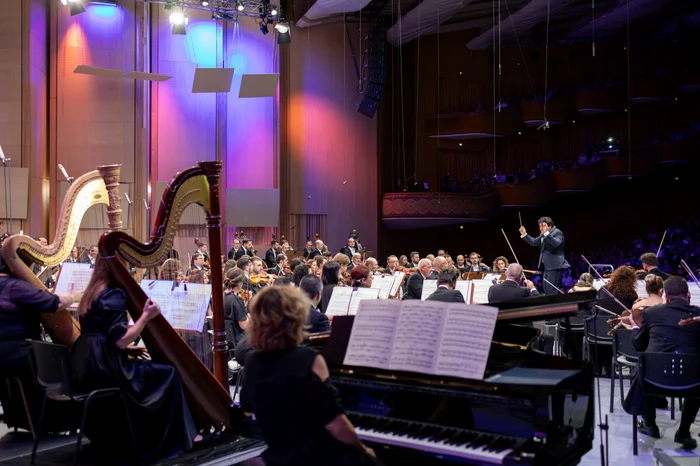
And what a lucky incident: to listen to this work with the composer himself every two steps, to see his reactions, how to enter the world of his concert, with nervousness, rumor and rhythm shaking with his foot, with shoulder that climbs and descends, with the huge emotion that accompanies any first audition.
And then see the pianist Dan Grigore, at a shoulder away, transmitting his congratulations in the air of the room, to the composer, in such a plastic and inspiring way: “Master, you are big! They floated in the work, almost as in an amniotic liquid, Stravinski, Ravel, Gershwin …”.
That was how he was, so intentionally, this was the work of the composer Dan Dediu in the conference in the pre-opening concert: “paraphrarating on Jules Verne, a journey of music in 20 minutes”.
Here references to Debussy's fauna, beyond the such recognizable agreements of Ravel's or piano as a grig. The concert for the orchestra op. 182 By Dan Dediu he opened in an inspired way the Enescu 2025 festival, with musical eyes sent to the public, as between old friends, all -know.
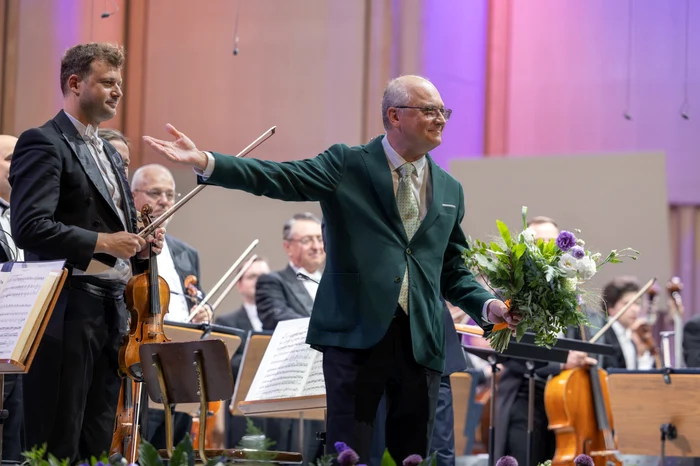
And to me, to us, the music came in sound waves, but also in waves like thorns: Master Dan Grigore kept the rhythm and the song with his fan, conducted, approved, lived and complicated every episode of this journey. “A work of extraordinary freshness,” Dan Grigore smiled at Dan Dediu, who climbed the festival with his green jacket, in tune with the work, and returned to his place with the admiration of the hall and a bouquet of flowers, a cheza of this happy event, when, in Bucharest and in the world, he was singing for the first time.
***
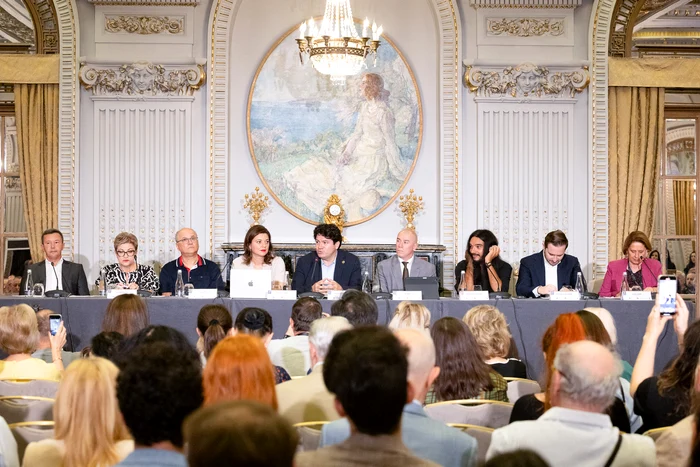
When it passes to the coffee machine, in black, long, lightweight clothes, waving, and hair, before sitting at the presidency of the press conference preceding the festival, the violinist Nemanja Radulović already attracts all eyes. And this alley of looks that follows him becomes a good and part of the clothing.
And maybe this was the case in 2001, when he won the violin section of the George Enescu International Competition, one of the youngest laureates (he was not 16 years old). Dan Dediu reminds him: “a violinistic flame”.
24 years later, at the presidium with serious people, with earphones, in rich hair, Nemanja rejoices, wonders, smiles, with eyes to the stained glass windows, with the eyes of the mind to everything that is discussed. You see him: he feels off it, he feels at home.
“It is a joy to return to Bucharest and to see so many known faces. And I remember the 2001 contest: what magic was to be in the middle of that mix of young musicians who supported each other and who could see so many great artists. Bucharest is part of my life for almost 25 years.
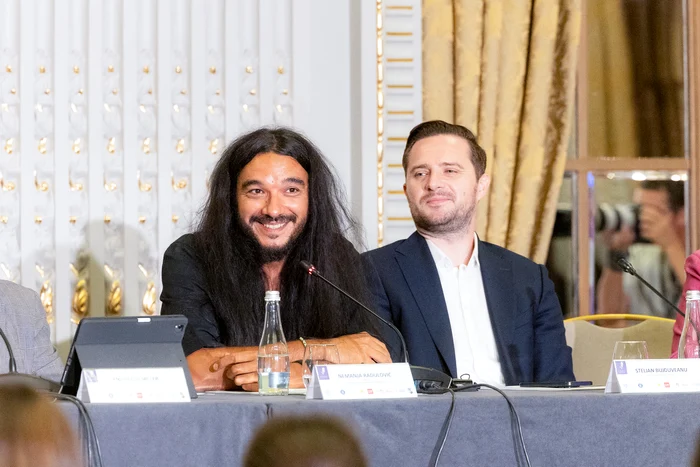
“I am waiting for the Haciaturian tomorrow,” he whispers, smiling at my conference partner, the journalist and the Armenian ethnic translator Madeleine Karacașian. “It is a concert of great difficulty and virtuosity, I always enjoy listening to him.”
And the incident does, another lucky incident, as often happens in the festival, to listen together Haciaturian's work. “This concert is so Armenian,” Mrs. Karacaşian murmured before Radulović's appearance.
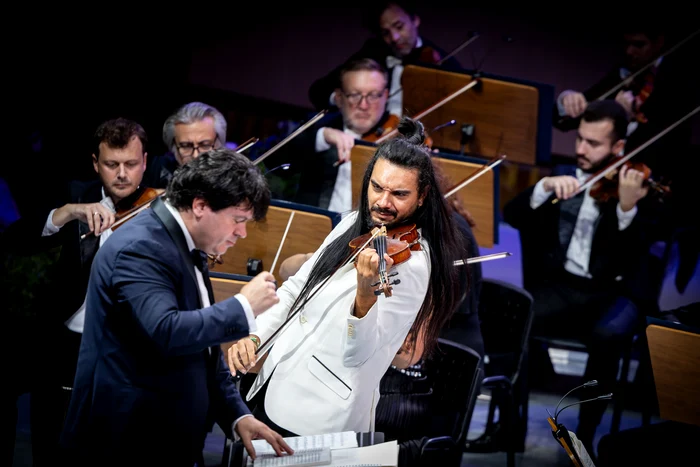
And how suitable is the description: this concert composed by Aram Haciaturian in 1940, for violinist David Oistrah, is an essence of Armenian history, with a cheerful first part, lively, Allegro con Ferizzalike life itself before tragedy, with a Andante Sosteno that seems to me soaked in drama, but also with the hopeful, gratitude, which is all and encompasses everything, in the third part, Allegro Vivace.
I see this, this is how I live the concert: as if the life of the Armenians passed through genocide, then taking everything from the end, a concert as a slice of history, interpreted with master, with finesse, with the rendering of the details of each note, by the extraordinary violinist who is the non-Manja Radulović.
It is also the life of my concert partner, born in 1934, in Craiova, part of “the first generation of Armenians born in Romania from refugees after the Armenian genocide.”
“Romania was the first country to receive the refugees then. The mother was a child, she came with her parents. And my father was 14-15 years old, so, and ran with his mother. He circulated throughout the country, practiced different professions, until he settled and opened a coffee shop. And this, and all this life he did, had a particular store. He also had a shopping boy, so he was considered an exploiter … ”
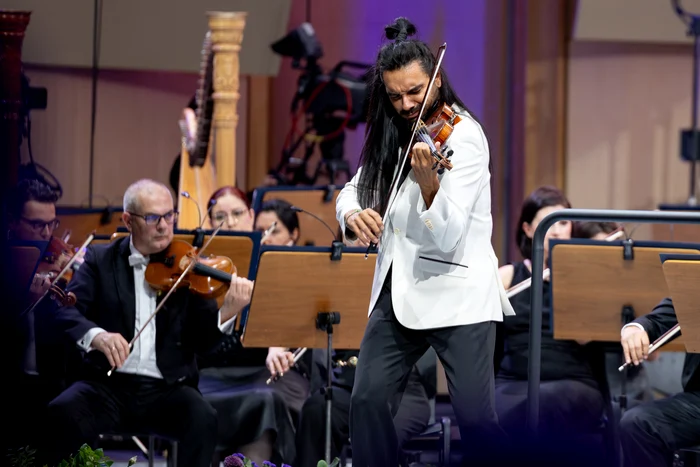
On the stage of the Enescu Festival, Nemanja Radulović offers himself: it is a concert that consumes you, but how true, as a storyteller and history. “Aram Haciaturian was also in Romania, many of our musicians have learned music from him,” I hear Dan Grigore, after being outraged at the stormy applause at the end of the first part of the concert. Of course, the room is full of old and new melomani, but the master does not forgive, he asks with his hands to stop the wave of applause, he is upset: “Cultural tourism!”.
***
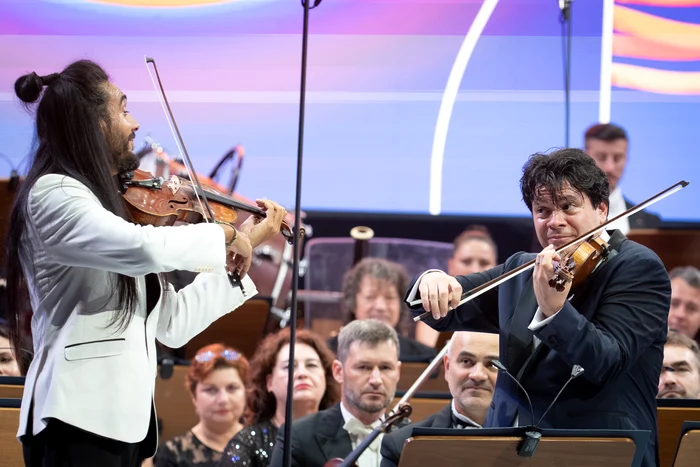
And there is also the beautiful surprise from the end of the concert, when Cristian Măcelaru leaves the conductor's wand, borrows the violin of the concert and returns to the first love; The violinist Radulović and the violinist Măcelaru sing and sing together, smiling complicit, and this velvety bis, Dan Dediu tells us, is from Şostakovici.
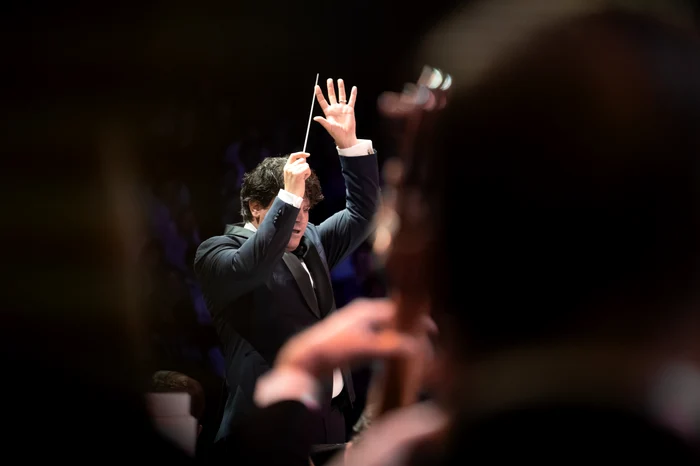
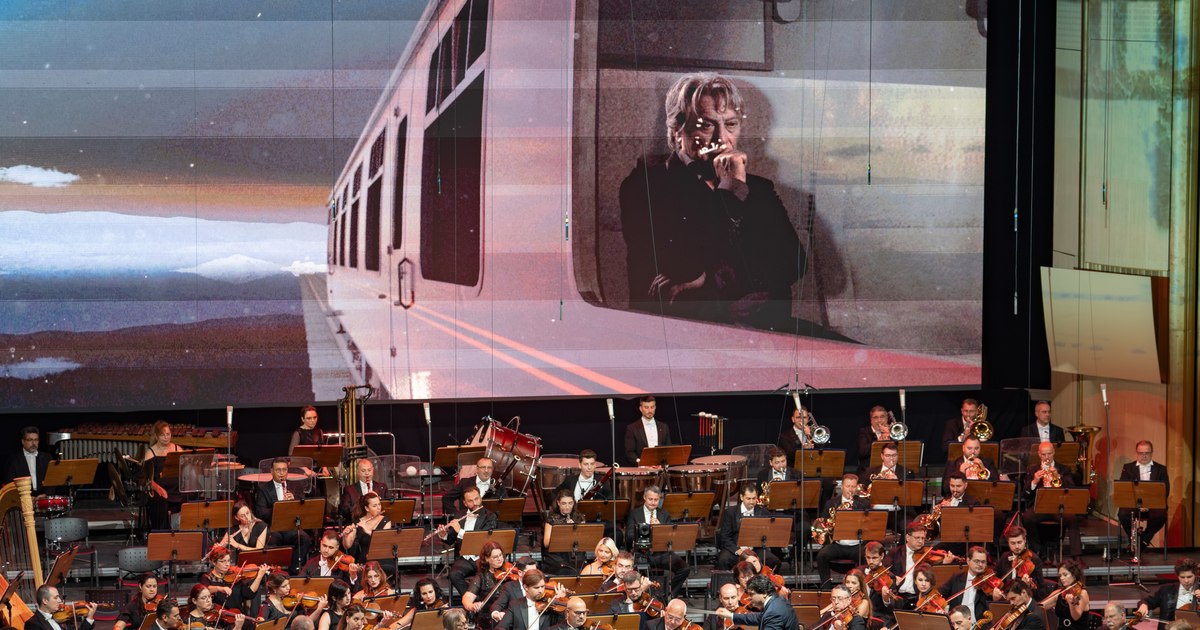
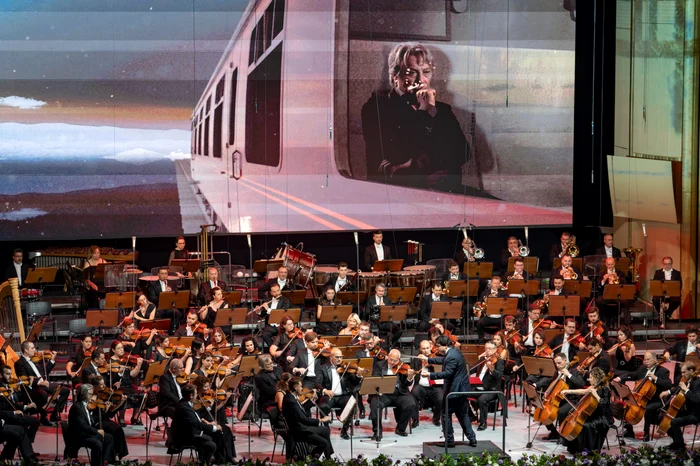
After the break Enescu – Enescu is sung in the opening of the George Enescu International Festival, as appropriate: it is the first work to which George Enescu assigned a number of opposite, Romanian poemin which they are heard (and see; the work is accompanied by video projections) and the time, and the journey, and the forest, and the distant trills (of the flutist who sneaks behind the scenes and sing from there), and the signs of the choir, also behind the scenes, and the folk musical accents of the childhood, the childhood, the families of Enescu.
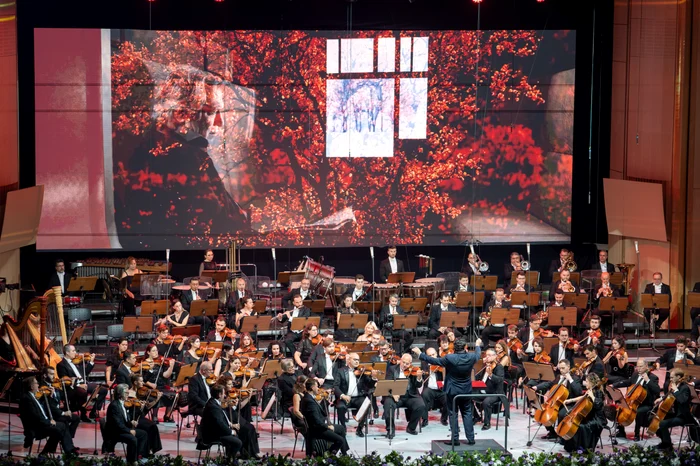
A story that Enescu himself says, in the middle of the Orchestra of the George Enescu Philharmonic, in the strikingly close interpretation with the master of Marius Bodochi.
The end is round: a dance enclosure from the same Romanian poemwhich closes the evening and opens the festival.
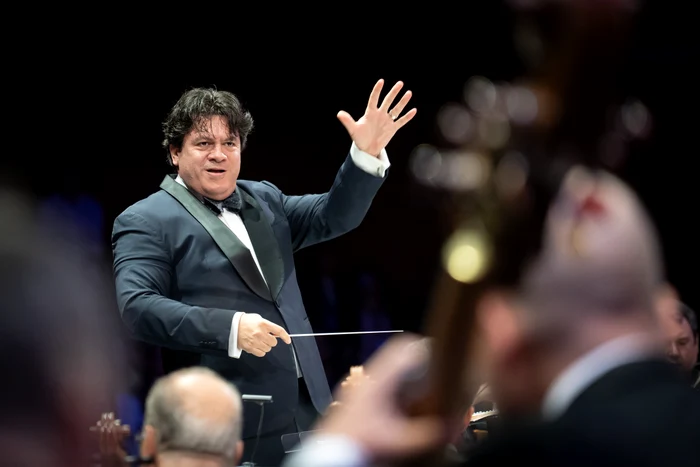
Do you come too? Come, come! The festival hat is very generous, and tickets are still on Eventim.ro.
Photo: Alex Damian, Andrada Pavel, Andrei Gîrdac / George Enescu Festival