Russia is in a difficult position in the Baltic Sea. The breakthrough occurred in 2023 and 2024.

The Baltic Sea is important primarily as a communication and supply route, both for goods and energy raw materials. This actually applies to all countries located in the region, including Poland: installations such as the LNG terminal in Świnoujście (and the planned FSRU floating terminal in Gdańsk), the Baltic Pipe gas pipeline and Naftoport in Gdańsk play a key role from the point of view of energy security. At the same time, facilities of this type located on the coast – and even more so on the high seas – are potentially exposed to possible attacks and sabotage.
The article continues below the video
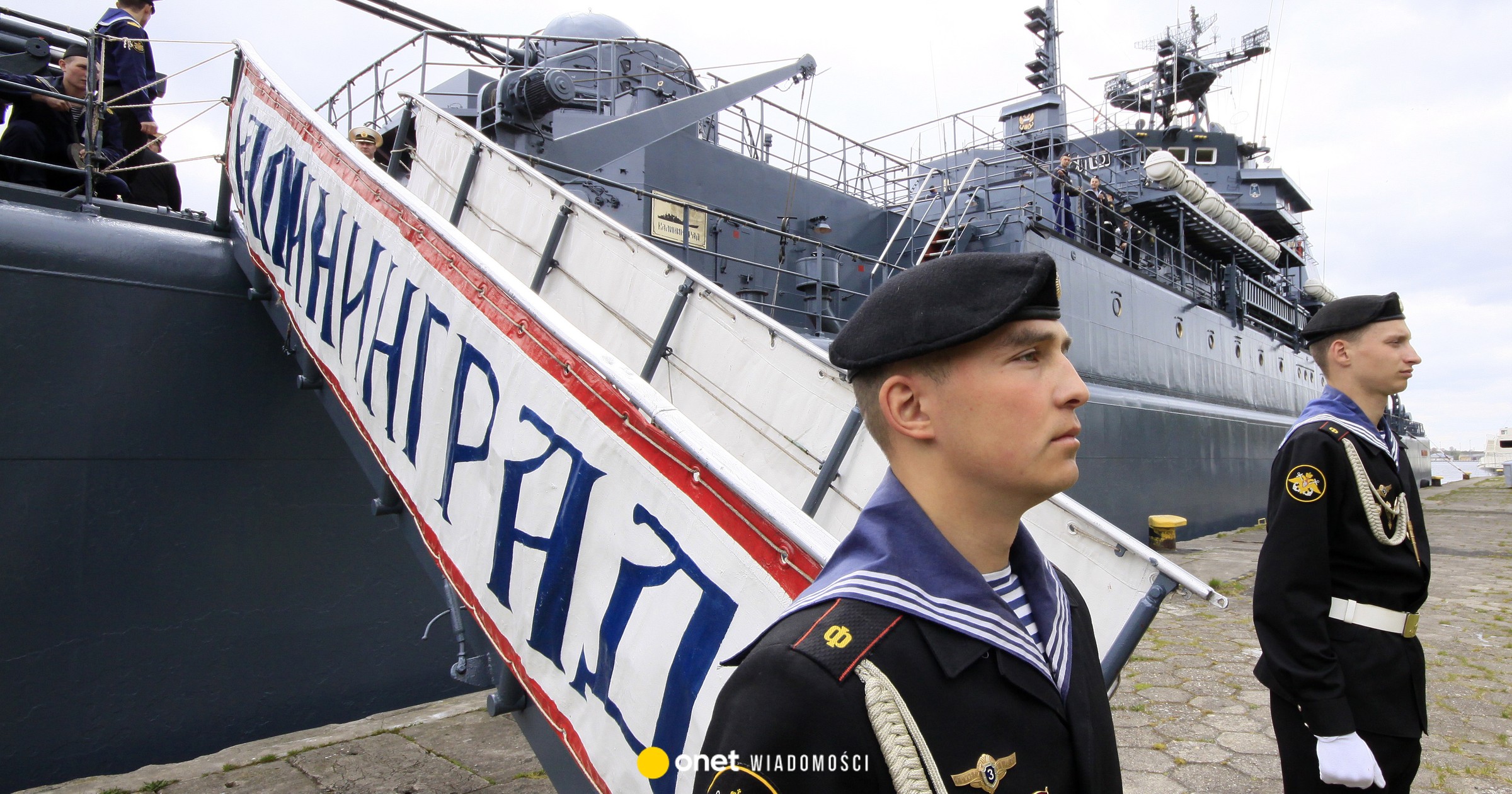
Russia has one of four fleets in this area – the Baltic Fleet. Its bases are located in the Königsberg Oblast and in the Gulf of Finland, near Saint Petersburg. It has, among others: a submarine, a destroyer, two frigates, four corvettes and a dozen or so small missile ships (in addition, there are several ships of the Black Sea Fleet in the Baltic Fleet bases).
Russia is in an increasingly difficult position. Scandinavian countries in NATO
The change in the geopolitical situation – the accession to NATO of Finland (2023) and Sweden (2024) has significantly complicated the position of Russia and its naval forces in the region. Both previously neutral countries have extensive naval forces, and with the support of other NATO countries, even just those on the Baltic Sea: Poland, Germany and Denmark, the advantage on the side of the allied countries becomes almost overwhelming. The situation of Russian forces stationed in the Gulf of Finland is particularly difficult: in the event of a possible conflict, this area is easy to block using mine barriers or anti-ship missiles (such actions are regularly practiced, among others, with the participation of the Polish Maritime Missile Unit).
Several places are of key importance for the situation in the Baltic Sea. One of them is the Gulf of Finland mentioned above. Others are the Danish Straits, connecting the Baltic Sea with the North Sea and the Atlantic Ocean. The risk associated with this place is analogous to the Gulf of Finland: narrow water passages are easy to block, not only by typical military actions, but also as a result of an incident that can be disguised as an accident.
Islands, especially Gotland, are also of key importance for the situation in the Baltic Sea. — The importance of this island can be compared with Crimea. Whoever controls Gotland controls the entire Baltic Sea, says Volodymyr Zabłockij, an analyst and military-naval expert at the Defense Express portal, in an interview with PAP. The island is part of the territory of Sweden, which began remilitarizing it a few years ago for fear of Russia's actions. Similarly important are the Åland Islands, key to controlling the entrances to the Gulf of Finland and Bothnia. In both cases, seizing the islands and placing anti-ship missiles on them would prevent any civilian navigation.
Russians are looking for alternative solutions
Russians are also aware of all these circumstances. Therefore, they strive to develop operational scenarios that could allow them to gain an advantage wherever possible, while neutralizing the capabilities of NATO countries' fleets. The basic method is to carry out activities in the field of the so-called hybrid war and striving to carry out operations below the war threshold – so as to prevent the involvement of all the forces of the North Atlantic Treaty Organization countries.
— Russia's actions involve adapting the land version of hybrid warfare to maritime conditions. This means using civilian ships to gather intelligence, damage and destroy key undersea infrastructure, and use them as platforms to carry and launch drones, writes former NATO Supreme Commander Admiral James Stavridis in a commentary for Bloomberg. Some activities of this type have been and are being carried out: the activity of Russian ships, including the so-called tankers shadow fleet, led, among others, to sever the submarine cables connecting Finland and Estonia in December 2024. There were also cases of airspace violations (three Russian MiG-31s stayed over the territory of Estonia for 11 minutes on September 19, and on the same day there was a close flyover of Russian military aircraft near the Polish oil platform). On October 1, the activity of a Russian cutter was observed in the area of the undersea pipeline belonging to Petrobaltic.
Due to this activity, a response from NATO is necessary. — It is necessary to identify ships involved in illegal operations, observe and track them, writes Admiral Stavridis, drawing attention to the appropriateness of using special units such as the American Navy Seals (their Polish equivalent is JW Formoza). Both formations, as well as the Polish JW Grom and other units subordinated to the Special Forces Component Command, had the opportunity to cooperate, among others, in operations in the waters of the Persian Gulf.
NATO reacts to Putin's troop movements
The indicated activities are being carried out as part of the Baltic Sentry operation, starting from January 2025. Their aim is to protect undersea infrastructure against further acts of sabotage; are carried out by surface ships and submarines, aircraft, and unmanned aerial vehicles (also operating underwater).
The role of the Polish Navy cannot be overestimated here: ships are the only means of permanent supervision over the maritime area, both territorial waters and the economic zone; they also enable quick response in the event of a threat. However, the capabilities of the Polish fleet require strengthening. The currently possessed ships (including one submarine, two frigates, several missile units) are too small to effectively protect its own coast, infrastructure and participate in activities within NATO. As Jarosław Ciślak from the Defence24.pl website notes, during the Baltexpo-25 fair (October 7-9) the following topics were discussed: about events expected at the turn of 2025 and 2026 that will bring closer the implementation of several new units into service. A company will soon be selected to build three submarines for the Polish Navy (Orka program), another minehunter Czajka and a radio-electronic reconnaissance ship Henryk Zygalski will be launched. It is also planned to start the construction of another frigate – Burza (Miecznik program) and a rescue ship. The launching of the Wicher frigate is also expected in mid-2026 – ultimately, the Polish Navy is to have three ships of this type.
***