The “younger brother of Jesus” and the most devastating civil and religious war in the history of mankind. The conflict that opened the path of communism in China

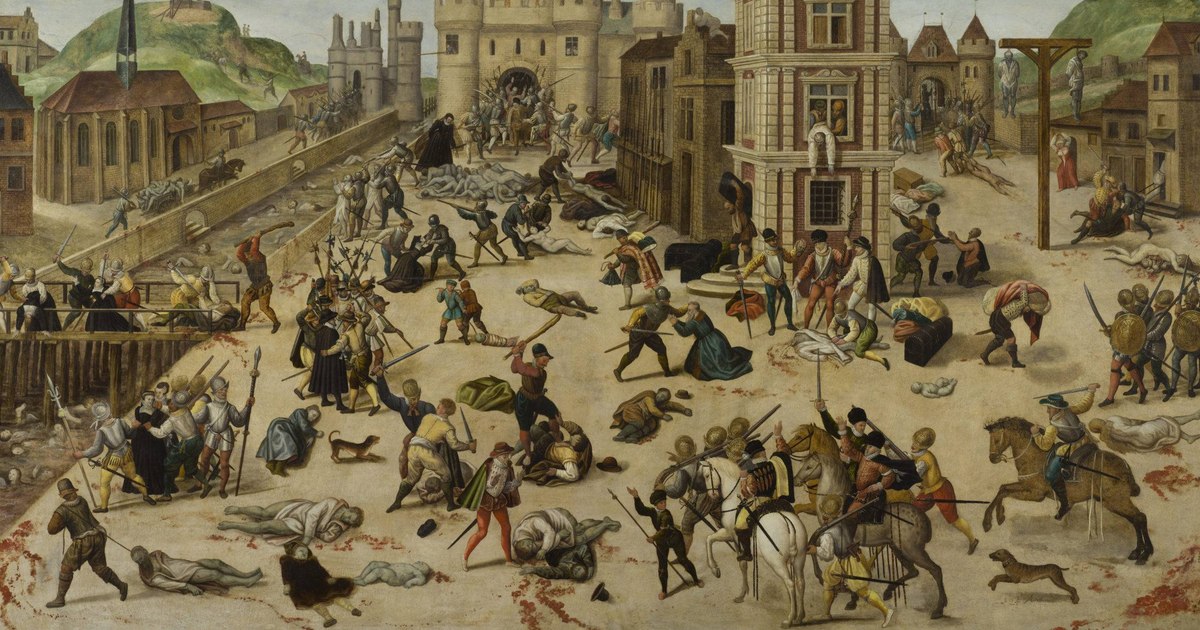
In the hands of false prophets, religion can become a deadly weapon. And when it is intertwined with endemic poverty, the frustration and carelessness of a corruption -ground state appears the perfect recipe for mass killing. And the perfect example is offered by the most killer religious war in history.
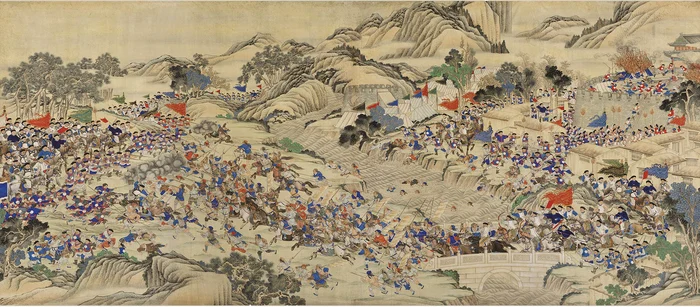
Fight during the Wikipedia photo taiping war
People have manifested from the earliest of all kinds of beliefs, from veneration of totemic animals or nature phenomena to complex forms of worship, with deities of all kinds and complex religious systems. Most of the time, religion has been offered hope to people and coagulated communities. Religious beliefs have made people perform incredible monuments and immortal works of arthenge and to the big cathedrals. Last but not least, religion offered, in times without secular education, sets of values that have guarded the society to fall into anarchy and promiscuity. Much of the religions promotes optimistic models that encourage communion, love, to help neighbor, compassion and distance from vices. But then when religious beliefs reach the hands of charlatans or those eager for power and control, they quickly become a very strong weapon. And if this weapon is used in societies at the limit of patience, ground by poverty, humility, hunger and lack of hope, the perfect recipe of genocide is prepared.
Hong's frustrations in a worldly corruption and poverty
The bloodiest religious war in history was carried in China, in the name of Christ. It was not about a European crusade nor about aggressive missionaryism, but about the frustrations of Hong and the despair of an entire nation. This religious (or civilian war, as described by some specialists) remained in history as the taiping rebellion and took place from December 1850 to August 1864. There were 14 years of slaughter and destruction. The war took place at the end of a period of greatness of the Qing dynasty, originally from Manciuria (northeast China).
Established in the seventeenth century, this Manciurian dynasty put their hands on power after dethroning the Chinese Ming Dynasty and conquered Beijing in 1644. Initially, some rebels, emperors of the Qing dynasty, have made progress and development. The empire knew its maximum peak period and became a powerful player on the international market, exporting tea, silk, porcelain and other luxury products. This is how solid economic contacts were made with the European West, being created true commercial warehouses in China, which led to prosperity and an important flow of silver and foreign currency. New agricultural crops, such as potatoes, corn or peanuts, were brought to China. Under the conditions of prosperity and surplus of food, the population increased considerably, reaching in 1851 to 432 million inhabitants throughout the Chinese Empire. The cities have prospered, becoming true metropolises, especially the imperial ones.
At the beginning of the 19th century things went from evil to worse for the Chinese. The population increased without control and food resources have become insufficient. The surplus of labor has led to unemployment. The taxes, on the other hand, were very high and many Chinese came to live below the poverty limit. Corruption had become unbearable. The preferences of the imperial court were gathering increasing assets, using nepotism and favors, while the ordinary population was increasingly poorer and hungry. To all these were added two major problems: opium and robbery. The opium brought by the British company of the Eastern India, which owned entire areas of the Chinese economy, ravaged the population. The robbery and robbery on the high road were in flower, without the order forces of the Qing dynasty.
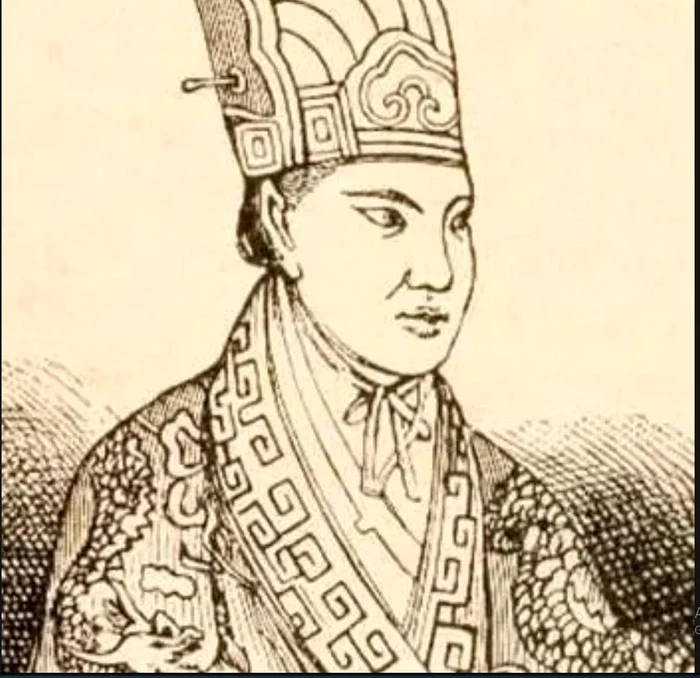
Hong Xiuquan Photo Wikipedia
Many people of the law were hand in hand with bandits and mafia organizations of opium and prostitution. Including externally, China had reached the great Western European powers, especially the UK. Following the first war of the opium, China ceded England's Hong Kong and paid for over $ 21 million. Other totally disadvantageous treaties followed for the Chinese, with the US and France. In this world destroyed by corruption, poverty and opium, lived Hong Xiuquan, the son of a peasant in the village of Fuyuanshui, Guangzhou province. Hong Xiuquan was ethnic hakka, a group from southern China, different from the Manciurians of the Qin dynasty. Hong has been attracted to teaching since childhood and his parents made huge sacrifices so he could attend school.
They hoped that Hong could take the exams and help the imperial official. The positions of “budgets” in the nineteenth century China were the most coveted, being the safest way to find financial stability and the possibility of advancement on the social scale. Hong returned to his native village and was a teacher. He has given the exams several times to become an imperial official. Each time it failed, especially since they had a promotability rate of less than 1% for ordinary people, most of them occupied by bribery and influence trafficking. The failure was filled with anger and frustration on Hong, who was ashamed to keep their eyes on their parents because of their sacrifices.
“The child of God” and the ideas that would have made it envious even Lenin
After failing so many times, Hong gave up nervously. Some say he suffered a deep depression, in which the frustrations combined with shame and feeling. Although he was a confucianist, Hong was directed to a religion that had just entered China through missionaries and was not very aware. In 1836, when he was 22, Hong heard Edwin Stevens, a foreign missionary, and his interpreter preaching about Christianity. From them, Hong received a set of brochures entitled “Good words for the exhortation of the time”, written by Liang Fa, Stevens's assistant, who contained fragments from the Bible, along with the homilies and other Christian teachings.
At that time, Hong read the brochures, but did not pay attention to them. During his wandering, Hong returned to these brochures and began to build a parallel reality. He confessed to the close ones that he had visions. More precisely, he would have appeared in his dream by ordering them to start a new work to reform the Chinese society. The son of God and the younger brother of Jesus Christ was self -proclaimed. What he failed with the teaching, Hong set out to achieve with the help of religion. His best friend, Feng Yunshan, immediately used Hong's messianic ideas to create a religious sect. This is how the “Society of worshipers of God” was born. The first proselytes were the poor peasants in the province of Guangxi. In 1847, Hong became the leader and Messiah of this cult, sucking the peasants' minds. It wasn't too hard either. Hong was used by notions taken from the Christian dogma, but also by purely communist ideas (just before this ideological current is invented in the world) to attract as many supporters as possible. Hong Xiuquan practices a rudimentary socialism.
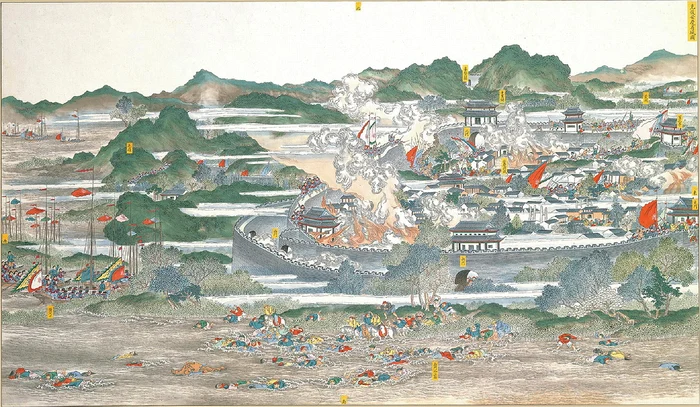
Siege of a city during the war taiping photo w
More precisely, the military for total equality between the citizens of China, with the entire agricultural area of the Empire equally distributed to the peasants. At the same time, it was positioned against moral decay, opium consumption, prostitution, corruption and nepotism. Promised the peasants an equitable society in which the order and the law received. Hong's Christianity was more “from heard” and based on a few Old Testament readings and themes, in which God demanded redemption, revenge, punishing the malicious and unbelievers. Shortly, 10,000 peasants and poor workers joined the movement of Hong Xiuquan. The “younger brother of Christ” touched the sensitive chord, what they were lacking, and gave them hope in a world of equality and social justice.
The most devastating civil and religious war in history
On January 1, 1851, Hong Xiuquan proclaimed his new dynasty, Taiping Tiaguo (“The Heavenly Kingdom of the Great Peace”) and assumed the title of Tianwang or “Heavenly King”. Propaganda against foreign leaders (of the Qinq dynasty, which was Manciurian), an anti-Western rhetoric (English, French, American were the bad strangers who steal their country). Plus the “communist” invoice messages, such as egalitarianism and social and political justice, gathered a huge number of followers.
The new “Heavenly King” put his friend, Feng Yunshan, the “minister” of his kingdom. Hong's fortresses, initially peasants, miners and crushed workers, have become more and more organized. They managed to eradicate banditism in Guangxi and chase tax collectors. The ordinary people saw a real Messiah in Hong. The number of supporters increased to over one million. The crushed band was transformed into a disciplined and fanatic army, strongly indoctrinated, organized by special divisions, by men and women. With them, Hong Xiuquan went to war against the Qing dynasty causing the hardest and most destructive civil war with a religious pretext in history. The Taiping armies, as it was known, crossed, to the north, the Fertile Valley of the Yangtze River and reached the Great Eastern Nanjing. After conquering the city on March 10, 1853, the taiping stopped.
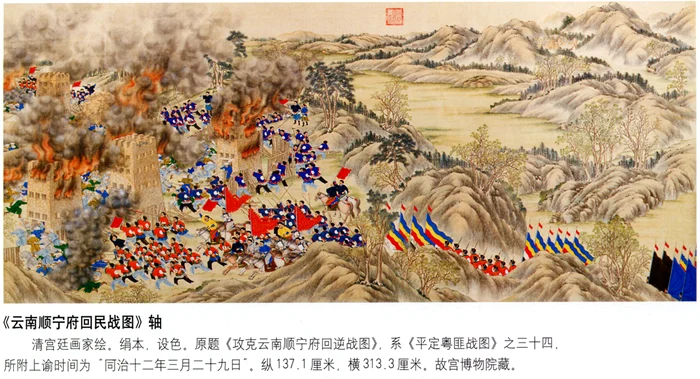
Battle in yunna photo wikipedia
They renamed the city of Tianjing (“Heavenly Capital”) and sent a northern expedition to conquer the capital Qing, meaning Beijing. The siege failed, but other expeditions from the upper valley of the Yangtze river were victorious. Where Hong arrived confiscated the Earth and redistributed it equally. That made him more and more popular. The emperor and army of the Qing dynasty were totally outdated, and the taiping rebels created their own state within the empire. In the meantime, however, the absolute power he enjoys transformed on Hong into a dictator. Initially, he killed one of his ministers, Yang Xiuqin, suspected of the desire for usurp. Then General Wei Changui had become too arrogant. Other generals fled for fear of not being suspected of betrayal and killed. Hong's state, although it had proposed total equality, even between the sexes, became more and more totalitarian.
“Dumnzeu's son” and his fanatics opened the way of communism in China
Finally, Emperor Qing, desperately losing the country and tired of the war that had been lasting for 14 years and had ruined much of China, has appealed to the Western commanders and mercenaries to restore the order. This is how the “eternal victorious army” coached by the West, ordered by American adventurer Frederick Townsend Ward, was born. With western armament and western European tactics, the taiping army sent by Hong to conquer the city of Shanghai. Later, the troops ordered by the Englishman Charles George Gordon again defeated the taiping troops, forcing them to beat in retreat. In addition, some of the Chinese scared of Hong's radicalism were rally under the flags Emperor Qing, forming an army under the leadership of Zeng Guofan. Until 1864, the nanjing, the taiping bastion, was conquered. Hong committed suicide before capitulation, but not before making “heavenly king” his only 15 -year -old son.
The rebellion was defeated, although the struggles continued in isolated areas until 1868. What was shocked on Quing officials and Western commanders, was like over 100,000 taiping soldiers, the most fanatical, preferred to die than to surrender. “Inspired by messianic visions with Christian influences and fueled by social dislocation, racial hatred and antistantal dissatisfaction (…) Taiping war was characterized as one of the most devastating wars in the history of mankind due to the huge number of deaths.”wrote the historian Tobie Meyer-phong. It is estimated that the number of victims caused by this war has risen to over 20 million. Although he managed to defeat the rebellion, the Quing Dynasty has never recovered. The Taiping revolt ideologically prepared the population of China for communism and has managed to decisively sell the imperial power.