Polish equipment in the Polish army? Here are our biggest hits


The text was published for the first time in 2023.
This construction is the result of a development work conducted at HSW SA by a consortium of companies: Huta Stalowa SA (leader), Jelcz Sp. z o. o., Bydgoszcz Zakłady Electromechanical “Belma” SA and the Military Institute of Engineering Technology. The delivery of 24 ordered copies is planned for 2026-2028. How will Baobabs strengthen the army? The task of these vehicles is to automatically and self -propelled to set up erratic minefields. This is an effective defense against armored vehicles and the opponent's infantry troops.
Read also at Business Insider
The main advantage of the Polish construction is the automation of this process and speed of operation. Baobab needs only about 20 minutes to cover the area up to 180 by 1800 meters. In this area, the vehicle places up to 600 minutes of anti-tank MI-123. The Polish factory is also responsible for the production and delivery of the min – Bydgoszcz Zakłady Elektromechaniczne “Belma” SA vehicles are equipped with a on -board computer, which creates a digital map showing exactly how a given area was mined.
Read also: The war in Ukraine drives the global arms industry. So why does the Polish armored plant die
Engineering Kroton mining system ISM Kroton ISM Kroton
|
Major Artur Pinkowski / Polish Army
|
Major Artur Pinkowski / Polish Army
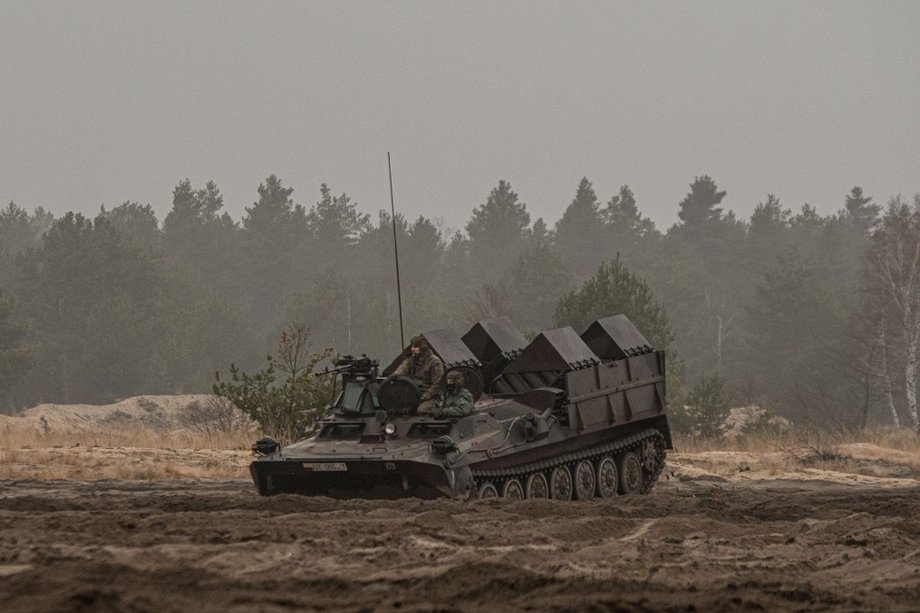
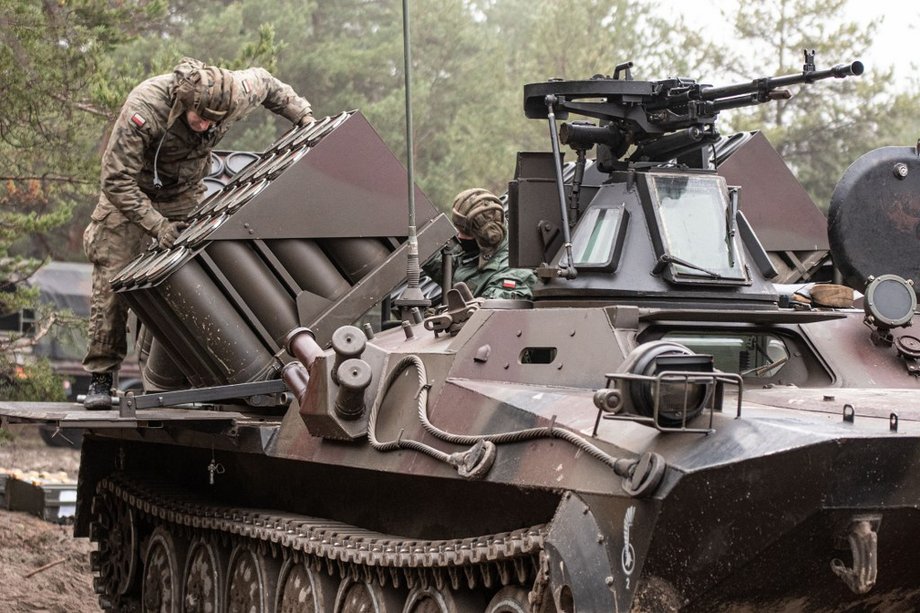
Baobab-K is not the first mining system developed by the Wrocław Institute and produced in Stalowa Wola. Work on his predecessor began in 1993. Unfortunately, It was one of those projects whose implementation encountered many difficulties – At some point the whole program was suspended. Ultimately, ISM Kroton began to be produced only in 2004, and only seven copies went to the army – definitely below the demand for this type of equipment. Unlike the latest ISM Kroton design, it is a caterpillar vehicle based on the MTLB armored personnel carrier. At the same time, he can take 400 anti -tank mines and in a quarter of an hour, cover a field with dimensions up to 90 by 600 m.
Read also: I didn't get a call, but I went to the army anyway. Here's what happened to me
Portable anti -aircraft rocket set of lightning
This is a real hit of the Polish reinforcement, and boldly called the best Manpads (Man-Portable Air-Defense Systems) weapons in the world. The launchers produced by Mesko from Skarżyska-Kamienna entered service in the Polish Army in 2019, as a modernized version of previously used GROM sets. The work on the new project took into account the experience of the Georgian army, which used thunders during the war with Russia in 2008.
Lightning also scored their combat debut in conflict with the Russian Federation – in 2022 Poland passed it to Ukraine. According to the accounts of representatives of the SZSU. Thanks to the thermovision, lightning allow us to operate at night, leading to a goal away by up to 6 km. Polish rockets are very precise, which works especially when disposing of small drones. The efficiency of lightning confirmed in Ukraine meant that more armies report for equipment from Skarżysko-Kamienna. The USA, Estonia and Norway have already decided to buy.
However, this is not the end – Polish engineers are already working on another, even more effective Piorun NG model (new generation) is to be tested in just a year and a half. For now, it is known that it is to be equipped with the latest optoelectronic head and more effectively deal with thermal and radio interference. The control block is also to be modernized.
Read also: A crushing report of Polish specialists with a cave after training with Ukrainians
Self -propelled mortar cancer
This is another structure provided by Huta in Stalowa Wola. The first mortars entered service in 2017. Currently, the army has about 100 copies at its disposal, and further deliveries resulting from signed contracts are also carried out. Crayfish are built on caterpillar or wheeled chassis, based on which Rosomak. The key element is a closed tower, increasing crew safety. The mortar can also be unmanned with a remote control system.
They accurately eliminate goals up to 12 km. The fire management system, thanks to the thermal imaging camera, allows for night conditions. Cancer develops speed up to 80 km/hi very quickly into combat mode – bullets can be fired after just 30 seconds from stopping the vehicle. Further driving is possible 15 seconds from the end of the fire. At the same time, 46 bullets can be loaded into a mortar, which are fired at a rate of 6-8 per minute. Soon, Polish mortars will appear on the front – Ukraine decided to buy 24 vehicles.
Tulip anti -tank face
Light, inconspicuous and extremely effective – faces developed by engineers of Bydgoszcz Elektromechanical Zakłady Belma are a modern and autonomous anti -tank weapon. Although they are commonly called faces, the official name of the tulip is a controlled anti-tank and over-sports explosive charge. This is a trap set for the opponent's tanks – a small weight (only 7 kg) allows you to place a tulip, e.g. on a treethanks to which it can hit the upper armor of the tank, i.e. its weakest point.
The tulip is equipped with acoustic and thermal sensors that allow you to track vehicles. The cumulative bullet is fired automatic when the detected object is exactly in front of it. The tulip effectively goes to a target over 50 meters, and the bullet strength allows you to pierce a 60 mm thick armor.
See also: What does a rocket destroyer do in Poland? There are only four such ships in the world [ZDJĘCIA]
MSBS Grot carabiner A Ukrainian soldier from the 24 Independent Mechanized Brigade with the Grot carabiner.
|
Mil.gov.ua
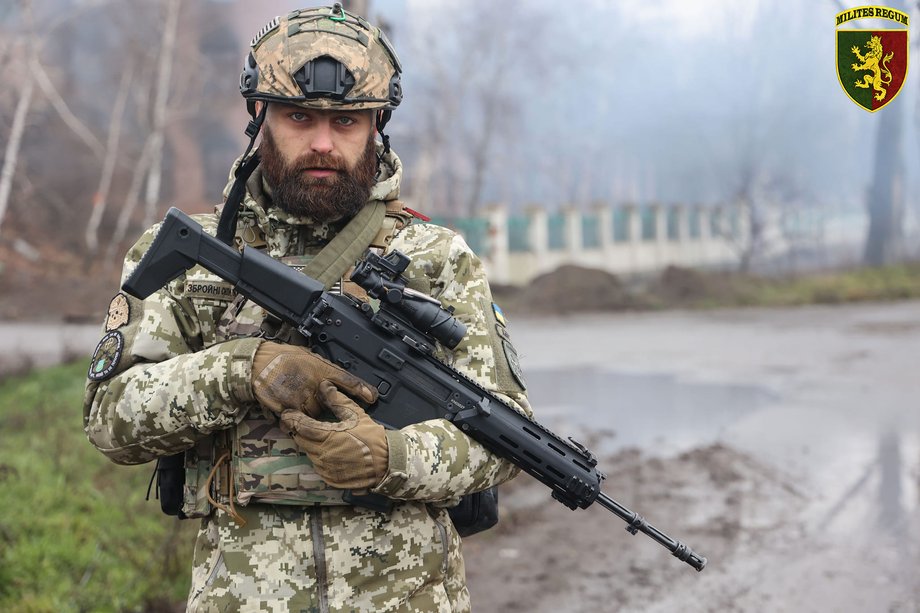
Polish instead of Soviet – such a slogan guided designers who at the beginning of the 21st century at the Military University of Technology began working on a modern automatic carabiner. They wanted to create a weapon that would allow to replace popular AKM. Finally, the first caves produced by the “Łucznik” Broni factory – Radom sp. Ultimately, this is to be the basic carabiner of the Polish army. The grotto proved their quality during war in Ukraine – about 10,000 went to the front. pieces of this weapon. Despite some controversies related to the partnership of the 2017, Ukraine also decided to buy more copies – the size of the contract is not public.
The cave is found in a butt and threaded system, weighs – depending on the system – from 3.4 to 3.7 kg. The carabiner allows you to effectively hit a target over 500 meters. Within a minute you can give it to 100 shots with continuous fire and up to 40 shots with single fire. What distinguishes the caves is the modularity – hence the name of the modular system of weapons of shooting. What does this mean? A soldier can create a weapon perfectly matched to his needs – all teams are interchangeable. Another barrel, different wheel, change of caliber – such modifications are possible in the grottoes. The designers even thought about left -handed ones – the shooter can choose which side of the castle chamber will be thrown out.
WB Electronics Flyeye
The drone created by Gliwice engineers is one of the first unmanned aerial artists that were included in the equipment of the Polish Army and the only one, which from beginning to end is being created in our country. In 2010, two sets went to the NIL military unit.
Polish drones had their debut on the battlefield during the mission in Afghanistan. Until 2019, the army had 31 Flyeye sets at their disposal – each of them contains four air platforms, observation heads, antenna systems and ground flight control station. They are also used by the Border Guard, and from 2015 also the armed forces of Ukraine. Unmanned aerial vehicles, which worked well during the conflict in Donbas and the fighting with separatists, passed the exam after Russia's open invasion of Ukraine. They are invaluable support in identifying the opponent's position. Air reconnaissance increases the effectiveness of fire management, which is particularly important in the context of the still low number of equipment and ammunition on the Ukrainian side.
What determines the success of Polish drones? First of all, they are light – they weigh only 12 kg. They are easy to use, and their start takes place from the hand, the operator does not need any additional support devices, thanks to which preparation for the start and folding after completion they take less than 10 minutes. And this increases mobility – extremely important during the actions on the front.
The unmanned aerian -axy itself is fast, develops speed up to 120 km per hour. and can reach a ceiling of 5000 m above The maximum range is 300 km, and the flight can last up to four hours, which allows deep reconnaissance in the opponent's distant positions. Thanks to this, Flyeye allows you to effectively detect the targets in the front of the front, for example, ammunition compositions, but also the opponent's troops. It was thanks to the Polish drone of the Ukrainian army that several Russian groupings managed to liquidate it before they reached the front.
Flyeye is equipped with a television and thermal imaging camera, which allows you to operate at night. It works in two modes – it can be controlled manually, and also run an autonomous flight according to the previously indicated route. In autonomous mode it is also possible to manually introduce corrections. Flyeye cooperates with the Topaz fighting management system, also by WB Electronics. Thanks to this, the time between the detection of the target and its liquidation by artillery is maximally shortened.