Kremlin's guerrilla fight for Moldova: “Abandoned houses, old people dying, slavery of debts”

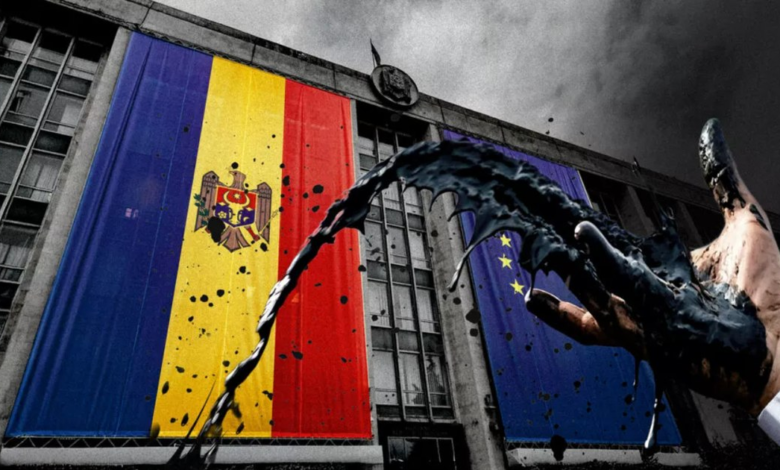
As the Republic of Moldova approaches the parliamentary elections in the fall, Pro-Kremlin propaganda intensifies its attacks. The stake is clear: the influence of the electorate and divert the pro-European direction of the country, shows the EU portal that fights Russian misinformation.
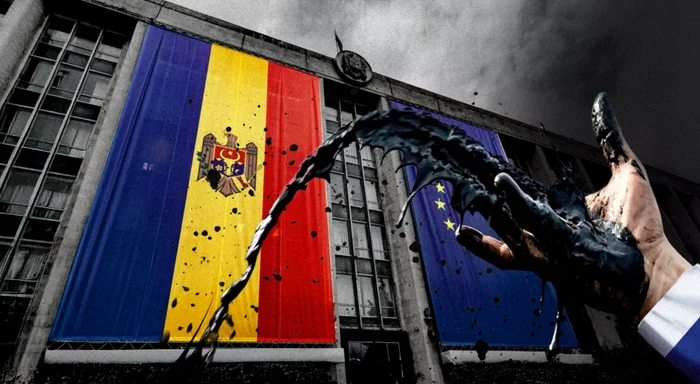
Russian propaganda has intensified its attacks. Photo: collage I vs disinfo
The Republic of Moldova is quickly heading to the parliamentary elections scheduled for September 28. Seen as decisive for the geopolitical orientation of the country, the competition for the hearts and minds of the potential voters is in full swing.
“Pro-Kremlin actors make every effort to convince Moldovans to give up European integration and vote for pro-Russian forces. Any possible argument has been mobilized to manipulate and confuse the electorate, under the pretext of creating a political alternative.”is shown in an analysis of the portal of the European Commission – I vs disinfo – which fights pro -Kremlin misinformation.
As always, the “doctors” of the Kremlin image see a little value in the correctness of the facts or in common sense when formulating their accusations.
“Representatives of a country where the protests are not allowed to launch accusations about dictatorship in a country where anyone is free to protest. The accusations that the opposition is persecuted from some people promoting closer links with a country where the opposition politicians are assassinated.”, It is shown in the analysis.
EU-Moldova partnership, your favorite target
The EU -Moldova partnership is a favorite target of the Kremlin misinformation machine. The “evil hand” of the EU is found everywhere, either the Moldovan government that acts in direct order in Brussels, or the EU that closes the eyes with cynicism at local illegalities.
On July 4, 2025, the first EU -Moldova summit was held in Chisinau. The President of the Republic of Moldova, Maia Sandu, hosted the president of the European Council, António Costa, and the President of the European Commission, Ursula von der Leyen. The summit was not only of symbolic importance, reflecting the solidity of the partnership, but also brought important ads. Among other things, the EU announced the unlock of 270 million euros from the growth plan for Moldova, totaling 1.9 billion euros, meant to stimulate the essential reforms and to boost the country's economy.
Overall, the summit marked a significant moment in EU -Moldova relations and generated an exceptionally wide media coverage, over 70 national media institutions relating to the event. The tone of the news remained predominantly neutral or positive towards the EU.
It is not surprising that the event has also become the target of a sophisticated and complex misinformation campaign, led by pro-Kremlin networks and focused on social networks.
False news avalanche before the summit
A few days before the summit, “Matryoshka”, an information manipulation and interference related to Russia, has released an avalanche of tricked videos, falsely labeled with the logos of European media such as Deutsche Welle and Euronews. A video claimed that a conflict between the High Representative/Vice -President Kaja Kalla and the president Maia Sandu would have erupted. Another video warned for a potential terrorist threat during the summit, trying to stain public perception on the event.
These misinformation activities mainly concerned the Moldovan diaspora in the EU. They were designed to sow doubts about the legitimacy and safety of the summit, while strengthening the narrative about the alleged loss of sovereignty of Moldova under the influence of the EU.
On the day of the summit, a false bomb alert at Chisinau Airport tested the preparation of Moldova in security. The police defused the threat, declaring that it was anticipated.
Meanwhile, channel 5 of the fugitive oligarch Ilan Șor, using the protests of its supporters in specially designated areas, has promoted the absurd statement that the EU is trying to turn Moldova into a dictatorship. The post broadcast news by accusing the law enforcement of holding 20 protesters, violating democratic norms.
Displenental future in the EU: abandoned houses, slavery of debts
Pro-Kremlin actors flooded social platforms with divisive rhetoric. The financial assistance announced during the summit was presented as a “debt trap”, so that the future generations of Moldovans were obliged to work only to reimburse hundreds of millions to the EU. The event itself was listed as a simple political theater meant to increase the popularity of Maia Sandu before the September parliamentary elections.
The Telegram KP Moldova channel claimed that EU leaders would have clearly declared, during the summit, that they will intervene in the elections of the Republic of Moldova in favor of the ruling party, also stating that “It signs a common statement by which they will not allow anyone to steal the choice of the Moldovan people”. Trying to exploit people's fears, the channel promoted misinformation that connected the EU to a dystopic future, with “abandoned houses, old people dying alone, abandoned graves and slavery of debts ”.
Meanwhile, other sources have claimed that the summit did nothing. The Telegram Channel Sputnik Moldova 2.0, controlled by Russia, quoted the journalist Dmitry Ciubașenko, who said after the summit: “The Moldova -EU summit ended in Chisinau. His essence: Bla-Bla-Bla. ”
Digital war and stratified influence
While the independent press based its stories about the summit and its impact on facts, the pro-Russian actors fueled misinformation using emotionally loaded narratives.
Telegram was the favorite weapon for spreading these misinformation narratives, while Facebook became a comment battlefield, where the divisive content has prospered with the help of algorithmic manipulation. Meanwhile, other misinformers used Tiktok to deliver satirical materials that undermined confidence in the pro-EU orientation of Moldova, especially among the young public.
Overall, this diverse set of tactics and the distribution of deceitful content on several platforms have sought to create the illusion of Euroscepticism among the population.
Two topics intensely exploited
The so-called loss of sovereignty and the alleged authoritarianism of Maia Sandu and his party are outlined as two major themes that the pro-Russian misinformation is constantly trying to project. They have become “frames” or meta-births, connecting numerous stories and dissatisfaction, meant to give meaning and coherence to the different statements of misinformation.
In a context of tense political campaigns and continuous efforts to undermine choices and democracy in general, it is expected that these two topics will be intensely promoted in the next period. The Kremlin and its interpres, as part of a broader effort to compromise democratic institutions and the electoral process, prepare the land to challenge the legitimacy of the parliamentary elections.
The loss of sovereignty has become one of the favorite themes of misinformation, gaining ground after the Romanian elections, where the pro-Russian candidates attracted a large number of supporters accusing that the EU “steals” the country's independence.
“The accusations regarding the supposed deportation camps of the EU will reappear”
The most exploited vulnerabilities are the economic difficulties of the population, the fear of regional instability and chronic distrust in the state institutions.
There is a clear convergence between the misinformation messages related to the economy – poverty, the collapse of agriculture – and the geopolitical ones, such as the loss of sovereignty and the danger of war. This combination aims to create an imminent feeling of collapse, in which the return to a pro-Russian policy, masked under slogans about “patriotism”, “neutrality” and “national interest”, is presented as the only solution.
Moreover, misinformation narratives promoted in previous campaigns could reappear. It should not be a surprise if accusations regarding the supposed deportation camps of EU, the transformation of Moldova into a military hub or even the country's involvement in the war.
After a testing phase during the 2024 elections and months of preparing the misinformation operations, the Kremlin's electoral offensive is in full swing. The counteracting these coordinated efforts to deceive and manipulate the Moldovan voters will be a peak priority for the institutions of the Republic of Moldova and its partners during the pre -election period.
The Moldovan authorities seem aware of the challenges that follow, as evidenced by the recent evaluation of the Supreme Security Council, which has identified at least ten main tools that Russia would use to interfere in the electoral process. The manipulation of information and interference campaigns occupy an important place on this list. This statement caused immediate attacks and comments from the pro-Kremlin ecosystem, as well as a mandatory denial from the official sources of the Kremlin.
Beyond the public statements, the Government recently began to take concrete measures to address these challenges, such as setting up a coordination center to respond to hybrid threats and block Russian applications and sites used to retract the prohibited TV content.