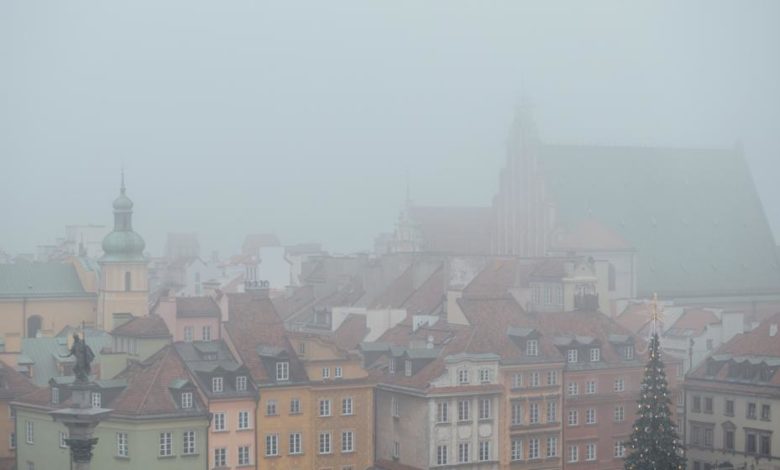
In Poland, we are still breathing very polluted air – emphasized in an interview with PAP the president of the Polish smog alarm Andrzej Guła commenting on the GIOŚ report on air quality in the country. He added that the increase in pollution of suspended dust is disturbing.
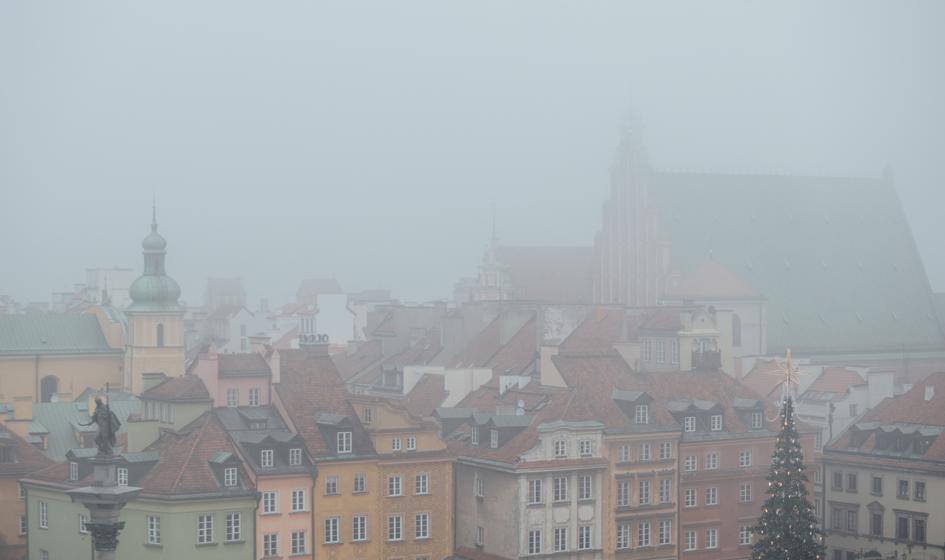

Last week, the Main Inspectorate for Environmental Protection (GIOŚ) published a report on air quality in Poland for 2024. According to it, the air quality improved “in the average annual nitrogen dioxide concentration, which sources in cities are mainly traffic, especially diesel engines.”
It's not better. It's worse
However, according to the president of the Polish smog alarm (belt) of Andrzej Guła, generally The air quality in the country has not improved, and in some cases worsened.
– For example: dust pollution suspended in 2024 increased by 7 percent. This is a very disturbing phenomenon – Gula said. As he reserved, it is not certain whether it is the result of meteorology or a trend associated with e.g. greater use of solid fuels for heating buildings.
Guła emphasized that Poland “is still one of the most polluted (smog – PAP) countries in Europe”and every year due to poor quality Polish air, 50,000 die prematurely. people. – The data presented by GIOŚ (…) should be alerted by persons responsible in Poland for the air protection policy, i.e. the Ministry of the Climate and the Environment – added Gula.
He pointed out that carcinogenic compounds attach to the suspended dust, e.g. heavy metals, hydzoalfapiren hydrocarbons. – In the case of just benzoalfaparene, we observe stagnation, not improvement, although the amount of this substance in the Polish air is an absolute record in Europe – emphasized Guła. Benzoalfapiren is a carcinogenic and mutagenic substance, mainly associated with heating houses with solid fuels, e.g. coal and wood.
PAP interlocutor indicated that The GIOŚ report refers to the current air quality standards, although these – in accordance with the directive adopted by the European Parliament – are to be tightened in 2030. – We are very far from the standards of the World Health Organization (WHO). In the case of PM10 suspended dust, the current average annual standard in Poland is 40 micrograms per cubic meter of air, the EU directive in 2030 is to introduce 20 micrograms, i.e. twice as less. However, WHO indicates that PM10 pollution should not exceed 15 micrograms – Gula explained.
Probes with heating and … “clean air”
President Pas noticed that The main source of air pollution in Poland is the emission from buildings heated with coal and wood in the so -called Cinderella, or outdated heating devices. “In urban centers, there are pollution from transport, i.e. car traffic,” he said. He also drew attention to the industry, although he emphasized, the equipment of factories, the heat and power plant in the electricaltra in recent years has caused that this emission has decreased.
In the assessment of Guła to Poland has met EU standards by 2030. It is primarily needed to revive the thermomodernization program of single -family houses, including in the “Clean Air” program. According to him, the decrease in interest in the program is caused by the way the program was reformed by the National Fund for Environmental Protection and Water Management (NFOŚiGW).
“Clean air” in March this year returned after four months of break caused by irregularities detected in the program. NFEPWW reported that about 270 reports regarding irregularities in the implementation of the program were received by the prosecutor's office and police. During the break, NFOŚiGW introduced reforms in the program, e.g. a subsidy for thermomodernization can be obtained for one house, you must also prove that you are the owner or co -owner of the property for a minimum of three years (except for declines). Some investments must be present operators conducting thermomodernization from beginning to end with the owners of the house, and the maximum costs for individual elements of the investment were specified.
Gula assessed that the creation of controversy around the program created an atmosphere that it was a program in which fraud and extortion were common. – It was not so, about a million households have already benefited from the program and the vast majority of them today enjoy a pure heat source, insulated home and lower electricity bills – he emphasized.
He also pointed out that it is also important to introduce the fuel quality control system sold to households, e.g. pellets. – This happens that the pellets burned in modern devices are contaminated and contains hazardous substances. This causes gigantic air pollution – explained the boss of Pas.
Details from the report
In the communiqué, GIOŚ explained that by fulfilling the legal obligation, he carried out an assessment of air quality for 2024 and based on it classified zones for each substance separately according to specific criteria. In total, 46 zones were rated. The average annual permissible level of air pollution with nitrogen dioxide was exceeded in two zones (Kraków and Katowice) compared to four a year earlier. “The average annual concentration of sulfur dioxide has also decreased,” added the inspectorate.
The inspectorate reported that the results also show the maintenance of the concentration of benzo (a) pyrene in the suspended PM10 at a similar level as in 2023. At the same time he reserved that at that time these concentrations reached the lowest level since the performance of uniform assessments according to the EU criteria. “2024, compared to 2023, was characterized by slightly higher values of suspended dust concentration. The average annual level permissible for PM2.5 suspended dust was maintained and the average annual level permissible for PM10 suspended dust. Exceeding the average -wound level of permissible suspended dust PM10 was recorded in the areas of three voivodships: Silesian, Małopolska and Lower Silesian” GIOŚ informed.
Jacek Stankiewicz (PAP)
JLS/ MALK/ LM/