The hospital where only 4% of the beds are occupied by patients. The map of hospitals in Romania “with more department heads than patients”


48 of the 353 public hospitals working in the contract with the National Health House have almost half of the beds, and “the phenomenon is not limited only to smaller counties, but also to those with advanced medical infrastructure”.
These data show from the study “Analysis of economic and operational performance in the health system”, launched by ASE, with the support of the Private Health network Regina Maria, and includes sections for patients with an acute health problem, not the sections for patients with a chronic disease, who have separate beds.
The hospital with the lowest occupancy in the sections for acute patients is the “Sf. Andrei” Pneumology Hospital in Valea Iașului in Argeș county. There, only 4.26% of the beds are busy.
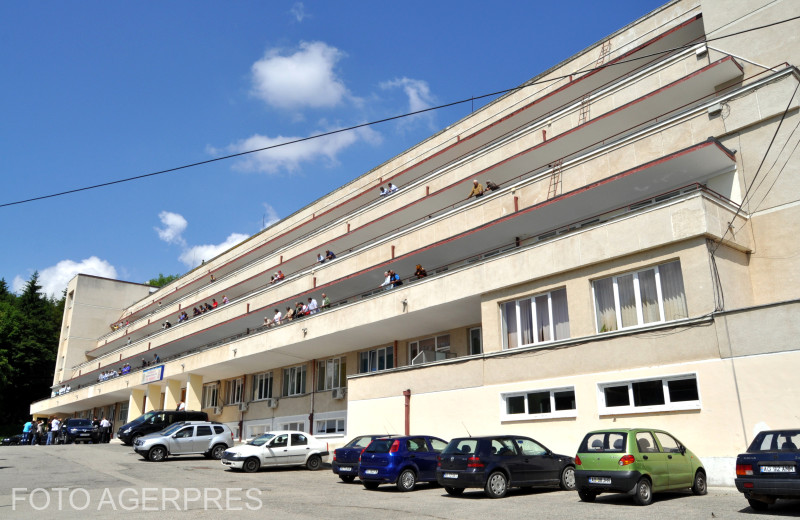
Hospitals in Romania with the fewest patients
In the Top 5 with the lowest occupancy degree you can find:
- St. Stephen's Pneumophysiology Hospital in Bucharest – 18.54% employment degree for acute beds
- Victoria City Hospital in Brasov County – 18.88% employment degree
- Făurei City Hospital in Brăila county – 21.75% employment degree
- General Hospital CF Sibiu – occupancy rate of 23.69%.
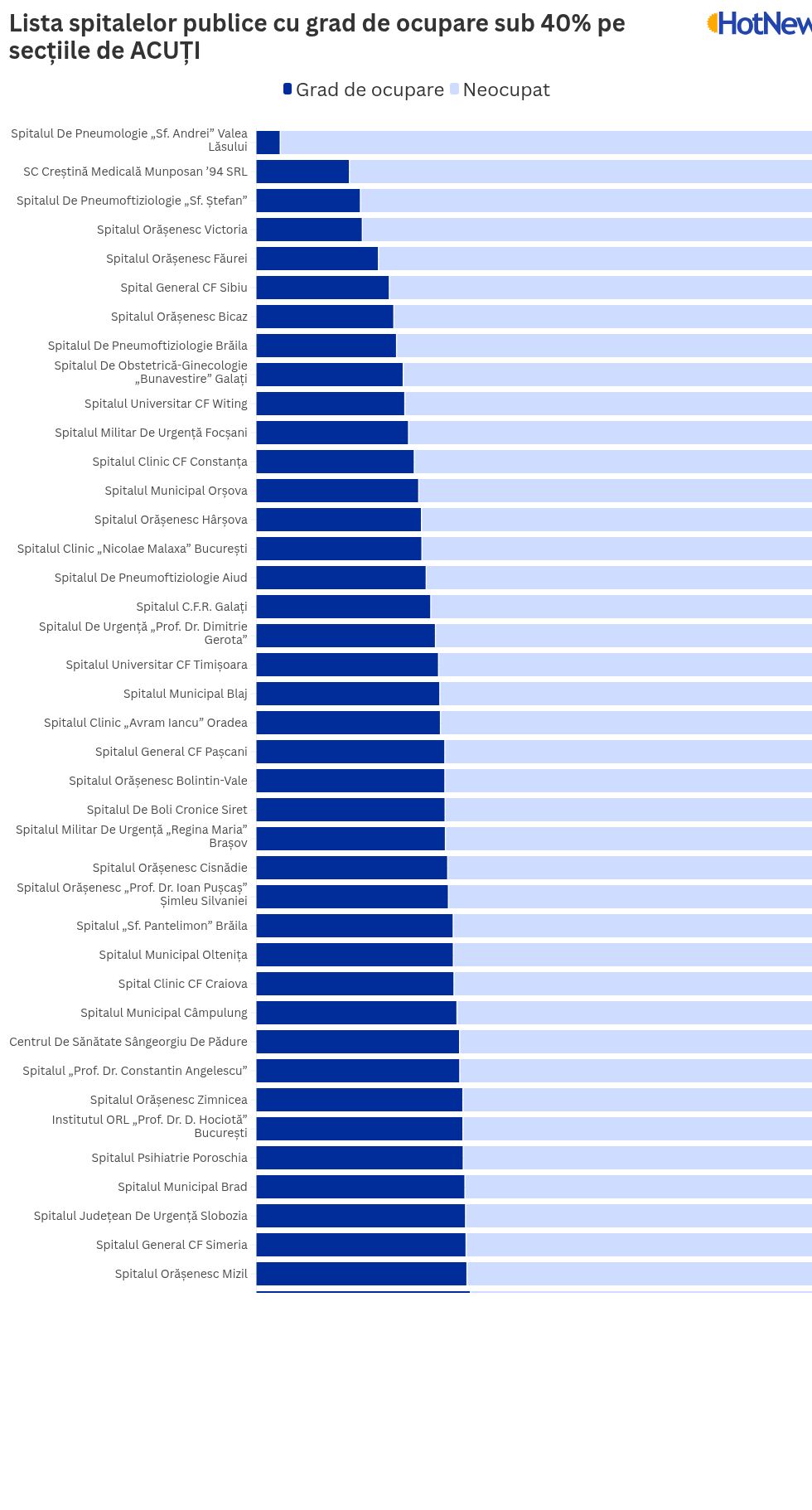
These are hospitals that “operate well below their optimal capacity”, according to the authors of the study, who say that these sanitary units “either have a reduced addressability or maintain a number of beds unjustified in terms of the real activity”.
Of the counties with the lowest average occupancy in hospitals, Ialomița (with an occupancy rate of 42.56%), Teleorman (44.25%) and Giurgiu (48.51%), all with significant values below the national average (54.60%).
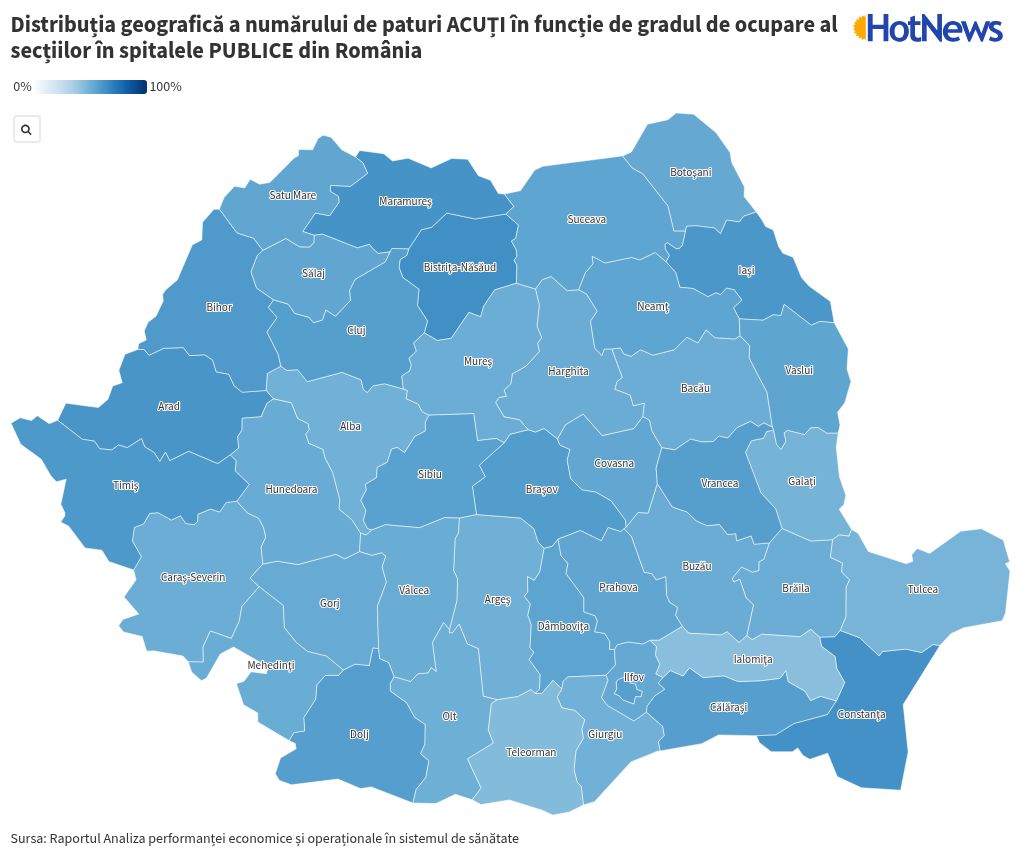
In these counties, “an important number of beds remains constantly underlying, which makes them candidates for a possible restructuring”, according to the study “Analysis of economic and operational performance in the health system”.
“Subutilized sections” even in large hospitals in Bucharest
However, the university centers are not exempted from the problem of low employment sections, notes the authors of the study. For example, despite the high size and addressability, Bucharest has hospitals with 1,213 beds with a use below 30%, which indicates “the existence of underlying sections even in large hospitals”.
The hospitals in Bucharest with the lowest occupancy rate (below 30%) in the sections for acute patients are:
- “Sf. Stefan” hospital – 18.54%occupancy;
- CF Witing University Hospital – 26.44%occupancy;
- “Nicolae Malaxa” Clinical Hospital – 29.49%occupancy.
The University Hospital CF Iași, for example, has a 38.43% employment degree of beds for acute patients.
These data suggest, according to the authors of the study, that “the phenomenon is not limited only to smaller counties, but also to those with advanced medical infrastructure”.
Identifying these hospitals “is essential to take measures to optimize the hospital infrastructure, either by redistributing the beds to higher demand sections, or by converting them into beds for chronic or palliative care”, say the authors of the study “Analysis of economic and operational performance in the health system”.
“A viable solution would be the conversion of the beds of acute underlying into beds for chronicles and palliative care, given that the demand for these services far exceeds the existing offer,” the authors of the study propose.
They also add that “it would be necessary to create a new, modernized infrastructure that will provide adequate conditions for the care of these patients.”
“Over 10,000 beds in hospitals in Romania could be reduced without risks”
In Romania there are 353 public hospitals working in the contract with the National Health Insurance House. According to Eurostat data, quoted in the study, there are 138,618 hospital beds, of which 105,241 intended for continuous and day hospitalization for acute conditions. The rest are allocated to sections for chronic conditions, long -term care, rehabilitation and palliation.
The Minister of Health, Alexandru Rogobete, declared on Monday, on the day he presented the reform proposals for the health system, that in Romania there are sanitary units in which the employment does not exceed 20-30% and are hospitals in the country where “there are more department heads than patients”.
The recommendation made by the authors of the study for hospitals with very low employment (between 0%and 30%) is to reduce the number of beds by 50%, “because even in the case of a fluctuation of the number of patients, the existing capacity will still be sufficient to avoid any risk of patients to medical services.”
In addition, for sections with a modest occupancy rate, located between 30%and 50%, “a moderate, 20%reduction, is justified and can be implemented without generating significant risks on the accessibility of services, taking into account the sufficient margin for absorbing possible demand increases,” the study shows.
According to the authors of the study, in the public hospitals in Romania “it could be reduced without risks about 10,058 beds from the total continuous hospitalization beds for acute patients”.
Read also: