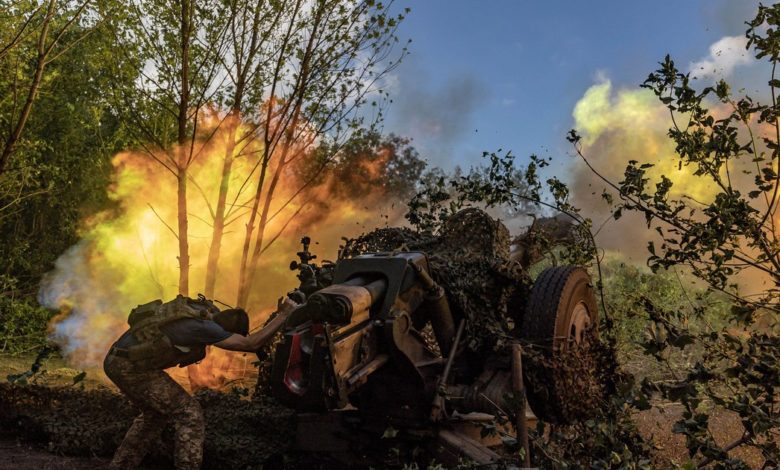
The war triggered by Russia against Ukraine is not just a fight for a territory or for the borders of a nation. The real stake is the security of Europe itself, the survival of liberal democracy and the global balance of power, writes “Financial Times”.
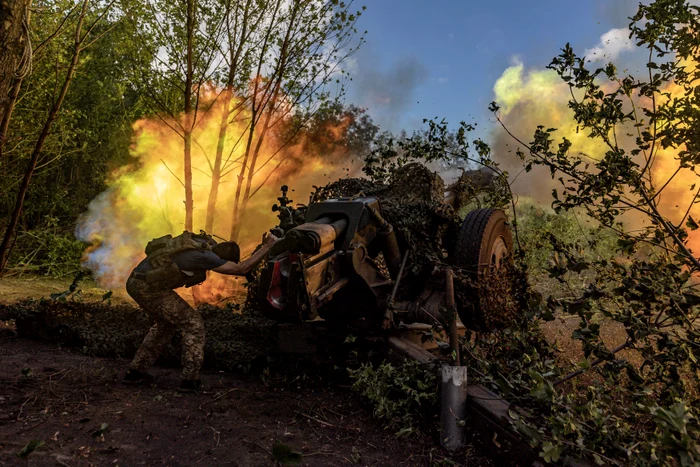
The Ukraine War is heading for the fourth year/photo: Profimedia
First and the simplest: Ukraine fights for the right of a people to decide their future alone. Russia, on the other hand, remains what has always been – a autocracy in which the will of a single man substitutes the law. Under the command of Vladimir Putin, Russia invaded Ukraine not for the security of its own border, but to delete that of the neighbor, along with his national identity. As the Fiona Hill and Angela Stent analysts have been written since 2022, Putin believes that Russia has a “divine” on Ukraine – and will only give up this pretend.
What happens if Russia defeats?
A victory of Russia in Ukraine would not just mean a tragedy for the Ukrainian people. It would legitimize the idea that borders can be redesigned by force, that the popular will are worth nothing and that autocrats can defy democracies without consequences. Europe, a continent with fluid borders and unresolved historical tensions, would thus open a “pandore box” that it might not be able to close.
A triumphant Russia would become the largest military force on the continent and a direct threat to NATO and EU member states. And if the US, under the conditions of a new Trump term, choose to withdraw even more of the commitments to the Allies – Europe could be alone, isolated and weak.
But the reverse is true. A defeated, blocked Russia would mean that the democratic world still has defense reflexes and mobilization capacity. It would be a signal for Beijing, Phenian and other autocratic regimes that the West is not just a fragile paper.
What the reality on the front says
After almost three and a half years of war, the balance sheet looks different than the Kremlin had imagined. According to the Center for Strategic and International Studies (CSIS), starting in 2024, Russia has conquered less than 1% of the Ukrainian territory. Moreover, the losses of human life of Moscow are five times higher than those recorded in all the wars worn by post -war Russia.
The war has become a wear. Ukraine is exhausted, but still standing. The population is tired but not defeated. The struggles continue, not only for their own survival, but also for the credibility of Western values.
Europe gives signs of hesitation. US withdraw in silence
And yet, external support began to decrease. In 2024, the US temporarily interrupted the financing of military aid, leaving pressure on the shoulders of Europeans. Only a few states-such as Denmark, Poland or Baltic countries-have maintained their commitments at a significant level.
According to the Kiel Institute for World Economy, the EU and the United Kingdom allocated together only 0.1% of GDP for bilateral support granted to Ukraine. Germany mobilized 0.13%, France even less. The proportions are, in relation to the stake, almost ridiculous.
At the level of resources, the West has a massive advantage: the EU+UK population is 3.5 times higher than Russia, and the GDP is almost 5 times higher. And yet, Moscow spends more and faster on defense, despite a fragile economic system, marked by real inflation than officially recognized. Despite these weaknesses, the Kremlin seems willing to sacrifice everything. But is Europe ready to do so?
The future is deciding now
Resources exist. What is missing is the will. Or political courage. Or moral clarity. Paradoxically, just anguish compared to a possible trump mandate can give Europe the necessary impulse. If America becomes an unpredictable ally, then the EU has no choice: it must become autonomous, coherent and capable of defending what it claims to support – freedom, sovereignty, democracy.
The Ukraine war became the final test. If Europe fails to pass it, it means that democracies are no longer willing to defend themselves – not even themselves. And if we fail to win now, the consequences will be seen not only in Kiev, but also in Vilnius, in Warsaw, in Chisinau or even in Berlin.
In the 1930s, the world closed its eyes in front of evil, hoping it would stop itself. Did not stop. It took tens of millions of dead to be stopped. History does not repeat itself, but often rhymes. If Europe does not learn the lesson, it will rhyme tragically, conclude ft.